
Operating system virtualization is a popular means to consolidate servers. Data center benchmarking studies performed by our business partner, Metrics Based Assessments LLC (MBA), show that 95% of data centers are deploying some level of server virtualization. Some benchmarking participants report successfully executing 10+ instances of Windows Server per physical machine.
Server virtualization has major benefits: savings in hardware costs, reduction in floor space requirements, lower power and cooling requirements, and savings in administrative time associated with deployment of physical servers. Combining virtualization with adoption of standard OS images (elimination of “one-off” OS configurations) yields even greater savings.
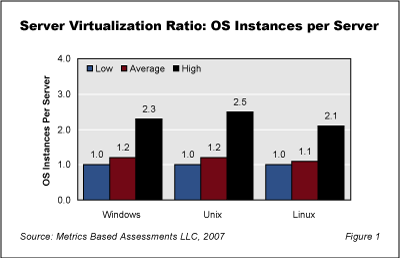
In spite of these promised benefits, overall virtualization rates are still low in practice. Figure 1 shows the server virtualization ratio (the number of OS instances in the data center divided by the number of physical servers) for all data centers benchmarked by MBA between 2005 and 2006. The average level of virtualization is between 1.1 and 1.2 instances per sever, with the highest level of virtualization at less than three instances per server. There is little difference in virtualization rates between Windows, Unix, and Linux.
These findings show that there is still much room to increase the practice of OS virtualization. Data center managers looking to contain costs or to reduce power and cooling requirements–and these days, who isn’t?–should become more aggressive about implementing virtualization.
April 2007
A complete set of data center benchmarks are available in Mark Levin’s book, Best Practices and Benchmarks in the Data Center.