
With over 60% of enterprises integrating generative AI into core operations, the urgency for responsible governance has never been greater. Generative AI is revolutionizing how businesses operate, make decisions, and engage with customers—unlocking new efficiencies, innovations, and competitive advantages. But with this transformation comes risk.
Without proper oversight, AI can lead to unintended consequences: legal liabilities, reputational damage, and erosion of trust among stakeholders. Recognizing this, forward-thinking organizations are establishing dedicated governance structures to ensure AI is deployed safely, ethically, and in alignment with strategic goals.
This shift is reinforced by global standards. The EU AI Act sets stringent requirements for high-risk AI systems, while the NIST AI Risk Management Framework provides a lifecycle approach to identifying and mitigating AI risks. Complementary frameworks like ISO/IEC 42001 and the OECD AI Principles emphasize fairness, transparency, and human-centric design.
Avasant can help enterprises operationalize these principles—especially in regulated sectors like finance and healthcare—by implementing robust governance models, risk-tracking tools, and best practices. By aligning with these standards, companies not only avoid pitfalls but also build trust and resilience as they scale AI across the enterprise. Therefore, this article aims to delve deeper into the significance of the ethical adoption of AI and how this can be implemented in the corporate world.
Responsible AI has become a strategic priority for enterprises worldwide, with nearly half actively investing in governance frameworks to address risks such as bias, misinformation, intellectual property misuse, and regulatory compliance (Avasant, 2025). To manage these challenges, organizations are forming AI governance boards that include stakeholders from technology, compliance, and business units. This reflects a broader shift in perspective—AI governance is no longer just a technical or legal concern, but a core business function that must be embedded across all levels of the enterprise. Avasant’s approach supports this shift by promoting board-level governance, offering tools like blockchain auditing and risk tracking, and advising high-risk sectors such as finance and healthcare on compliance and ethical deployment.
This governance model aligns closely with emerging global standards. The EU AI Act introduces risk-based regulations that emphasize transparency, oversight, and accountability. The NIST AI Risk Management Framework (AI RMF 1.0) provides a structured methodology for identifying and mitigating AI risks throughout the lifecycle. ISO/IEC 42001:2023 defines a certifiable AI management system, while the OECD AI Principles promote fairness, transparency, and human-centric values. These frameworks validate and reinforce the governance strategies Avasant champions, offering enterprises clear pathways to deploy AI responsibly. Together, they signal a global consensus on the need for ethical, accountable, and well-regulated AI systems.
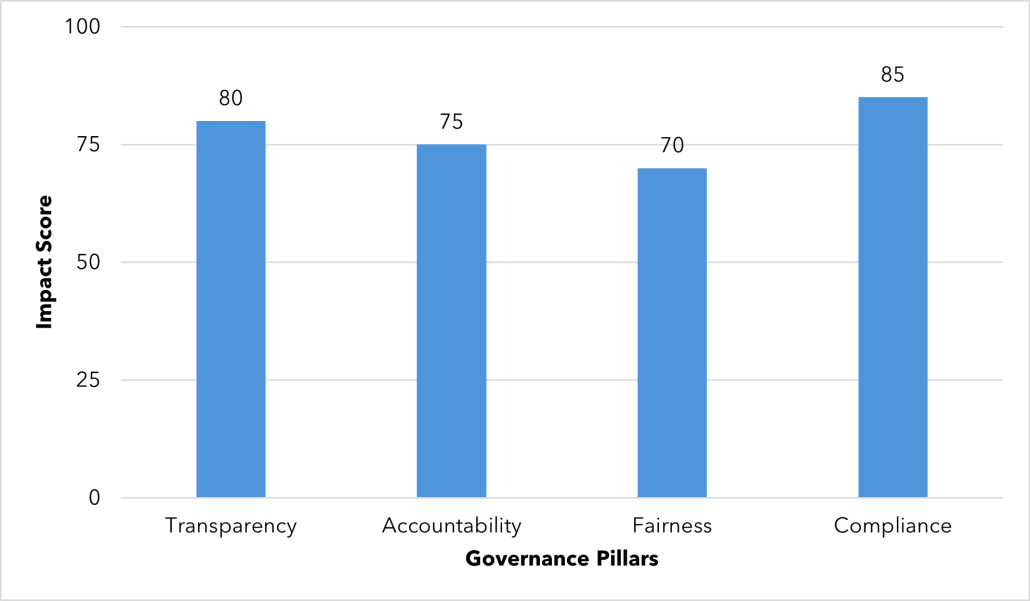
Figure 1 highlights four foundational pillars: transparency, accountability, fairness, and compliance and their impact on ethical AI use, stakeholder trust, regulatory alignment, and sustainable innovation.
The urgency of responsible AI governance is growing across sectors, especially in industries where decisions directly impact human lives and financial stability. In healthcare, poor oversight of AI systems has already led to legal challenges. IBM’s Watson for Oncology, once hailed as a breakthrough in cancer treatment, was discontinued after it provided unsafe recommendations based on synthetic data, raising serious concerns about data quality and transparency (Harvard Ethics Center, 2024). Legal experts warn that “black box” AI systems—those whose decision-making processes are not easily explained—are increasingly landing hospitals and insurers in court over issues like algorithmic discrimination and misinformation (WorldHab, 2025). These lawsuits underscore the need for clear accountability and explainability in AI-driven healthcare decisions.
In finance and customer-facing industries, the risks are equally pressing. IBM’s 2025 Data Breach Report revealed that 97% of organizations experiencing AI-related breaches lacked proper access controls, and 63% had no governance policies in place. These gaps led to higher breach costs and compromised personal and intellectual property data (National Law Review, 2025). In the legal system, two U.S. federal judges came under Senate investigation for issuing AI-generated rulings filled with fabricated parties, misquoted laws, and ghost individuals—raising serious ethical and constitutional concerns (USA Herald, 2025). Meanwhile, fast-food giants like Taco Bell and McDonald’s withdrew AI ordering systems after viral failures exposed how biased or inaccurate outputs can damage brand trust and customer relationships (Tech.co, 2025). These examples show that weak AI governance is not just a technical flaw—it’s a strategic risk. As global regulators tighten compliance mandates, organizations must prioritize oversight to avoid legal penalties, reputational damage, and erosion of stakeholder trust
Avasant’s research into Responsible AI Platforms highlights the emergence of sophisticated tools for auditing, bias detection, and compliance monitoring. These technologies are increasingly vital as enterprises navigate an evolving regulatory landscape. Likewise, the Governance, Risk, and Compliance (GRC) Services report demonstrates the value of embedding GenAI into compliance systems, enabling proactive monitoring and reducing overall risk exposure. By leveraging these tools, organizations can create a structured and transparent approach to AI oversight that balances innovation with responsibility.
Responsible AI governance offers enterprises far more than just regulatory compliance it provides a strategic edge in a rapidly evolving digital landscape. Organizations that build strong governance frameworks are better positioned to manage risks, protect their reputation, and earn lasting trust from customers, investors, and regulators. By clearly defining how AI systems are developed, deployed, and monitored, these companies can avoid costly mistakes, respond confidently to legal and ethical challenges, and demonstrate accountability in their decision-making processes.
Beyond risk management, responsible governance also accelerates innovation. Enterprises that embed transparency, fairness, and ethical standards into their AI strategies are more likely to gain stakeholder buy-in and scale AI solutions with confidence. This creates a competitive advantage, allowing them to lead in digital transformation while maintaining public trust. Moreover, responsible governance helps differentiate brands in crowded markets—showing that they not only embrace cutting-edge technology but also care about how it impacts people and society. In doing so, these organizations position themselves as forward-thinking, values-driven leaders in the AI era.
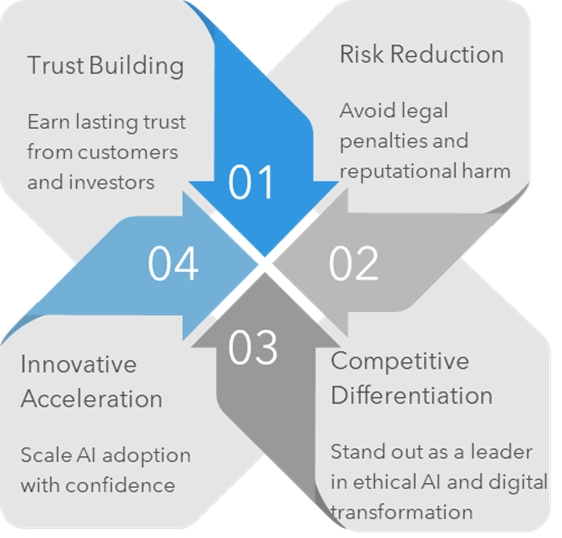
Figure 2 below shows how responsible AI governance supports key business outcomes—reducing risk, building trust, accelerating innovation, and helping organizations stand out as ethical leaders.
Avasant’s research and advisory services provide enterprises with the guidance needed to design governance structures tailored to their maturity, culture, and operational scale. By embedding governance into strategy, compliance, operations, and organizational culture, companies can innovate with confidence, resilience, and long-term sustainability. In a landscape where AI is increasingly central to competitive advantage, responsible governance is no longer optional—it is essential for sustainable success.
By Briege Pierre-Campbell, Manager & Denzil Rajack-Prayag, Senior Procurement Specialist