
As customer expectations rise and operational complexity grows, Customer Relationship Management (CRM) integration is no longer just an IT concern; it has emerged as a boardroom-level priority. Yet, Avasant’s Cloud CRM Suites 2024 RadarView™ reveals a persistent challenge: over 60% of enterprises still operate with fragmented data environments, where silos and poor interoperability slow growth, hinder collaboration, and reduce responsiveness.
These isolated pockets of customer and operational data degrade data quality, delay decision-making, and obstruct efforts to scale. When platforms can’t talk to each other, efficiency drops and customer experience suffers.
To scale effectively, leadership must focus on tearing down data silos, streamlining system connections, and creating a foundation for agility. These are not theoretical best practices — they are field-tested approaches drawn from Avasant’s enterprise engagements and ready for immediate execution.
Data silos form when departments work in isolation with separate tools—marketing on one system, sales on another, and service on a third—with no shared, real-time data exchange. The disconnect prevents teams from seeing the full customer journey. Sales may be unaware of recent support issues. Marketing could be working with outdated contact lists. Leadership risks making strategic decisions based on incomplete or conflicting reports.
Left unchecked, these inefficiencies ripple across the enterprise, resulting in missed revenue opportunities, inflated operational costs, and delayed decision cycles. In some industries, such as healthcare, finance, and retail, they also open the door to compliance risks and poor customer outcomes. Fragmented data can lead to audit failures, data breaches, and penalties under regulations such as HIPAA and GDPR.
Interoperability isn’t a technical buzzword. It’s a business enabler. When systems connect seamlessly, departments collaborate more effectively, insights reach leadership faster, and customer engagement becomes more personalized and scalable.
Unified data unlocks:
CRM interoperability is not just a technical upgrade—it’s a foundational element of enterprise transformation. As referenced in Table 1, Avasant’s Digital Operating Model Framework™ positions interoperability as a core enabler of agility, aligning technology investments with business outcomes across functions.
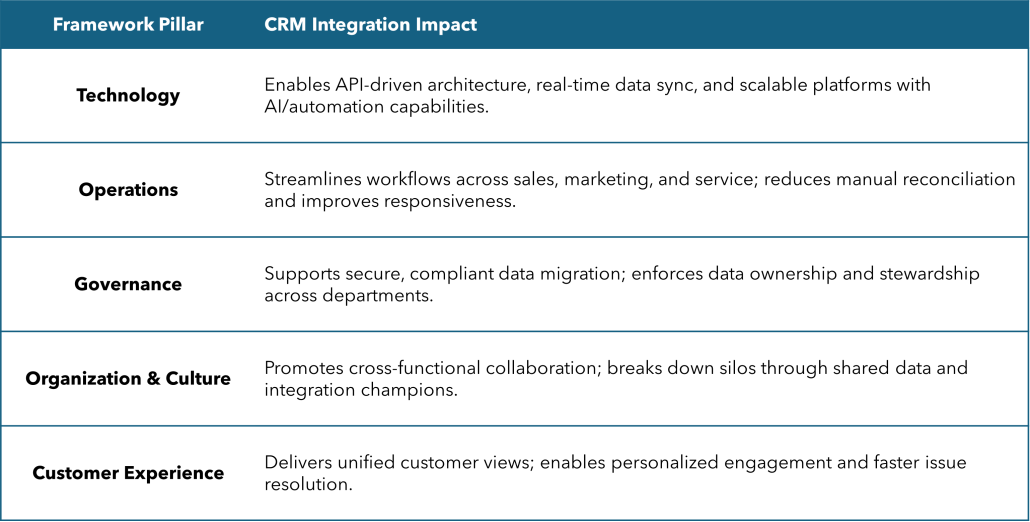
Table 1 Mapping CRM Integration into the Digital Operating Model Framework
Achieving true CRM integration requires more than just linking systems—it demands a deliberate, strategic approach across technology, processes, and culture. Enterprise companies must think beyond feature checklists and address the structural and behavioral barriers that allow data silos to persist. The following strategies offer a practical blueprint to unlock interoperability, accelerate responsiveness, and future-proof customer operations.
Checklist:
Each of these six actions aligns with Avasant’s Digital Operating Model Framework™, as highlighted in Table 2, reinforcing CRM integration as a foundational enabler of enterprise transformation.
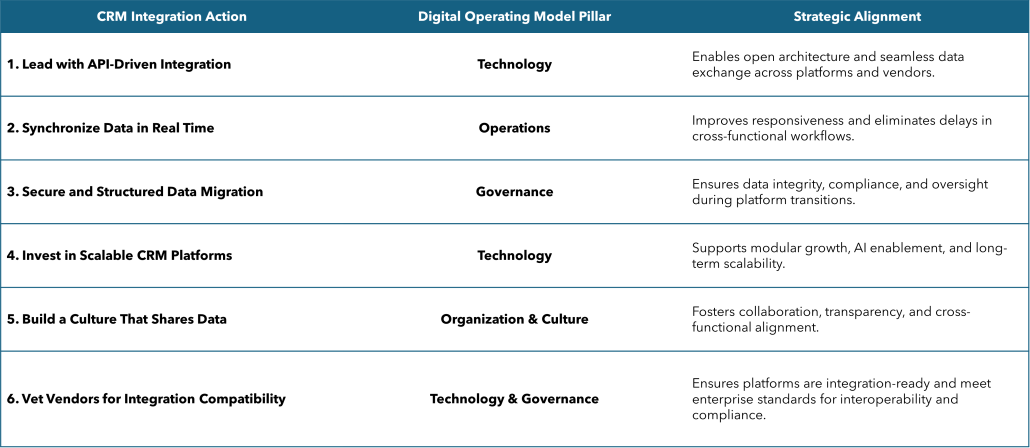
Table 2 Aligning CRM Integration Actions with the Digital Operating Model Framework
These six strategies work together to create a resilient, scalable integration framework. By investing in open APIs, real-time synchronization, secure data migration, and modern CRM platforms—while fostering collaboration and selecting integration-ready vendors—executive teams can eliminate fragmentation and position their organizations for cross-functional agility and long-term growth.
CRM integration has shifted from a back-office IT function to a front-line enabler of enterprise agility and growth. According to Avasant’s Cloud CRM Suites 2024 RadarView™, mid-sized enterprises that prioritize interoperability and eliminate data silos are 2.3x more likely to achieve measurable improvements in customer satisfaction and operational responsiveness.
To stay competitive, executive leaders must focus on:
Enterprises that embed CRM integration within Avasant’s Digital Operating Model Framework™ are better positioned to achieve cross-functional agility. Leaders can accelerate value realization and drive measurable outcomes by aligning CRM capabilities with cloud, automation, and AI investments.
Avasant’s research shows that enterprises with integrated CRM ecosystems outperform peers in speed-to-market and customer retention. Interoperability is no longer a technical upgrade. It is the foundation of modern digital operations and a strategic requirement for growth.
By David Acklin, Senior Director and Tracell Frederick, Manager