
CES 2026 marked a structural shift in how consumer technology is being built and commercialized. The industry is moving beyond “smart devices” toward coordinated living systems, where intelligence is distributed across homes, vehicles, wearables, and networks to deliver outcomes with minimal user effort. Unlike recent editions that leaned on generative AI experimentation and concept showcases, this year’s announcements were more execution oriented. Companies demonstrated how AI, energy intelligence, and software-defined platforms are being operationalized into products and ecosystems designed to scale. Across the CES show floor, AI increasingly appeared not as a frontend feature, but as an orchestration layer, optimizing decisions in the background to reduce complexity for consumers.
The overarching theme: Consumer tech is evolving from feature-led innovation to outcome-driven living systems, where value is measured by reduced effort, increased efficiency, and improved continuity of customer experience.
This year’s electronics show highlighted how technology providers are increasingly shifting toward agentic AI systems that can triage, decide, and complete multistep actions instead of simply responding to prompts.
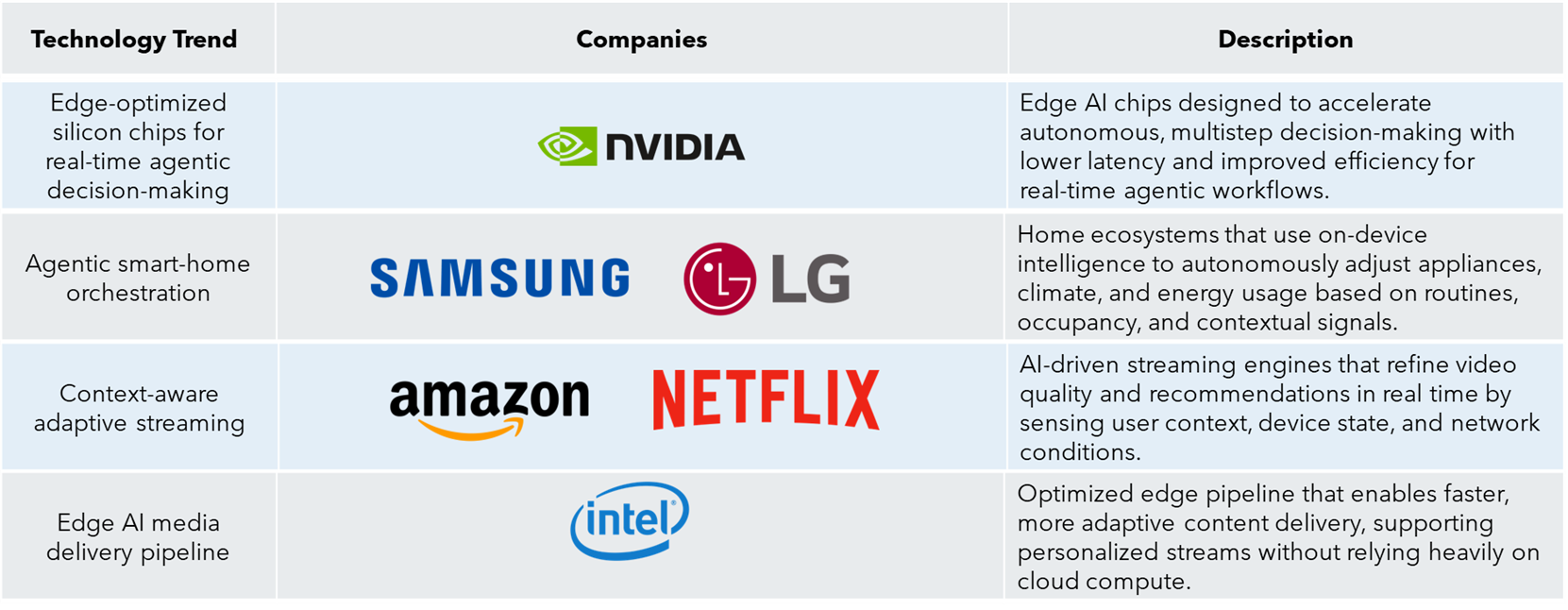
Enterprises need to prepare for agent-mediated customer journeys, where AI agents increasingly influence discovery, decision-making, purchase execution, and service requests. This requires redesigning engagement flows, hardening identity and permissions, and exposing “agent-ready” APIs and workflows that are secure, auditable, and predictable.
With the increasing adoption of robotics and automation in the manufacturing industry, robotics has shifted from futuristic demonstrations to credible production road maps.
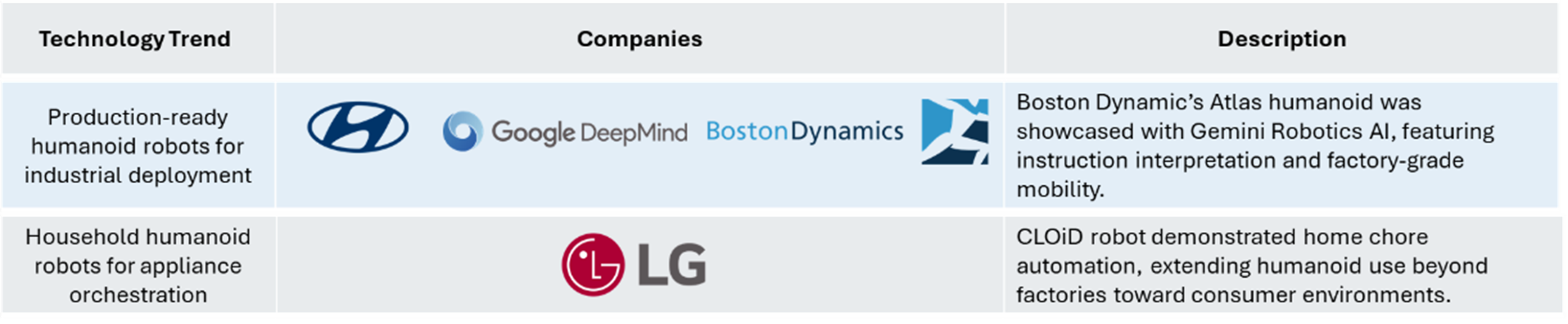
This implies that robotics is evolving into a design variable for operations—impacting productivity, safety, and labor models rather than remaining a lab experiment. Enterprises will need robotics readiness road maps that cover site design, workforce enablement, governance, safety, integration into OT workflows, and operating models that define where automation delivers ROI and where humans remain essential.
CES 2026 marked a shift in wearables from activity‑tracking gadgets to continuous, context‑aware health‑intelligence systems capable of interpreting physiological signals in real time. On‑device AI models evolved to provide early, predictive insights into stress, fatigue, metabolic shifts, and wellbeing trends—moving health monitoring beyond reactive metrics to proactive guidance.
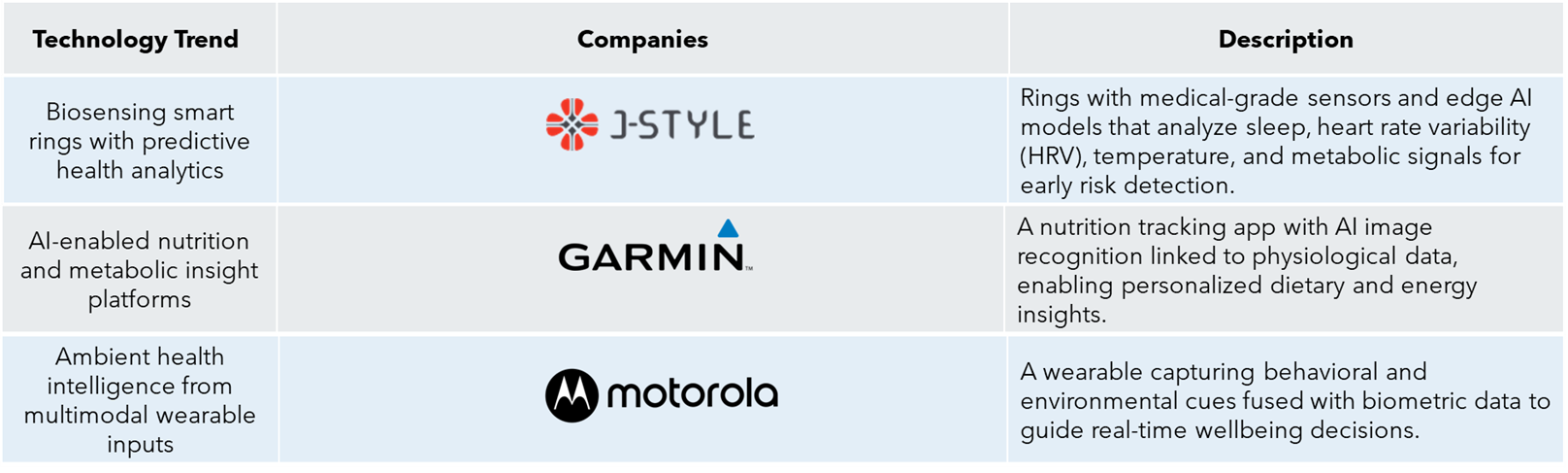
Cross‑device wellness demonstrations showed how wearables could automatically adjust lighting, sound profiles, or daily routines based on biometric patterns—linking circadian alignment, stress relief, and habit formation with real‑time data.
These advancements collectively signal that health signals are now predominantly generated outside clinical settings, creating new obligations for enterprises. Organizations across healthcare, insurance, employee wellbeing, and consumer electronics will need clear strategies for data consent, interoperability with care pathways, clinician trust in AI‑generated insights, and safeguards against false positives or ungoverned recommendations. As wearables evolve into ambient health companions, they are reshaping wellbeing into a continuous, personalized layer of daily life.
Automakers are transitioning from software-defined vehicles (SDVs) to AI-defined platforms, where real-time perception, prediction, and split-second decision-making are foundational capabilities.
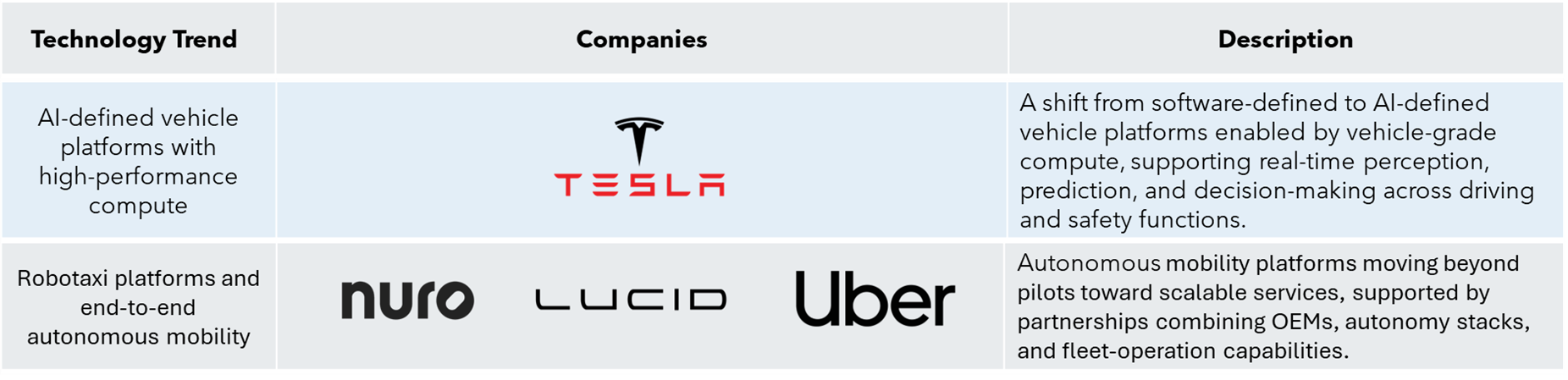
Enterprises need to consider vehicles as AI platforms by investing in vehicle-grade compute, scalable data pipelines, and over-the-air software operations, while strengthening safety validation through simulation and real-world testing. As robotaxi ecosystems mature (for instance, the Uber–Lucid–Nuro partnership), success will depend on regulatory readiness, fleet operating capability, and differentiated autonomy performance, not just new subscription features.
CES 2026 featured expanded discussion of AI agents, autonomous software entities capable of reasoning and decision-making with minimal human intervention, and digital twins and virtual replicas of physical systems used for simulation and optimization.
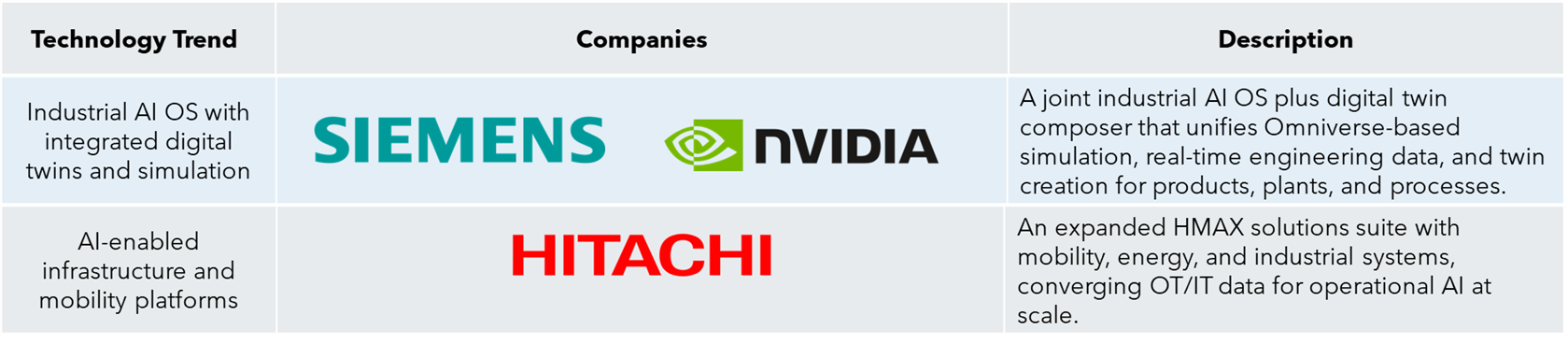
These technologies are moving beyond tech company showcases into practical commercial deployment across energy, transportation, and healthcare sectors. Enterprises should act now by establishing scalable AI agents and digital twin programs with integrated OT/IT data foundations, governance guardrails, and simulation toolchains to unlock near-term gains in productivity, uptime, and decision quality across physical world operations.
At CES 2026, consumer AI advanced from basic assistance to proactive, context‑aware intelligence embedded across the home.
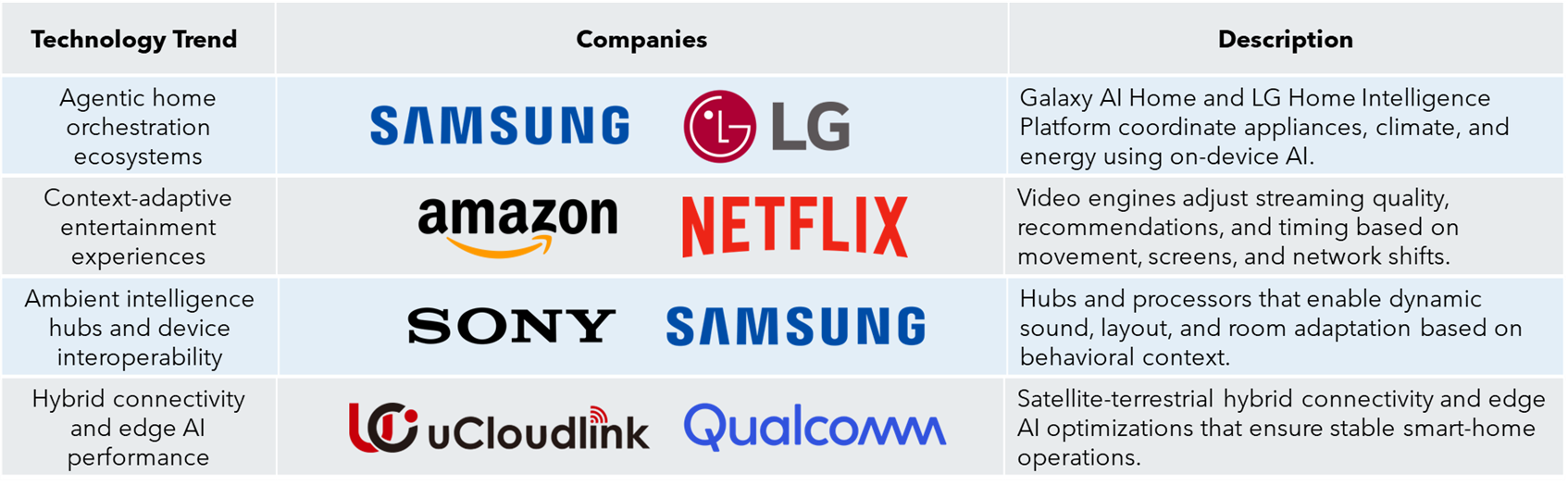
These advancements signal a shift toward self-optimizing living systems, where intelligence supports comfort, entertainment, energy management, and daily routines in the background. With stronger on‑device models and deepening interoperability, the home becomes an environment where AI operates quietly yet continuously to enhance everyday life.
CES 2026 signals a shift in competitive advantage from feature innovation to system execution. Enterprises will increasingly compete on their ability to deliver orchestrated outcomes across devices, environments, and services, while managing trust, safety, and economics at scale. The implication is that product teams can no longer operate independently from data, platform engineering, and governance functions—autonomy requires operational discipline. At the same time, CES 2026 indicated that “consumer-grade” experiences are becoming the benchmark across industries, raising expectations for speed, personalization, reliability, and low-friction engagement in enterprise contexts as well.
CES 2026 indicated that consumer technology is consolidating into cross-industry orchestration platforms spanning home, mobility, wellness, and entertainment. In this landscape, differentiation will depend less on isolated product features and more on system-level strengths, spanning integration depth, energy efficiency, trust controls, and experience continuity.
For enterprises, the immediate actions are clear:
Taken together, CES 2026 marks a pivotal shift—the focus of consumer technology has moved from simply adding intelligence to devices to creating dynamic systems that respond to people’s lives. Success will be increasingly determined by how well technologies coordinate, build trust, conserve energy, and connect across ecosystems, rather than just offering more features. In this new era, standout technologies will seamlessly blend into daily life, becoming almost invisible while remaining essential.
By Sahaj Kumar, Research Director, Amar Verma, Lead Analyst, Norkit Lepcha, Lead Analyst, and Jatin Gulati, Research Analyst, Avasant