
Starting a new job can be both exciting and challenging, especially when it comes to understanding the specifics of a new project. A well-structured project-specific onboarding process is essential for ensuring new hires are adequately prepared and confident in their roles. This article explores the importance of project-specific onboarding and how it differs from general company-wide onboarding. It details our approach to creating a dynamic and engaging onboarding experience, which includes comprehensive orientation, interactive training sessions, mentorship, gradual integration, and regular feedback. By prioritizing project-specific onboarding, we aim to foster a positive and productive work environment that benefits both the individual and the team, ultimately driving the project’s overall success.
Whether you’re a new employee at a new company or a current employee switching projects or areas, this change brings the thrill of joining a new team, jumping into new projects, and turning the next page in your professional journey. At the same time, it involves learning the specifics of the company and/or project and adapting to new environments and team dynamics. For some, it can feel like stepping into a spinning fair game, where constant motion and unpredictability require quick adaptation to avoid falling behind. For CIOs, COOs, and project leaders, effective onboarding is no longer a tactical HR function—it’s a critical enabler of productivity, team cohesion, and time-to-value.
In support of new employees, employers should recognize the importance of providing the right onboarding process. Not only does it benefit the company in the long term, but it also creates a “domino effect” where the excitement and eagerness to learn become contagious among the team. There are two types of onboarding: the first focuses on the new employee who hopes to gain general knowledge about the company and overall culture, including such things as workplace guidelines and systems tutorials. The second, which we have found to be less common but equally important, is project-specific training aimed at both the new employee jumping onto and new team as well as the current employee transitioning projects or teams. This second type involves providing a deep understanding of the operation, project, and people involved before diving into activities, so the new team members feel equipped and excited to start their journey.
While we recognize the importance of company-wide onboarding, we believe that project-specific onboarding is often an area where many organizations fall short. It is crucial to customize the onboarding process to address the unique requirements of each project, ensuring that new hires or new joiners are adequately prepared and confident in their roles. Project-specific onboarding offers a deeper understanding of the project’s objectives, methodologies, and expectations, which is essential for the success of both the individual and the team. In this case study, we will detail how we designed and structured our project onboarding process, leveraging intellectual property (IP) to create a cohesive and comprehensive framework that enables new hires to seamlessly integrate and confidently contribute to our project.
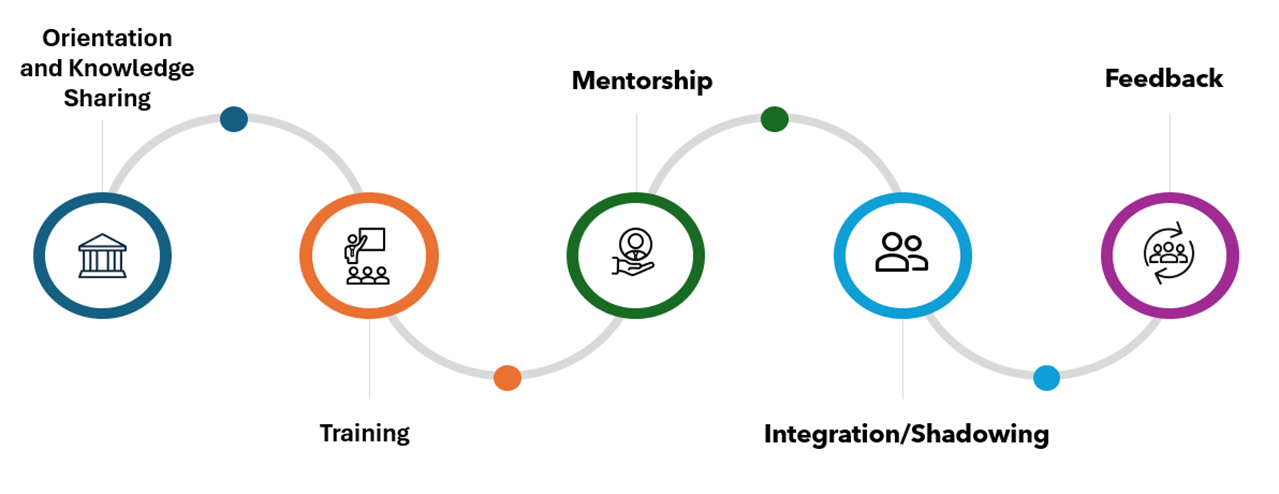
When crafting the project onboarding, it is important to make the process dynamic and engaging to ensure a smooth transition for new hires. There are five main key sections to a cohesive and informative project onboarding plan: orientation/knowledge sharing, training, mentorship, integration/shadowing, and feedback.
Overall, building from these 5 pillars of an effective project-specific onboarding process, new joiners can be successfully transitioned onto the project with both knowledge and confidence to positively and effectively contribute. By providing comprehensive and supportive onboarding experience, companies and project teams set new hires up for higher levels of success and initial work satisfaction.
The assimilation of new joiners is a pivotal aspect that dictates the rhythm of project progression. If not prioritized, project onboarding can be fragmented and chaotic for new joiners as they receive a patchwork of information dissemination, heavily reliant on individual meetings and word of mouth learning. This type of incohesive onboarding can result in project inefficiencies as well as long integration times for new team members.
In combination with the 5 pillars discussed previously, an excellent way to ensure efficient project onboarding is to utilize IP in the form of an Onboarding Manual or other self-study resource. The resource should be a meticulously curated guide that can serve as the bedrock of the onboarding process. Even further, the resource should be a distillation of practical wisdom, background context, and strategic tips that empower new joiners to navigate the project landscape with confidence. Additionally, this resource should be a living document, as it continually evolves, ensuring that it remains an indispensable reference guide for new joiners through their onboarding process and beyond.
Avasant’s SharePoint platform THINK, houses Avasant delivery archives and is used widely for providing guidance on the company processes. AvasantX is utilized as the single source for latest delivery templates, training, and proposal development.
In wrapping up, our project-specific onboarding process has been thoughtfully crafted to ensure new hires feel prepared and confident from day one. By tailoring the onboarding experience to meet the unique needs of each project, we go beyond general company knowledge to provide a deeper understanding of project objectives and expectations. Our approach includes a comprehensive orientation, interactive training sessions, and a strong mentorship program, all designed to create a supportive and engaging environment. Gradually integrating new hires into ongoing projects and maintaining regular feedback sessions ensures a smooth transition and continuous improvement. The Onboarding Manual has been a strategic enabler, making essential information easily accessible and empowering new team members to contribute effectively right away. By prioritizing project-specific onboarding, we set the stage for individual and team success, ultimately driving the project’s overall success.
By Grace Melendez, Associate Director