Integrating IT procurement systems is more than a technical upgrade—it’s a strategic transformation that affects how teams work, how suppliers engage, and how value is delivered. Yet even the most well-designed integration can falter if change is mismanaged. Resistance, confusion, and poor communication often delay progress or derail outcomes altogether.
Successful integration depends on the ability to manage change deliberately, engage stakeholders early, and communicate with clarity and consistency. It’s not just about systems—it’s about people.
Avasant’s Change framework emphasizes that successful integration in IT procurement hinges on the alignment of strategy, structure, and culture. By anchoring change initiatives in a shared strategic vision, adapting organizational structures to support transformation, and cultivating a change-ready culture, the framework accelerates adoption, minimizes disruption, and ensures lasting impact.
This approach is reinforced by Avasant’s proprietary Digital Operating Model Framework™, which offers a structured lens for aligning digital capabilities, organizational processes, and governance. When embedded into procurement transformation initiatives, the framework serves as a holistic blueprint—ensuring that technology, talent, and operations are orchestrated to deliver enterprise-wide value. It enables organizations to move beyond isolated improvements and toward integrated, strategic outcomes that are sustainable and scalable.
See Figure 1: Avasant’s Transformation Journey
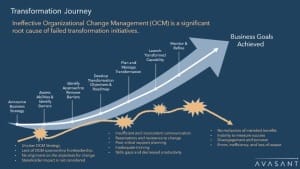
Effective change management ensures that the human side of integration is addressed alongside system implementation. Organizations that embed change management as a core component of their project strategy are more likely to achieve meaningful outcomes. Beyond meeting go-live deadlines, they realize sustained business value, enhancing compliance, streamlining operations, and driving measurable improvements in supplier performance.
The most successful leaders recognize that aligning teams behind a shared vision of change is not optional—it’s foundational. Securing stakeholder buy-in is a strategic imperative—driven by sustained engagement, clear expectations, and consistent delivery of value at every stage.
Communication during IT procurement integration must go beyond informing—it should influence, clarify, and motivate. Leading organizations take a proactive approach, creating communication frameworks that address core questions: Why is this change happening? How will it benefit the business? What does it mean for me?
This messaging should be woven into multiple channels—from executive briefings and town halls to team meetings and one-on-one coaching. The goal is to create a consistent drumbeat of communication that builds trust and addresses concerns head-on.
Equally important is transparency. Regular updates on progress, risks, and decisions allow stakeholders to stay informed and engaged. Teams are more likely to support a change they understand—and even more so when they’ve had a voice in shaping it.
Change champions play a pivotal role here. These advocates bridge leadership strategy and frontline reality. By surfacing concerns, offering feedback, and reinforcing messages, they accelerate acceptance and foster local ownership.
Stakeholder engagement cannot be reduced to a sign-off checklist. It’s a continuous process of dialogue and partnership. Models like ADKAR (Awareness, Desire, Knowledge, Ability, Reinforcement) provide a useful roadmap for supporting individuals through change, but the broader organizational approach must be inclusive from the outset.
Early involvement—particularly during the planning and design phases—creates alignment and uncovers friction before it becomes resistance. When people feel heard, they’re more likely to commit.
Executive sponsorship is another crucial success factor. Leaders must be visible, vocal champions of the initiative, not just sponsors in name. Their endorsement, particularly when tied to strategic outcomes and cultural values, sends a strong signal that integration is a business priority—not just an IT project.
A structured change impact assessment is essential for managing the human side of IT procurement integration. It clarifies how roles, behaviors, and business processes will shift—enabling teams to anticipate resistance, tailor training, and target communications with precision. Conducting this assessment early in the project lifecycle helps define the scale and scope of change for each stakeholder group. By mapping impacts across departments and job functions, organizations can avoid blind spots and plan proactively. The insights gained should directly inform the change strategy—prioritizing high-impact audiences, aligning resources, and building confidence across the enterprise. Avasant recommends embedding change impact assessments into the early design phases to ensure people strategies are aligned with operational shifts from the outset.
Training is often the first casualty of a compressed project timeline—but it’s the last thing organizations can afford to cut. A successful training program goes beyond system navigation; it equips individuals with the confidence and competence to adopt new ways of working and drive performance in a transformed environment.
Best-in-class training programs go beyond the technical. They include principle-based approaches—like Crew Resource Management and TeamSTEPPS—that emphasize communication, collaboration, and decision-making. These methods improve not only adoption but also team performance under pressure.
Simulation-based learning brings an added layer of realism. By allowing users to test scenarios in a safe environment, simulations reduce uncertainty and help identify gaps before go-live. Post-implementation support, such as refresher courses and help desk services, ensure that the learning continues and performance stabilizes.
Resistance is inevitable—but it’s also manageable. Most pushback stems from fear: fear of failure, of job loss, or of increased complexity. That fear is often rooted in a lack of understanding.
Organizations that communicate value early and often tend to overcome resistance faster. Highlighting tangible benefits—cost savings, faster approvals, better supplier management—helps stakeholders see the upside. Showcasing success stories from other teams or prior projects also helps build momentum.
But communication alone is not enough. Stakeholders need to see their fingerprints on the solution. Co-design workshops, working groups, and pilot programs bring them into the process and reinforce that their expertise is valued.
Recognition matters too. Teams that feel acknowledged for their adaptability are more likely to sustain the change. Publicly celebrating milestones, rewarding early adopters, and tying participation to professional growth creates a positive feedback loop.
Ultimately, integrating IT procurement systems successfully requires a blend of technical execution and human-centered leadership. By embedding change management into the project lifecycle, organizations increase their chances of long-term success.
The path forward is clear: communicate with purpose, engage stakeholders, and invest in empowering training. Done right, IT procurement integration isn’t just a tech upgrade—it’s a catalyst for lasting transformation.
Nathan Pierre, Managing Consultant, Korea Gilreath, Associate Director, and David Acklin, Senior Director