

This RadarView™ assists higher education enterprises in developing a robust strategy by providing insights into industry trends, best practices, and digital transformation. It begins with an overview of the key trends shaping the market’s supply side and follows with an in-depth assessment of 14 providers offering digital services in higher education. Each provider profile includes an overview of its industry-specific solutions, a list of representative clients and partnerships, and brief client case studies. Each profile concludes with analyst insights on the provider’s practice maturity, investments, innovation, and partner ecosystem.
Why read this RadarView?
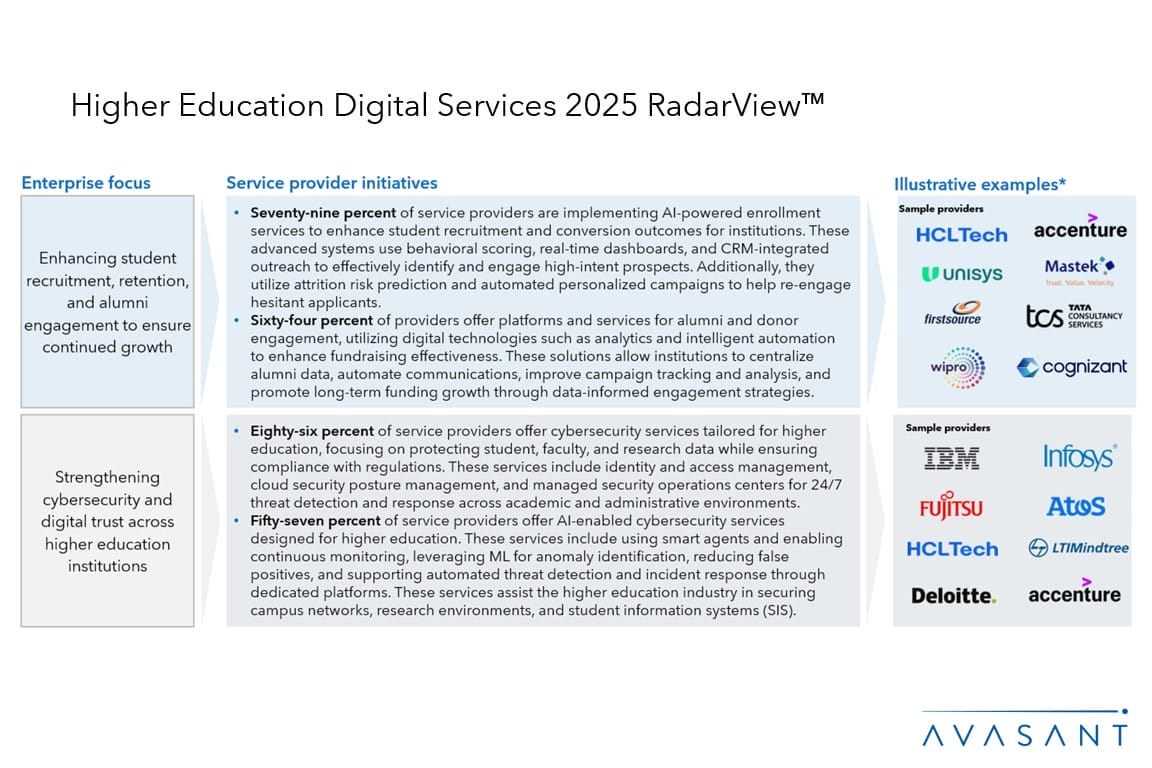
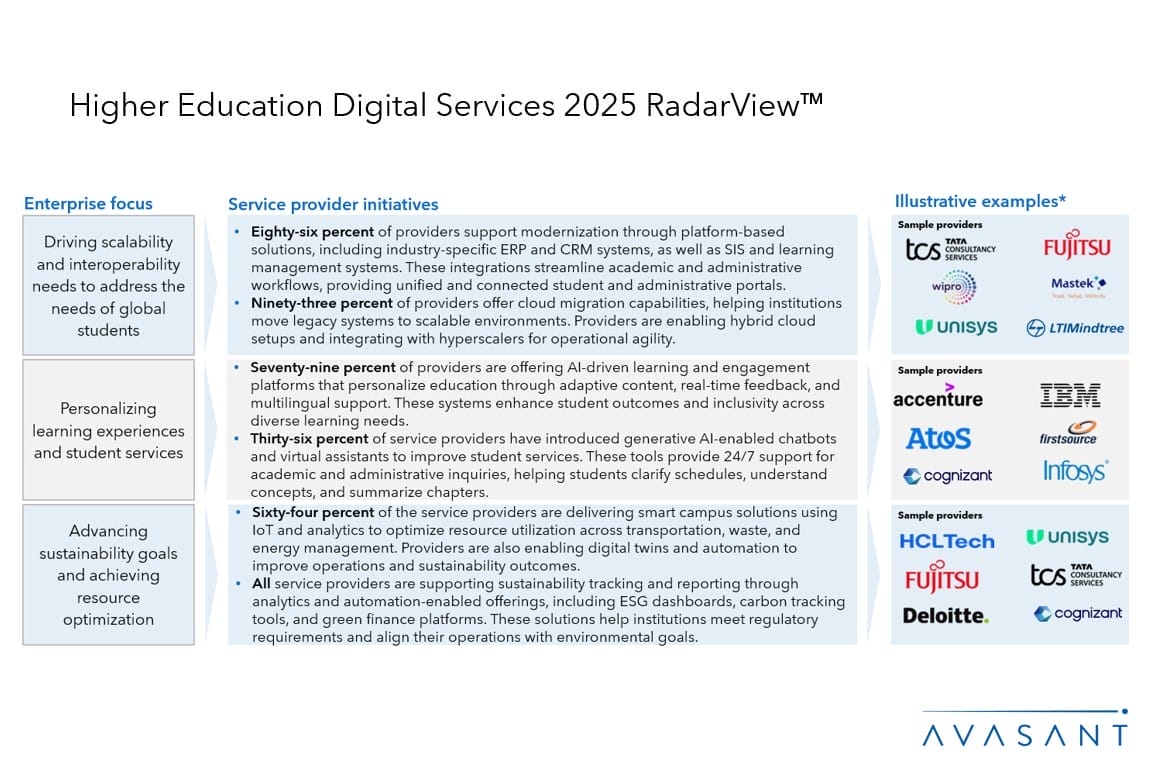
The higher education industry is responding to financial pressures, enrollment volatility, and rising cyber threats by accelerating digital transformation across academic and administrative functions. AI, advanced analytics, and immersive technologies are being deployed to enhance student recruitment, personalize learning experiences, and improve retention. As hybrid learning becomes the norm, universities are modernizing legacy infrastructure with cloud-native platforms to ensure scalability, interoperability, and seamless data exchange. At the same time, institutions are leveraging digital tools, such as virtual assistants, AI-powered chatbots, and AR/VR applications, to deliver more personalized, data-driven engagement. With increasing exposure to digital systems, cybersecurity has emerged as a strategic imperative, prompting the adoption of zero-trust architectures, AI-driven threat detection, and cross-sector collaboration to strengthen resilience. Finally, sustainability is also becoming central to institutional strategy, with investments in IoT, real-time analytics, and smart campus solutions aimed at reducing emissions, optimizing energy use, and aligning with global climate goals.
The Higher Education Digital Services 2025 RadarView™ highlights key supply-side trends in higher education and Avasant’s viewpoint on them. It aids higher education-based enterprises in identifying top service providers to assist them in their digital transformation initiatives. It also analyzes each service provider’s capabilities in technology and delivery support, enabling organizations to identify the right strategic partners.

Featured providers
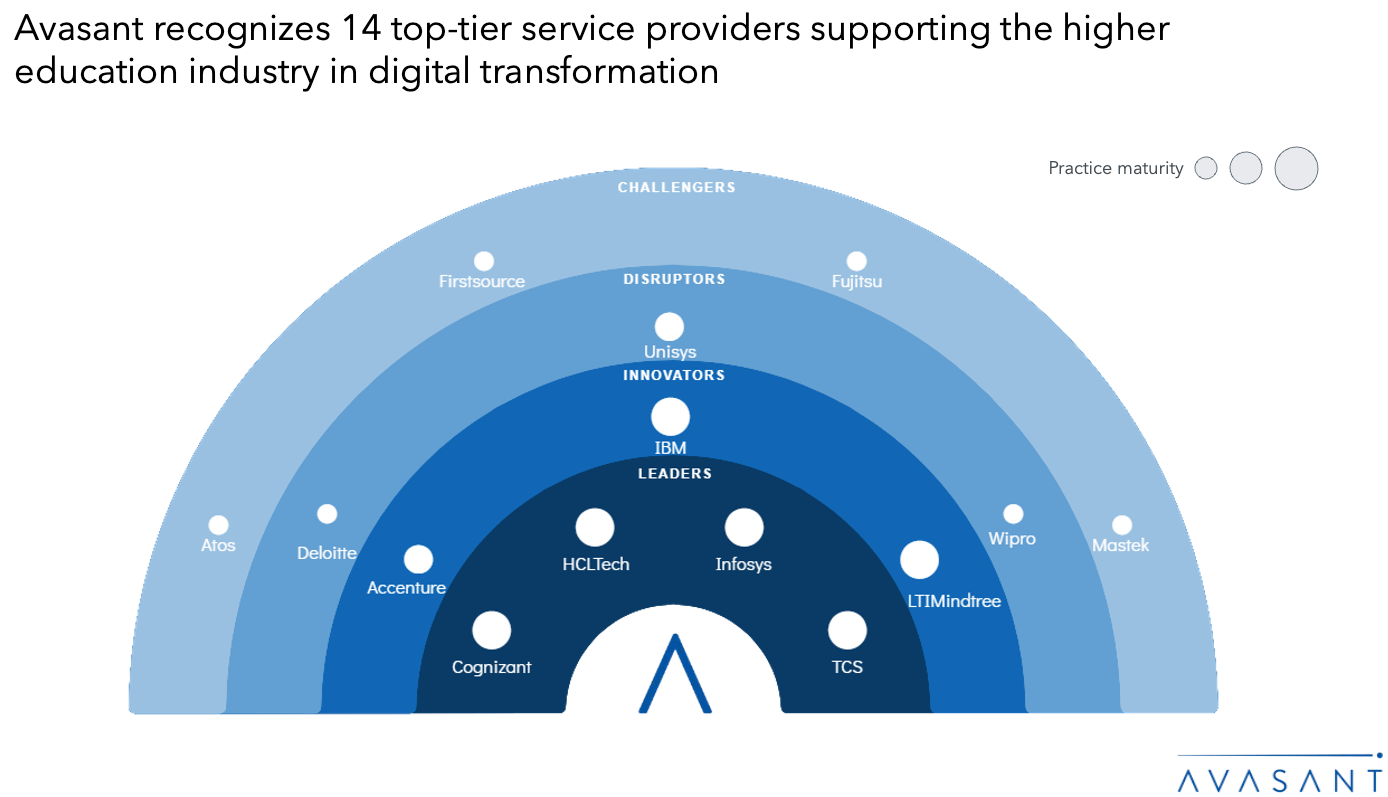
This RadarView includes a detailed analysis of the following service providers: Accenture, Atos, Cognizant, Deloitte, Firstsource, Fujitsu, HCLTech, IBM, Infosys, LTIMindtree, Mastek, TCS, Unisys, and Wipro.
Methodology
Our evaluation of service providers is based on primary input from the providers, focused briefings, public disclosures, validation from their clients, and Avasant’s ongoing market interactions. The assessment is across the three dimensions of practice maturity, investments and innovation, and partner ecosystem, leading to our recognition of those service providers that have brought the most value to the market over the past 12 months.
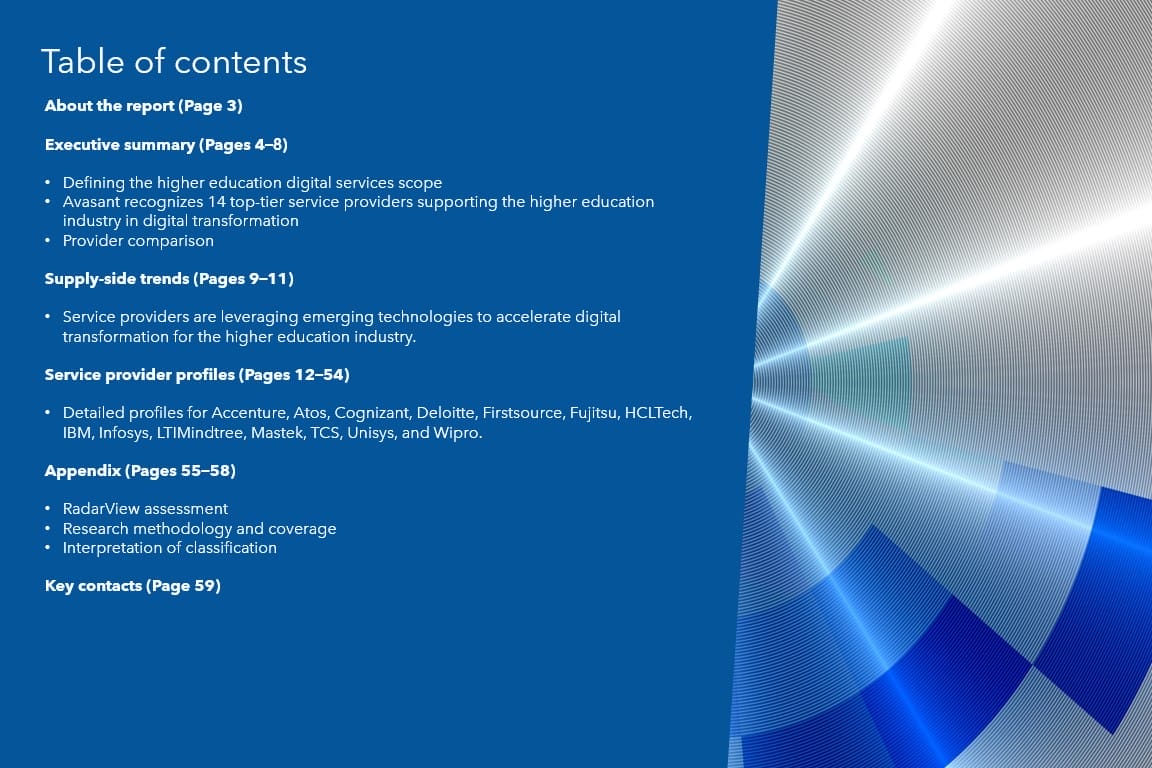
Table of contents
About the report (Page 3)
Executive summary (Pages 4–8)
-
- Defining the higher education digital services scope
- Avasant recognizes 14 top-tier service providers supporting the higher education industry in digital transformation
- Provider comparison
Supply-side trends (Pages 9–11)
-
- Service providers are leveraging emerging technologies to accelerate digital transformation for the higher education industry.
Service provider profiles (Pages 12–54)
-
- Detailed profiles for Accenture, Atos, Cognizant, Deloitte, Firstsource, Fujitsu, HCLTech, IBM, Infosys, LTIMindtree, Mastek, TCS, Unisys, and Wipro.
Appendix (Pages 55–58)
-
- RadarView assessment
- Research methodology and coverage
- Interpretation of classification
Key contacts (Page 59)
Read the Research Byte based on this report. Please refer to Avasant’s Higher Education Digital Services 2025 Market Insights™ for insights on the demand-side trends.