Reports
Showing 1329–1344 of 4763 results
-

The Evolution of Service Providers from AI Enablers to Ecosystem Orchestrators
Enterprises are accelerating the adoption of generative AI to achieve measurable productivity gains, fueling growth in large-scale transformations and managed service deals. At the same time, many are developing proprietary large language models to enhance contextual accuracy, regulatory compliance, and data sovereignty. While automation-led functions are scaling rapidly, compliance-heavy areas continue to advance cautiously. In parallel, national investments in sovereign AI are strengthening domestic compute and data ecosystems, reinforcing the foundation for enterprise-grade AI maturity.
November, 2025
-

The Evolution of Synchronous AI Agents: Enterprise Adoption Trends and Strategies
The next leap forward is the rise of synchronous AI agents—self-learning systems capable of executing complex, end-to-end tasks from a single prompt. Avasant presents The Evolution of Synchronous AI Agents: Enterprise Adoption Trends and Strategies report in this context. This study is based on in-depth interviews with over 60 industry leaders, including C-level decision-makers, advisors, providers, and tech vendor executives. It offers recommendations for enterprises to accelerate adoption while addressing associated risks and challenges. The report delves into the evolution of synchronous AI, adoption timelines, and industry priorities while uncovering key challenges, opportunities, and strategic considerations, including workforce strategies and outsourcing impacts.
January, 2025
-

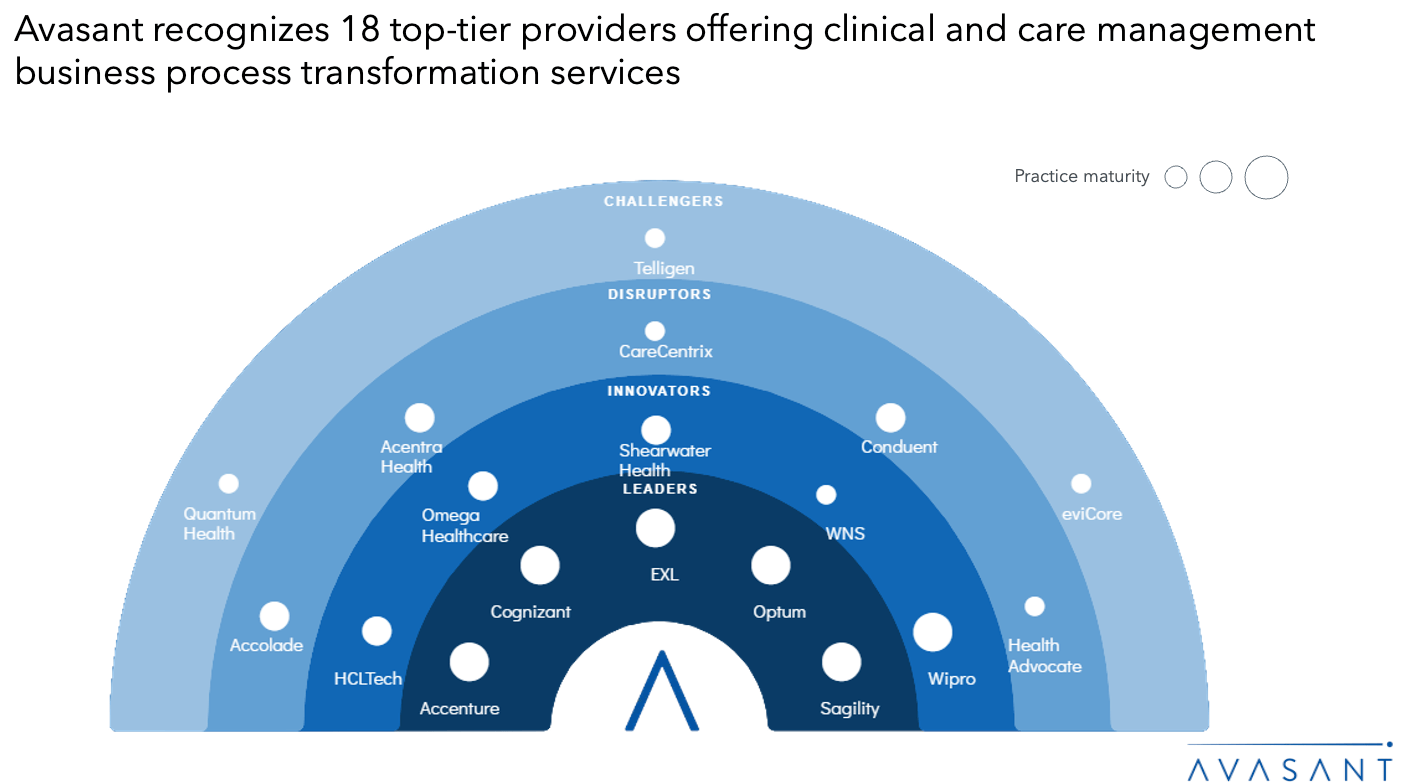
The Evolving Future of Clinical and Care Management: From Utilization to Intelligence-driven Care
Clinical and care management has undergone a fundamental shift in recent years, moving from reactive, utilization-focused models to proactive, patient-centered approaches that prioritize prevention, personalization, and care continuity. The integration of technologies such as generative AI, automation, analytics, and digital triage tools has enabled more precise risk stratification, faster prior authorizations, and smarter care coordination. Organizations are embedding clinical decision support tools and virtual care capabilities across the care continuum, improving both outcomes and operational efficiency. Looking ahead, the future of clinical and care management lies in building intelligent, scalable ecosystems where data flows seamlessly across providers, payors, and patients. This will be driven by AI-powered population health tools, adaptive care pathways, and real-time clinical insights that enable early interventions and reduce unnecessary utilization, ultimately reshaping how care is delivered and managed.
June, 2025
-

The Future of Customer Experience: Automation, Analytics, and Agent Enablement
The customer experience landscape is rapidly changing, and businesses must keep pace to exceed customer expectations. With customers becoming more demanding and switching providers when service deteriorates, call centers are evolving into contact centers and ultimately into customer experience (CX) centers, central to driving customer experience (CX). This report—coauthored by Avasant and HCL Technologies—explores how CX centers have evolved into the next frontier of customer experience, and it defines strategies to ensure a positive and seamless customer experience. We conclude with ways in which organizations can reimagine their relationships with CX outsourcing service providers to create the right incentives for themselves and their partners.
July, 2023
-

The Future of Software Licensing: The Importance of an Optimal License Model in Divestitures
When a company spins off a business unit, the spotlight often shines on financials, operations, and IT infrastructure. Yet, hidden within the fine print of software contracts lies a strategic lever that can make or break the success of a divestiture: licensing. In today's rapidly evolving digital landscape, where hybrid cloud, SaaS, and AI-driven platforms reign supreme, software licensing has transcended its role as a mere compliance checkbox. It has become a critical enabler of agility, innovation, and cost control. However, many organizations still underestimate the complexity and opportunity embedded in licensing decisions during a carve-out or spin-off.
July, 2025
-

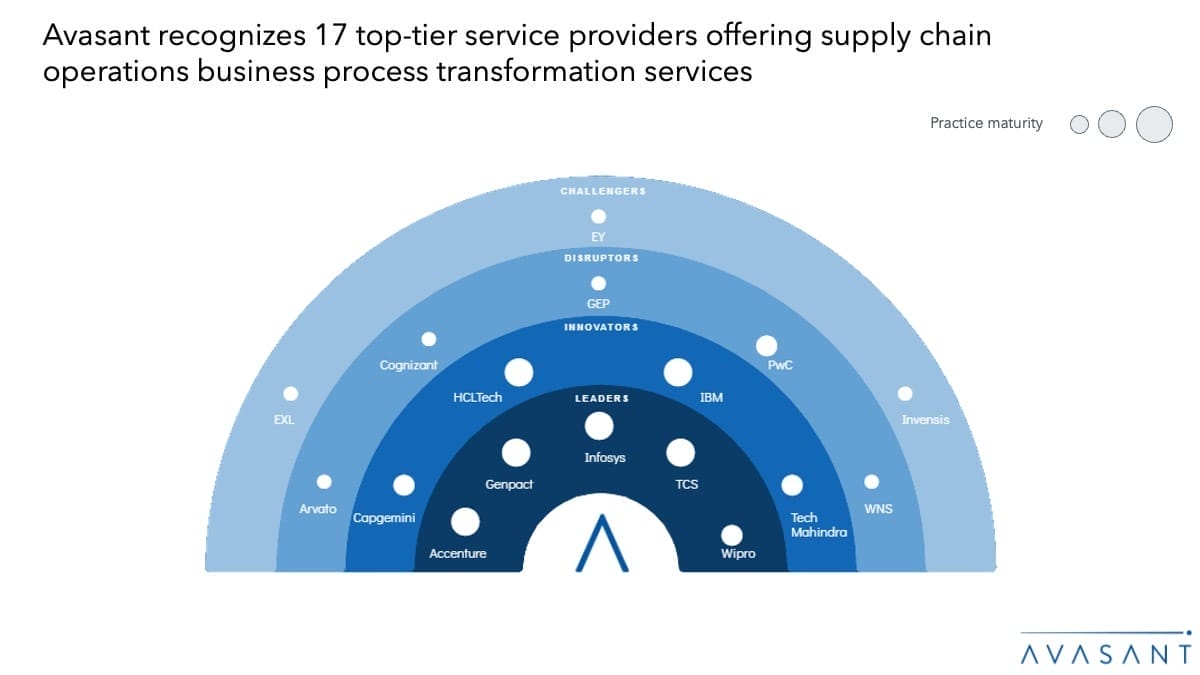
The Future of Supply Chain Blends Human Insight with Smart Automation
Over the past year, supply chain transformation has taken a more grounded turn. Rather than aiming for expensive tech-first reinventions, many organizations have focused on creating smarter, more adaptive operations that combine the best of technology with human insight. Faced with continued disruption, changing customer expectations, and stretched teams, enterprises have shifted their priorities toward solutions that improve decision-making. Technologies such as AI, control towers, and digital twins are being adopted not for innovation’s sake but to help people work better, automating repetitive tasks and offering visibility. At the same time, the nature of transformation engagements is evolving. Enterprises today are less interested in traditional activity-based outsourcing and more focused on output-based engagements. Success now depends on how well solutions fit into real workflows and drive agility, resilience, and long-term impact. The future is not just digital but human-centered and results-first.
May, 2025
-

The Future of Work: Integrating AI and Human Capital in a Hybrid Workforce
As the nature of work continues to evolve at a rapid pace, driven by advancements in AI and digital technology, business leaders face the challenge of preparing their organizations for an inevitable transformation.
September, 2024
-

The Golden Age of America: Implications for Enterprises in Trump’s Second Term
President Donald Trump’s return to the White House on January 20, 2025, marked the beginning of a policy revolution that is reshaping the socioeconomic landscape of the United States. A mix of ambitious initiatives and polarizing decisions, these actions have already left a significant mark on enterprises operating in the region. From high-profile tech projects to dismantling diversity mandates, the administration’s “Build in America, by America” ethos signals a transformative era for businesses. Here is a closer look at key executive orders and their potential impact.
January, 2025
-

The Illusion of AI Sovereignty: Washington and Beijing Still Pull the Strings
A new wave of digital nationalism is sweeping through public policy and enterprise boardrooms. Countries including France, Saudi Arabia, the UAE, Singapore, and India are doubling down on sovereign AI. They are investing in localized data ecosystems, region-specific LLMs, national AI clouds, and stricter compliance regimes. No nation today enjoys absolute, full-stack AI sovereignty. Rather than chasing total independence, the trend is toward layered sovereignty: choosing which parts of the stack to control, influence, outsource, or codevelop. The sovereign AI game is not binary; it is composable. In the coming decade, national AI strategies will be defined not by what a country builds alone but by what it chooses to own, protect, and shape on its own terms.
June, 2025
-

The Impact of Broadcom’s Acquisition of VMware: Pricing and Licensing Changes, and Strategies for Mitigation
With VMware’s customer base facing up to 800% price hikes, Broadcom’s $69B acquisition has become a strategic inflection point for enterprise IT leaders. The shift has triggered widespread reevaluation of virtualization strategies, especially as Broadcom transitions VMware’s licensing from perpetual to subscription-based models. According to Avasant’s benchmark data, over 70% of enterprises are now actively exploring mitigation strategies, including hybrid cloud adoption and alternative hypervisor platforms,to offset cost escalations and maintain operational continuity. For organizations deeply embedded in VMware’s ecosystem, understanding these changes and responding with agility is no longer optional; it’s essential.
September, 2025
-

The Implementation of AI in Healthcare Requires an Extra Special Approach
AI has the potential to significantly enhance the quality, efficiency, and accessibility of health services. However, its adoption within the healthcare sector remains comparatively low. Deploying AI comes with significant challenges and risks, such as IT skill gaps, data privacy concerns, regulatory obstacles, ethical dilemmas, and human resistance. Business leaders must navigate these challenges effectively and adopt the best strategies, as AI and other advanced technologies are here to stay.
January, 2025
-

The Importance of a Diversified Revenue Cycle Management Outsourcing Strategy
Healthcare organizations must have a diversified RCM outsourcing strategy to ensure financial stability, operational resilience, and data security. The recent consulting engagement with a leading DSO demonstrated the practical benefits of a diversified vendor base as they leveraged external relationships to mitigate the impact of the Change Healthcare cyberattack. This incident serves as a compelling reminder of the potential consequences of single-vendor dependency, including disrupted cash flow, reputational damage, and compliance challenges. Healthcare organizations must proactively diversify their RCM outsourcing strategy to safeguard against unforeseen disruptions and maintain continuous, efficient revenue cycle operations. This approach enhances the organization’s ability to navigate crises and reinforces its commitment to providing uninterrupted, high-quality patient care.
June, 2024
-

The Importance of Being Data-Driven in Implementing an IT VMO within the Public Utilities Sector
Imagine a city where electricity never falters, water flows reliably, and communications are seamless. Behind these essential services lies a complex web of vendors—ensuring everything runs smoothly yet managing these crucial partnerships is no small feat. Public utilities face a daunting task: maintaining the reliability of their extensive vendor networks. In an era demanding uninterrupted service and stringent oversight, the stakes couldn't be higher. This is where an information technology vendor management office (IT VMO) emerges as a game-changer. Strategically centralized, the IT VMO orchestrates every facet of vendor interaction, from contract initiation, execution, and implementation to ongoing steady state management By capitalizing on data-driven methods, the IT VMO revolutionizes vendor management. Cutting-edge analytics and real-time insights elevate performance tracking and streamline contract oversight, propelling utilities toward operational excellence.
July, 2024
-

The Importance of Demand Management for Expanding Managed Services Scope
Managed service contracts are agreements between a service provider and a client that define the scope, quality, and cost of the services delivered. They are often used to outsource non-core functions, such as IT, to external vendors who can provide more efficiency, expertise, and innovation. However, not all organizations are able to leverage the benefits of managed service contracts to their full potential, especially when they lack proper demand management practices. This article will explore the case of a US-based utility that is attempting to expand the scope of work included in their managed service contracts, but faces challenges due to its funding model and demand management practices.
March, 2025
-

The IT Consultant’s Playbook: Human-Centered Success in IT Divestitures Why the Consultant’s Mindset Matters
As enterprises accelerate carve-outs to unlock value, IT divestitures have become strategic imperatives—demanding more than just frameworks. Divestitures can lead to significant financial and operational consequences. A failed divestiture, as seen with Meta's $262 million loss on the sale of Giphy due to regulatory pressure, contrasts sharply with successful ones. For instance, in 2023, Fidelity Information Services improved its financial standing and stock price by selling a 55% stake in Worldpay to GTCR for $11.7 billion, showcasing the strategic benefits of a well-executed divestiture
October, 2025
-

The Key to Navigating the Tides of Disruptive Technologies
Navigating the intersection of sustainable growth and disruptive technology is a critical challenge for modern businesses. At Avasant’s Empowering Beyond Summit (EBS), industry leaders Cynthia McKenzie, Tembi (Sibanda) Hommes, and Anish Sethi, moderated by Chitra Rajeshwari, explored strategies to balance innovation with sustainability. They discussed aligning operations with the UN's Sustainable Development Goals, ensuring global equity in technology access, and maintaining ethical standards. As McKenzie noted, the key is to harness technology to meet business goals without compromising ethical, social, and environmental responsibilities.
July, 2024