Areas of Interest
Content Type
Industries
- Aerospace and defense
- Banking, Financial Services, and Insurance
- Energy and Resources
- Federal Government
- Healthcare and life sciences
- High-tech and telecommunications
- Higher Education
- Media and entertainment
- Private equity
- Public Sector
- Retail and manufacturing
- Social Impact Institutions
- Travel and transportation
Technologies
- Artificial Intelligence
- Automation
- Blockchain
- Business and data analytics
- Cloud
- Customer relationship management (CRM)
- Cybersecurity
- Digital Services
- Enterprise resource planning (ERP)
- Human capital management (HCM)
- Internet Of Things
- Machine Learning
- Networking
- Supply chain management (SCM)
- Virtual reality/Augmented reality
Areas of Interest


Latest Reports

Banking Digital Services 2024 Market Insights™
The Banking Digital Services 2024 Market Insights™ assists organizations in identifying important demand-side trends that are expected to have a long-term impact on any digital project in the banking industry. The report also highlights key challenges that enterprises face today in this space.

Banking Digital Services 2024 RadarView™
The Banking Digital Services 2024 RadarView™ helps banking enterprises craft a robust strategy based on industry outlook, best practices, and digital transformation. The report can also aid them in identifying the right partners and service providers to accelerate their digital transformation in this space. The 106-page report also highlights top market trends in the banking space and Avasant’s viewpoint.
IT Spending Trends in Retail 2024
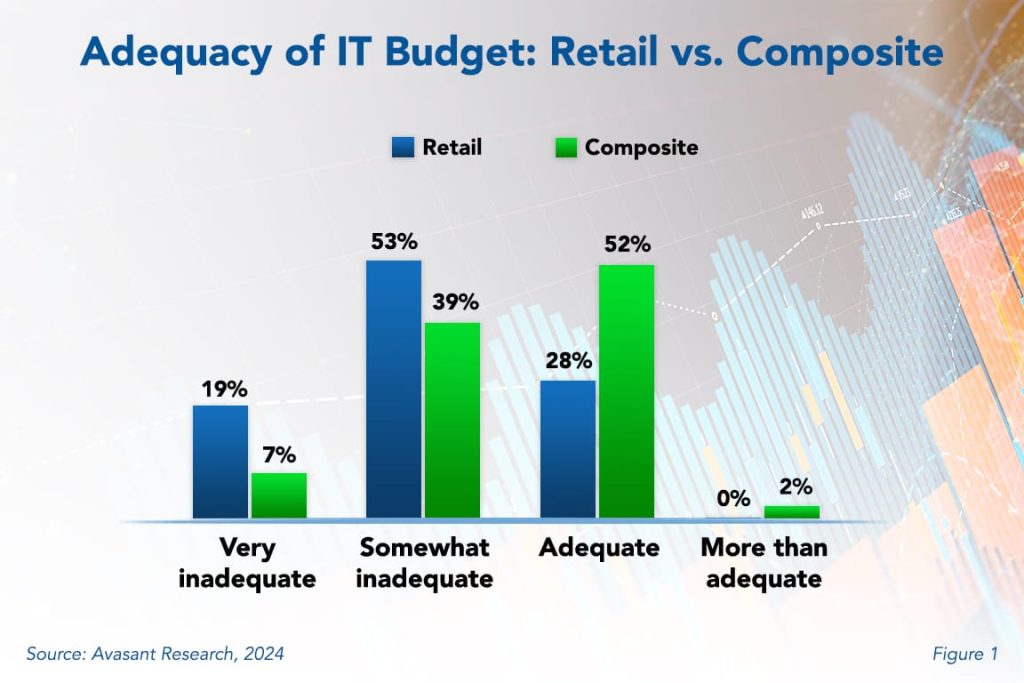
Retail CIOs are feeling the pressure. Retail is in a change-or-die mode, but most CIOs in the sector feel they are not being given the budget to make those changes. Retailers are looking to reduce costs to protect the bottom line and digitally transform to better serve their customers. This report analyzes the IT characteristics of this sector. Based on our latest benchmarking survey, it provides key metrics for this sector.
Current Fair Market Values June 2024
The Computer Economics Market Value Reports provide information on the most commonly traded machines and systems at the time the report is published. The values shown are the composites of a range of quotes acquired from sources within the industry deemed reliable, accuracy of the information presented is not guaranteed. Resources are eBay, Insight, NewEgg, CDW, ETB-Tech, Amazon, Savemyserver, TheServerStore, LoadBalancer, NetworkOutlet, Netsyst-Direct, TigerDirect, and others as well as online sales companies and appraisals.

Clinical and Care Management Services Business Process Transformation 2024 Market Insights™
The Clinical and Care Management Services Business Process Transformation 2024 Market Insights assists organizations in identifying important demand-side trends that are expected to have a long-term impact on any clinical and care management transformation project. The report also highlights the evolution of the clinical and care management functions and emerging priorities of healthcare organizations.
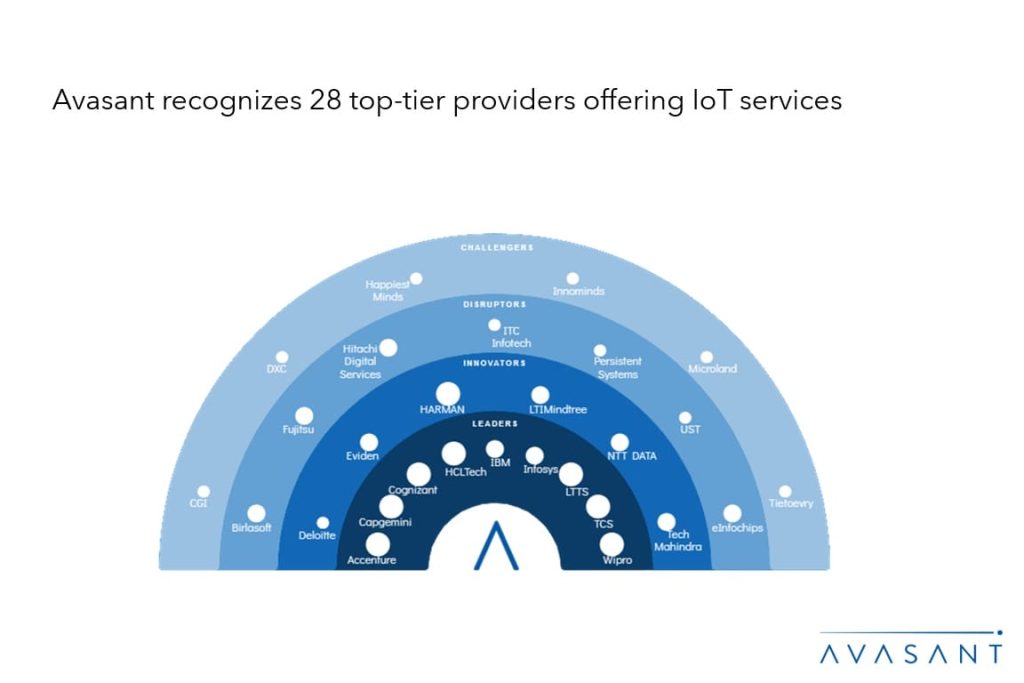
Process Transformation for Value-Based, Cost-Efficient, and Coordinated Clinical and Care Management Services
The healthcare industry is shifting towards a more coordinated and patient-centered approach. The global population is aging, raising the nurse demand and creating a nursing shortage. Due to rising healthcare costs, healthcare payers and providers are seeking ways to manage costs. These factors have led to a surge in demand for clinical and care management services, as evidenced by a 13% revenue increase and a 23% active client growth for clinical and care management service providers from December 2022 to December 2023.

Clinical and Care Management Services Business Process Transformation 2024 RadarView™
The Clinical and Care Management Services Business Process Transformation 2024 RadarView™ assists organizations in identifying strategic partners for clinical and care management business process transformation by offering detailed capabilities and experience analyses for service providers. It provides a 360-degree view of key clinical and care management business process transformation service providers across practice maturity, domain ecosystem, and investments and innovation, thereby supporting enterprises in identifying the right services service partner. The 57-page report highlights top supply-side trends in the clinical and care management space and Avasant’s viewpoint on them.
Project Managers are Crucial but Finding the Right Balance is Key
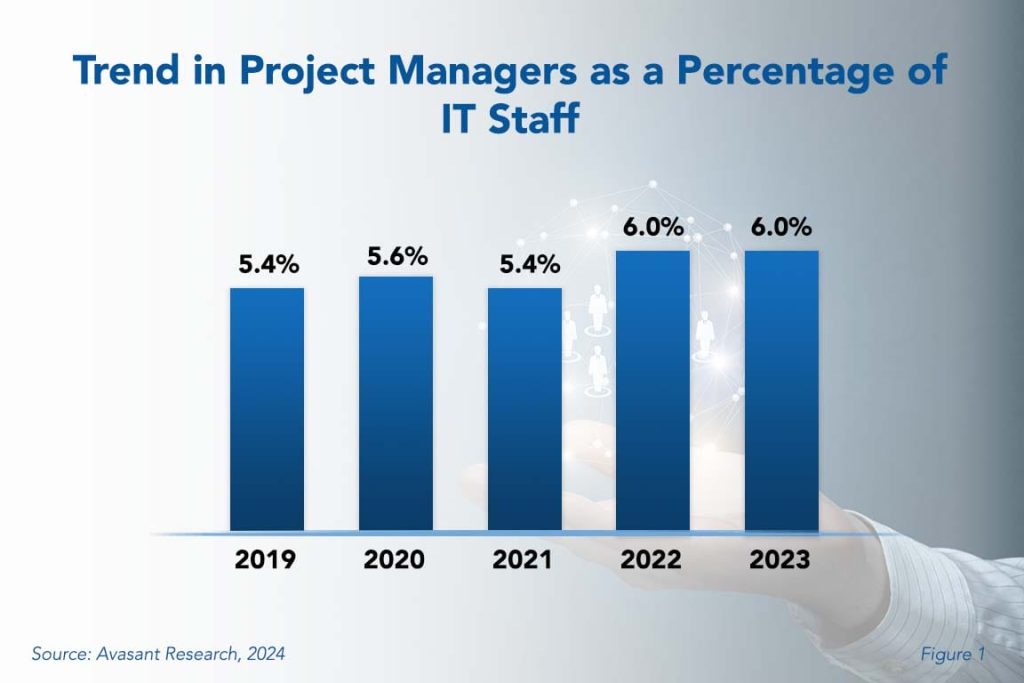
In IT organizations, the role of the IT project manager is critical. New technology adoption, regulatory compliance, outsourcing, remote/hybrid work, and the ever-present mandate to do more with less make it crucial that projects be adequately planned and controlled. Because of this constant need for change, rightsizing the project management staff is an ongoing priority for IT leaders. Luckily, it seems as though IT leaders are getting the idea. This Research Byte provides a summary of our full report on IT project management staffing ratios
IT Project Management Staffing Ratios 2024
Most enterprises require constant and rapid change. In IT organizations, the role of the IT project manager is critical. New technology adoption, regulatory compliance, outsourcing, remote/hybrid work, and the ever-present mandate to do more with less make it crucial that projects be adequately planned and controlled. Because of this constant need for change, rightsizing the project management staff is an ongoing priority for IT leaders.

Prismforce: Meeting the Needs of the Talent Supply Chain Ecosystem
IT and tech services companies with hundreds of development projects have always had difficulty matching developer skills with open jobs. One of the companies tackling this talent supply chain morass is Prismforce. Prismforce is a US-India startup that provides a SaaS platform designed to address the talent supply chain challenges faced by IT and tech services. Prismforce has already garnered the trust of over 20 top-tier IT services and tech companies, boasting about 500,000 users on its platform. It is a Tech Innovator to watch.