Areas of Interest
Content Type
Industries
- Aerospace and defense
- Banking, Financial Services, and Insurance
- Energy and Resources
- Federal Government
- Healthcare and life sciences
- High-tech and telecommunications
- Higher Education
- Media and entertainment
- Private equity
- Public Sector
- Retail and manufacturing
- Social Impact Institutions
- Travel and transportation
Technologies
- Artificial Intelligence
- Automation
- Blockchain
- Business and data analytics
- Cloud
- Customer relationship management (CRM)
- Cybersecurity
- Digital Services
- Enterprise resource planning (ERP)
- Human capital management (HCM)
- Internet Of Things
- Machine Learning
- Networking
- Supply chain management (SCM)
- Virtual reality/Augmented reality
Areas of Interest


Latest Reports
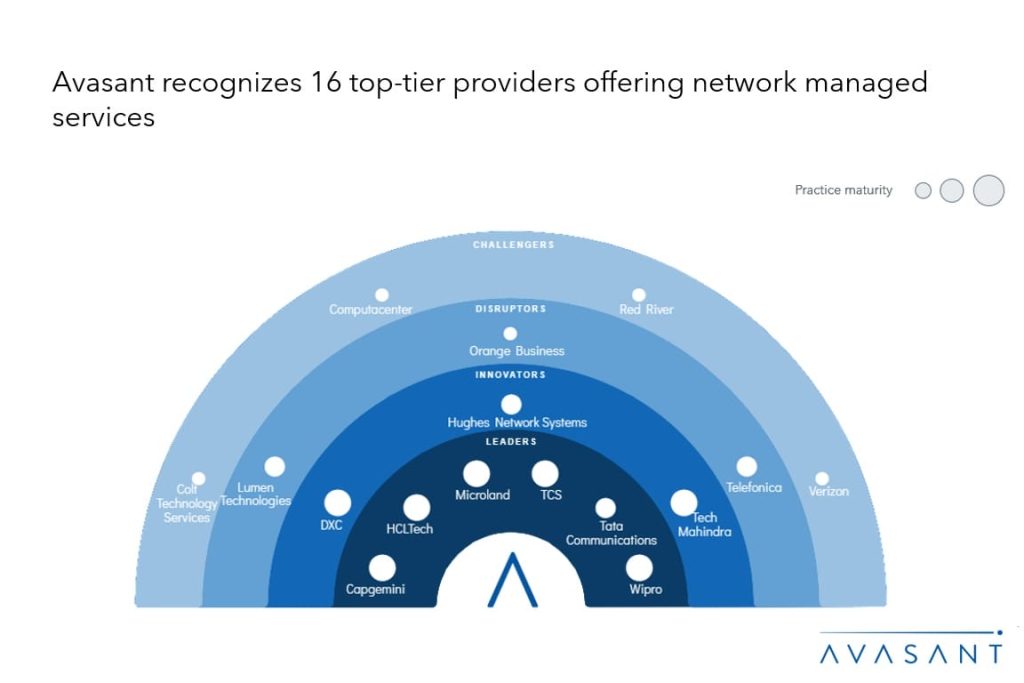
Network Managed Services: Optimizing Network Operations Effectively
Enterprises encounter several challenges in managing their network infrastructure, such as scalability issues, security vulnerabilities, and resource limitations. In today’s dynamic digital environment, it is crucial for businesses to overcome these challenges to adapt to evolving demands and remain competitive and resilient. This requires comprehensive assessments, strategic planning, and tailored technology implementation. Furthermore, effective network monitoring, maintenance, and troubleshooting are vital to ensuring seamless operations and minimizing downtime. Additionally, service providers are helping enterprises with proactive security measures, compliance adherence, and efficient resource utilization, empowering enterprises to focus on core objectives while effectively managing network complexities.

Network Managed Services 2023–2024 RadarView™
The Network Managed Services 2023–2024 RadarView™ assists organizations in identifying strategic partners for network modernization by offering detailed capabilities for service providers. It provides a 360-degree view of key network managed service providers across practice maturity, partner ecosystem, and investments and innovation, thereby supporting enterprises in identifying the right service partner. The 53-page report highlights top supply-side trends in the network managed services space and Avasant’s viewpoint on them.

Retail Digital Services 2024 Market Insights™
The Retail Services 2024 Market Insights™ assists organizations in identifying important demand-side trends that are expected to have a long-term impact on any digital project in the retail industry. The report also highlights key challenges that enterprises face today in this space.
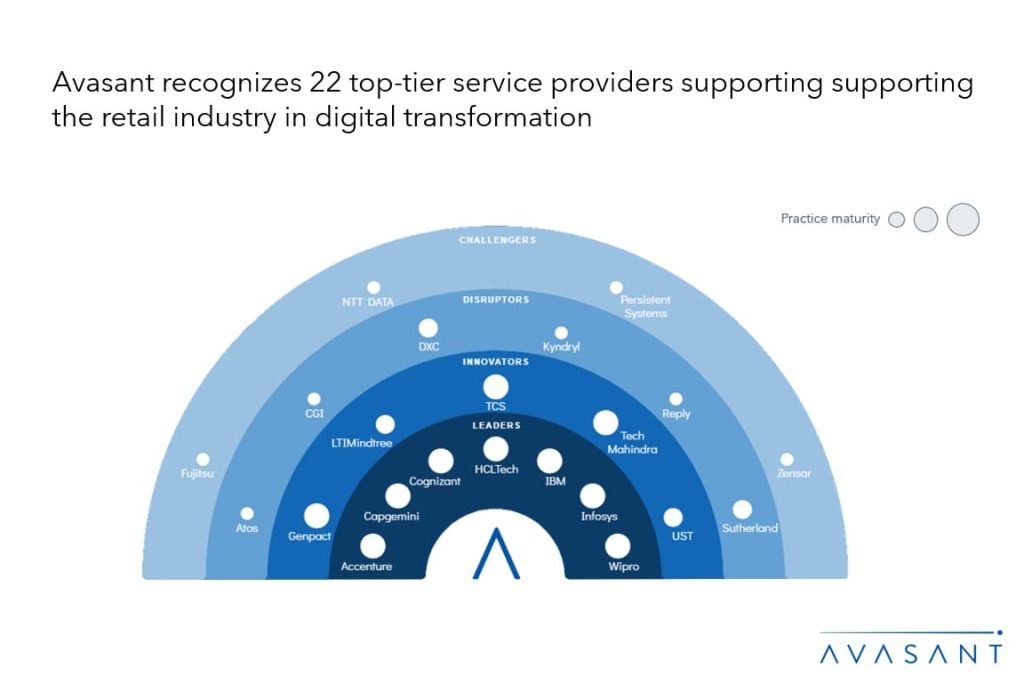
Retail Digital Services: Elevating Customer Experience Using Emerging Technologies
Retail enterprises worldwide leverage emerging technologies to provide a personalized and immersive customer experience. They also focus on enhancing profit margins by utilizing AI to improve operational efficiency and venturing into higher-margin businesses such as retail media networks. They are also realizing the significance of social media as a pivotal commerce channel and adopting measures to better connect with their audiences there. Increasing regulatory requirements also compel retailers to integrate sustainability into core business operations.

Retail Digital Services 2024 RadarView™
The Retail Digital Services 2024 RadarView™ helps retail enterprises craft a robust strategy based on industry outlook, best practices, and digital transformation. The report can also aid them in identifying the right partners and service providers to accelerate their digital transformation in this space. The 86-page report also highlights top market trends in the retail space and Avasant’s viewpoint.
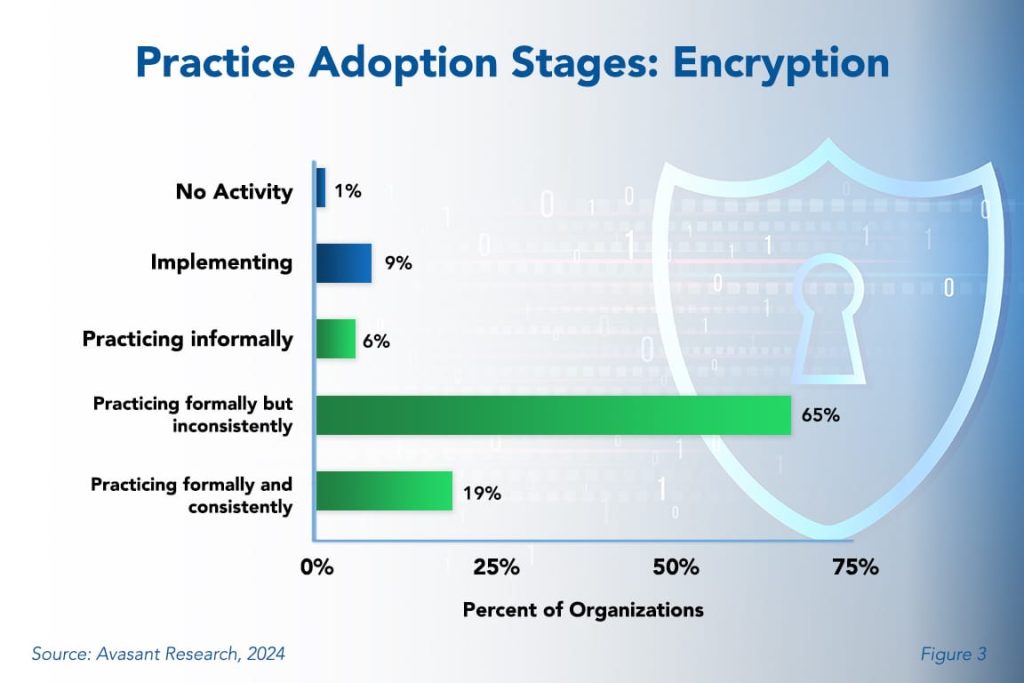
Inadequate Encryption Might Be a Recipe for Disaster
Each year, hundreds of millions of sensitive personal records are exposed by hackers and cybercriminals. Encryption is an essential security control and part of a company’s security policies and procedures. Yet, despite high practice rates, few IT leaders encrypt their data consistently. This Research Byte summarizes our full report, Encryption Best Practices.
Encryption Best Practices 2024
Encryption best practices protect sensitive or confidential information, both in storage and in transit. Data encryption software and algorithms translate data into another form or code so that only those with access to a secret key—a decryption key—can read it. Banking details, health records, financial information, or other sensitive personal information must be encrypted so it cannot be intercepted, accessed, or read.
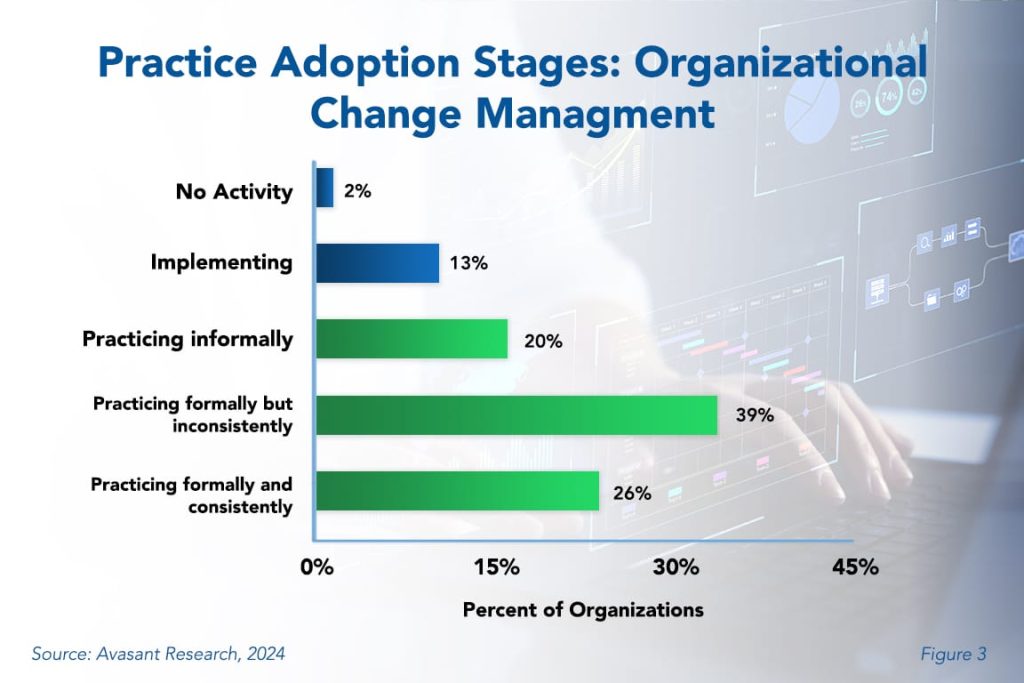
The Pace of Change is Accelerating But Change Management is Not Keeping Up
The pace of change in many companies is increasing as new technologies allow businesses to serve customers faster, better, and cost-effectively. In most industries, therefore, new systems are essential to compete in today’s global economy. However, it is not always as simple as buying a new system and expecting users to adopt it seamlessly. Many new projects fail without the effective use of change management. And some companies still fall behind in formal and consistent practice of change management best practices. This Research Byte provides a summary of our full report on organizational change management best practices.
Organizational Change Management Best Practices 2024
The pace of change in many companies is increasing as new technologies allow businesses to serve customers faster, better, and cost-effectively. In most industries, therefore, new systems are essential to compete in today’s global economy. Still, some companies fall behind in formal and consistent practice of change management best practices. These best practices can help them leverage these new systems more effectively. IT leaders are not as resistant to change as they once were, but inadequate training and support, unrealistic expectations, or a lack of governance and strategic leadership might hinder them.
IT Spending on the Rise Despite Uncertain Economic Future
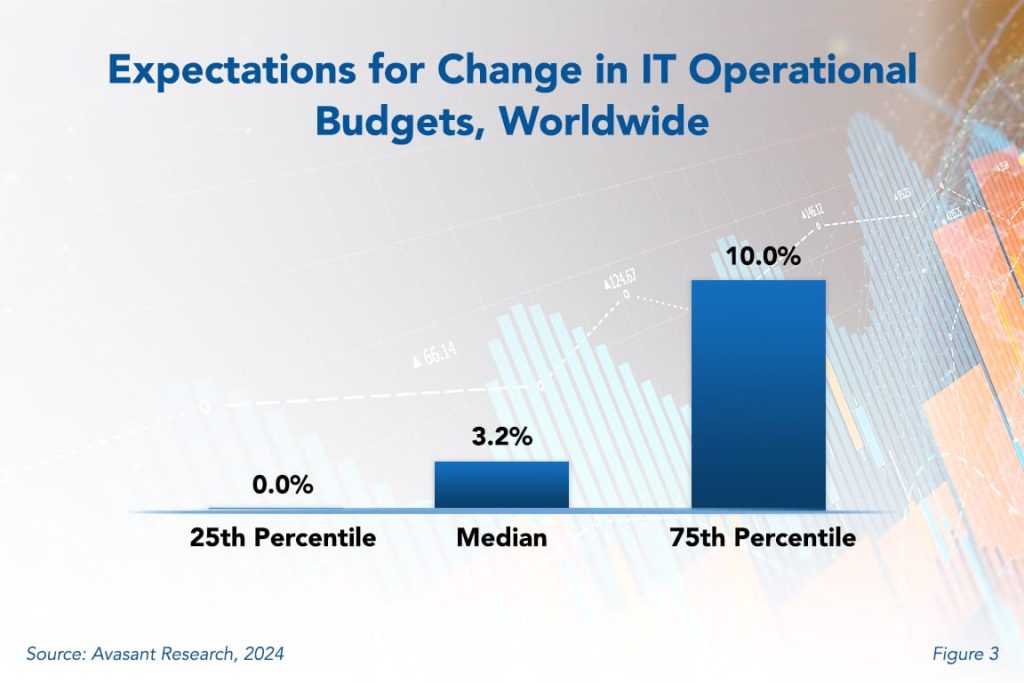
Our forecast for enterprise IT spending in 2024 is partly sunny, with a chance of strong headwinds. With stronger-than-expected economic data in the US and Europe and easing inflation, the world economy in most regions looks poised for the soft landing that central banks were aiming for. Our survey shows that IT budgets will continue to grow, and enterprises expect a slightly better year than 2023. The worldwide outlook is cautiously optimistic. This Research Byte summarizes the full study.