Areas of Interest
Content Type
Industries
- Aerospace and defense
- Banking, Financial Services, and Insurance
- Energy and Resources
- Federal Government
- Healthcare and life sciences
- High-tech and telecommunications
- Higher Education
- Media and entertainment
- Private equity
- Public Sector
- Retail and manufacturing
- Social Impact Institutions
- Travel and transportation
Technologies
- Artificial Intelligence
- Automation
- Blockchain
- Business and data analytics
- Cloud
- Customer relationship management (CRM)
- Cybersecurity
- Digital Services
- Enterprise resource planning (ERP)
- Human capital management (HCM)
- Internet Of Things
- Machine Learning
- Networking
- Supply chain management (SCM)
- Virtual reality/Augmented reality
Areas of Interest


Latest Reports
SAP S/4HANA Services 2025–2026 RadarView™
The SAP S/4HANA Services 2025–2026 RadarView™ assists organizations in identifying strategic partners for SAP S/4HANA adoption by offering detailed capability and experience analyses for service providers. It provides a 360-degree view of key SAP S/4HANA service providers across practice maturity, partner ecosystem, and investments and innovation, thereby supporting enterprises in identifying the right SAP S/4HANA services partner. The 74-page report highlights top supply-side trends in the SAP S/4HANA space and Avasant’s viewpoint.
Evolving Talent Strategies for AI-first Operations
Enterprises are rethinking their digital talent strategies as AI adoption reshapes work patterns and elevates the skills required to deliver at scale. Providers are expanding investments in engineering, data, and domain expertise while strengthening training infrastructure and partnering across the ecosystem to build job-ready talent. As AI takes on more routine activities, workforce roles are shifting toward higher-value judgment and oversight. In parallel, academia, government, and industry are working together to expand the pipeline of AI-skilled professionals.

Digital Talent Capability 2025 Market Insights™
The Digital Talent Capability 2025 Market Insights™ assists organizations in identifying important demand-side trends that can aid in building a digital talent strategy and help them chart an action plan to address the digital talent gap. The report also highlights Avasant’s viewpoint on key technology and talent-related trends that are expected to have a long-term impact on any digital transformation projects.
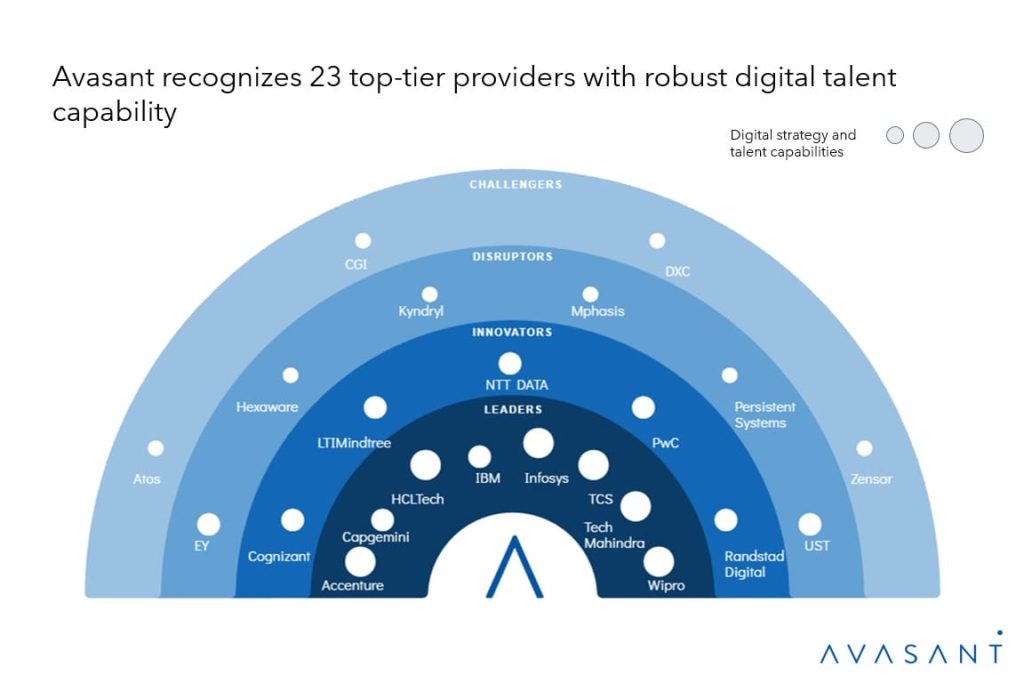
Digital Talent Capability 2025 RadarView™
The Digital Talent Capability 2025 RadarView™ helps enterprises identify strategic partners that bring the right digital talent expertise to accelerate digital transformation by providing detailed capabilities and experience analyses of service providers. It offers a 360-degree view of key service providers across digital strategy and talent capabilities, talent transformation, and talent investments and innovation. The 69-page report highlights top supply-side trends in the digital talent space and Avasant’s viewpoint on them.

Nordics Digital Services 2025–2026 Market Insights™
The Nordics Digital Services 2025–2026 Market Insights assists organizations in identifying important demand-side trends that are expected to have a long-term impact on any digital projects in the Nordics. The report also highlights key challenges that enterprises face today.
Nordics Digital Services: Driving Sustainable Growth with AI, Cloud Modernization, and GCC Expansion
Nordic enterprises are accelerating digital transformation by rapidly adopting AI, cloud, and automation to enhance efficiency, resilience, and innovation amid rising cost pressures and talent shortages. They are strengthening cybersecurity and sovereign cloud capabilities in response to increasing cyberattacks and stricter EU/Nordic regulations. Enterprises are also expanding global competency centers to scale digital engineering and modernize legacy systems. Governments and companies are jointly addressing advanced skills gaps through large-scale upskilling, academic partnerships, and AI-enabled workforce tools. With strong regional commitments to sustainability, Nordic enterprises are deploying digital solutions to reduce emissions, improve energy efficiency, and advance green innovation across sectors.
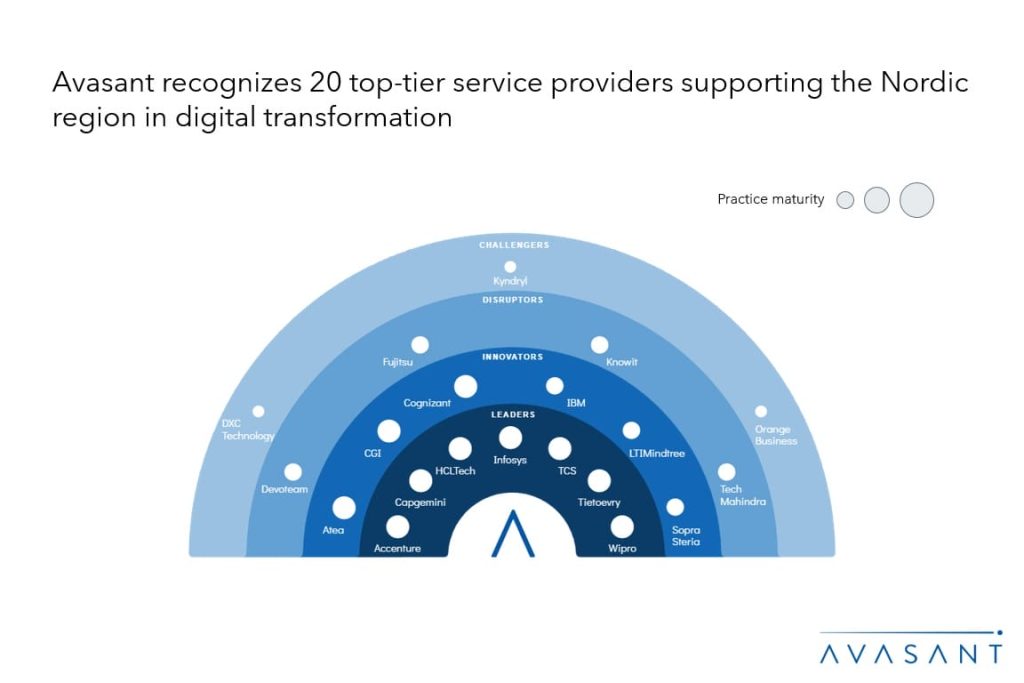
Nordics Digital Services 2025–2026 RadarView™
The Nordics Digital Services 2025–2026 RadarView can help enterprises in the Nordic region craft a robust strategy based on regional outlook, best practices, and digital transformation. The report can also aid them in identifying the right partners and service providers to accelerate their digital transformation. The 85-page report also highlights top market trends in the Nordics and Avasant’s viewpoint on them.
Residual Value Forecast December 2025
Our quarterly Residual Value Forecast (RVF) report provides forecasts for the following categories of IT equipment: desktop computers, laptops, network equipment, printers, servers, storage devices, and other IT equipment. It also includes residual values for other non-IT equipment in the following categories: copiers, material handling equipment (forklifts), mail equipment, medical equipment, test equipment, and miscellaneous equipment such as manufacturing machinery and NC machines. Residual Value Forecasts are provided for five years for end-user, wholesale, and orderly liquidation values (OLV) prices.
Fair Market Value Report December 2025
The Computer Economics Market Value Reports provide information on the most commonly traded machines and systems at the time the report is published. The values shown are the composites of a range of quotes acquired from sources within the industry deemed reliable, accuracy of the information presented is not guaranteed. Resources are eBay, Insight, NewEgg, CDW, ETB-Tech, Amazon, Savemyserver, TheServerStore, LoadBalancer, NetworkOutlet, Netsyst-Direct, TigerDirect, and others as well as online sales companies and appraisals.

Payroll Business Process Transformation 2025–2026 Market Insights™
The Payroll Business Process Transformation 2025–2026 Market Insights assists organizations in identifying important demand-side trends that are expected to have a long-term impact on any payroll transformation project. The report also highlights the evolution of the payroll function and the emerging priorities of payroll professionals.