Areas of Interest
Content Type
Industries
- Aerospace and defense
- Banking, Financial Services, and Insurance
- Energy and Resources
- Federal Government
- Healthcare and life sciences
- High-tech and telecommunications
- Higher Education
- Media and entertainment
- Private equity
- Public Sector
- Retail and manufacturing
- Social Impact Institutions
- Travel and transportation
Technologies
- Artificial Intelligence
- Automation
- Blockchain
- Business and data analytics
- Cloud
- Customer relationship management (CRM)
- Cybersecurity
- Digital Services
- Enterprise resource planning (ERP)
- Human capital management (HCM)
- Internet Of Things
- Machine Learning
- Networking
- Supply chain management (SCM)
- Virtual reality/Augmented reality
Areas of Interest


Latest Reports

Healthcare Payer Business Process Transformation 2025 Market Insights™
The Healthcare Payer Business Process Transformation 2025 Market Insights assists organizations in identifying important demand-side trends that are expected to have a long-term impact on any healthcare payer business process services project. The report also highlights the evolution of healthcare payer processes with the integration of emerging technologies such as Gen AI.
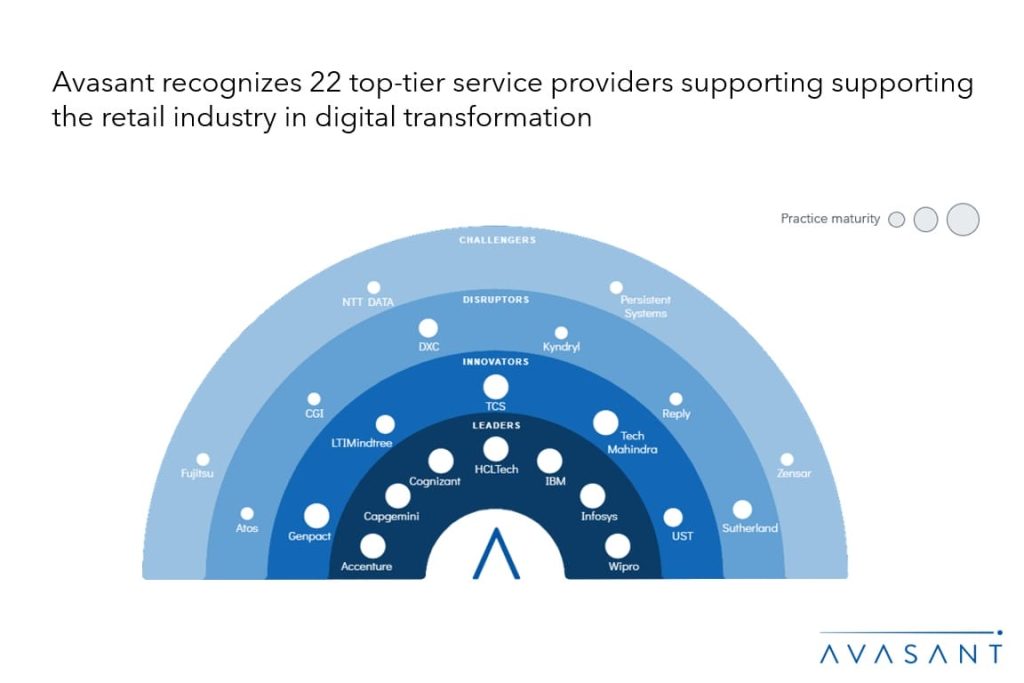
Healthcare Payer BPT: Accelerating Value-Based Care, Digital Transformation, and Member-Centric Strategies
Healthcare Payer Business Process Transformation 2025 RadarView™
The Healthcare Payer Business Process Transformation 2025 RadarView™ assists organizations in identifying strategic partners for healthcare payer business process transformation by offering detailed capabilities and experience analyses for service providers. It provides a 360-degree view of key healthcare payer business process transformation service providers across practice maturity, domain ecosystem, and investments and innovation, thereby supporting enterprises in identifying the right service partner. The 66-page report highlights top supply-side trends in the healthcare payer business process transformation space and Avasant’s viewpoint on them.

Procurement Alchemy: Turning Compliance into Human Rights Gold
Human rights due diligence in procurement is not just a moral imperative but a legal necessity. Companies are increasingly held accountable for ensuring their supply chains are free from human rights abuses. This growing awareness is driven by international standards and local laws that mandate businesses to take proactive steps in identifying, preventing, and mitigating human rights risks within their supply chains. The importance of human rights due diligence cannot be overstated, as it safeguards the dignity and rights of individuals while protecting companies from reputational and legal risks.

Exploring HCLTech’s advances in medical device engineering and healthcare transformation
In the past 12 to 18 months, GenAI has transitioned from pilot projects to full product implementation across the healthcare and life sciences sectors. It is accelerating drug discovery, optimizing clinical trials, and enhancing biomarker identification for precision medicine. AI-driven genomic data platforms are facilitating breakthroughs in personalized healthcare and disease research, while Industry 4.0 technologies are revolutionizing manufacturing through real-time analytics and small-batch production. Moreover, AI is bolstering supply chain resilience with predictive forecasting, blockchain transparency, and diversified supplier networks. On the commercial side, AI-powered engagement strategies, omnichannel marketing, and telemedicine are expanding direct-to-consumer models and improving patient adherence. This shift towards a digital, AI-driven healthcare system enables remote monitoring, self-care guidance, and proactive interventions, all of which contribute to better population health and care delivery while reducing administrative burdens and enhancing workforce efficiency.

UAE’s AI Gambit: From Bold Vision to a Global Contender
Dubai AI Week was not just another tech conference but an ecosystem-wide movement. Spanning over five days, it brought together every stakeholder in the AI value chain—from startups, big tech, and academia to government bodies, developers, coders, and students. The event captured the true spirit of how Dubai envisions its AI future: inclusive, action-driven, and globally connected.
Fair Market Value May 2025
The Computer Economics Market Value Reports provide information on the most commonly traded machines and systems at the time the report is published. The values shown are the composites of a range of quotes acquired from sources within the industry deemed reliable, accuracy of the information presented is not guaranteed. Resources are eBay, Insight, NewEgg, CDW, ETB-Tech, Amazon, Savemyserver, TheServerStore, LoadBalancer, NetworkOutlet, Netsyst-Direct, TigerDirect, and others as well as online sales companies and appraisals.
Residual Value Forecast May 2025
Our quarterly Residual Value Forecast (RVF) report provides forecasts for the following categories of IT equipment: desktop computers, laptops, network equipment, printers, servers, storage devices, and other IT equipment. It also includes residual values for other non-IT equipment in the following categories: copiers, material handling equipment (forklifts), mail equipment, medical equipment, test equipment, and miscellaneous equipment such as manufacturing machinery and NC machines. Residual Value Forecasts are provided for five years for end-user, wholesale, and orderly liquidation values (OLV) prices.

Google Cloud’s Yellow Brick Road: The New Way to Cloud with AI-First Stack
This research byte highlights the industry’s shift toward autonomous, task-oriented AI agents, with 88% of enterprises expected to adopt them in some capacity in 2025. However, only 10% will scale the deployment of these agents. At Google Cloud Next 2025, this transformation was symbolized through a generative AI reinterpretation of The Wizard of Oz, underscoring Google’s vision for AI-driven cloud platforms. CEO Sundar Pichai emphasized AI as a foundational layer, not an add-on, with innovations like Gemini-powered models and agents guiding enterprises along a modern “yellow brick road”—toward open, secure, AI-first cloud ecosystems.