Areas of Interest
Content Type
Industries
- Aerospace and defense
- Banking, Financial Services, and Insurance
- Energy and Resources
- Federal Government
- Healthcare and life sciences
- High-tech and telecommunications
- Higher Education
- Media and entertainment
- Private equity
- Public Sector
- Retail and manufacturing
- Social Impact Institutions
- Travel and transportation
Technologies
- Artificial Intelligence
- Automation
- Blockchain
- Business and data analytics
- Cloud
- Customer relationship management (CRM)
- Cybersecurity
- Digital Services
- Enterprise resource planning (ERP)
- Human capital management (HCM)
- Internet Of Things
- Machine Learning
- Networking
- Supply chain management (SCM)
- Virtual reality/Augmented reality
Areas of Interest


Latest Reports

Economic Booms and Business Growth: Balancing Opportunity and Risk
Boom times demand a startup mentality. Companies must innovate aggressively while maintaining control to thrive in intense competition. As markets surge and competition intensifies, executives must adopt an entrepreneurial mindset of risk-taking and adaptability to accelerate innovation. At Avasant’s recent 2024 Empowering Beyond Summit, Richie Etwaru, Chief AI Officer at Morbeus, emphasized the importance of this mindset. By embracing innovation and maintaining robust internal controls, companies can maximize benefits such as increased employment, higher revenues, and enhanced competitiveness. While challenging, this can lead to long-term sustainability and market leadership in dynamic economic environments. Successfully navigating these boom periods requires a strategic approach that balances seizing opportunities while mitigating risks.

Avoid the Click: Building a Cyber Resilient Culture to Navigate New Age Threats
The recent AT&T data breach sent shockwaves through the telecommunications and entertainment industries, highlighting critical vulnerabilities in cybersecurity protocols. This breach, which exposed sensitive customer information, underscores the urgent need for robust cybersecurity measures and heightened employee awareness within these sectors. It also brings to the forefront the concept of cyber resiliency—an organization’s ability to withstand, recover from, and adapt to cyber threats.

Telecom Digital Services 2024 Market Insights™
The Telecom Digital Services 2024 Market Insights™ assists organizations in identifying important demand-side trends that are expected to have a long-term impact on any digital project in the telecom industry. The report also highlights key challenges that enterprises face today in this space.
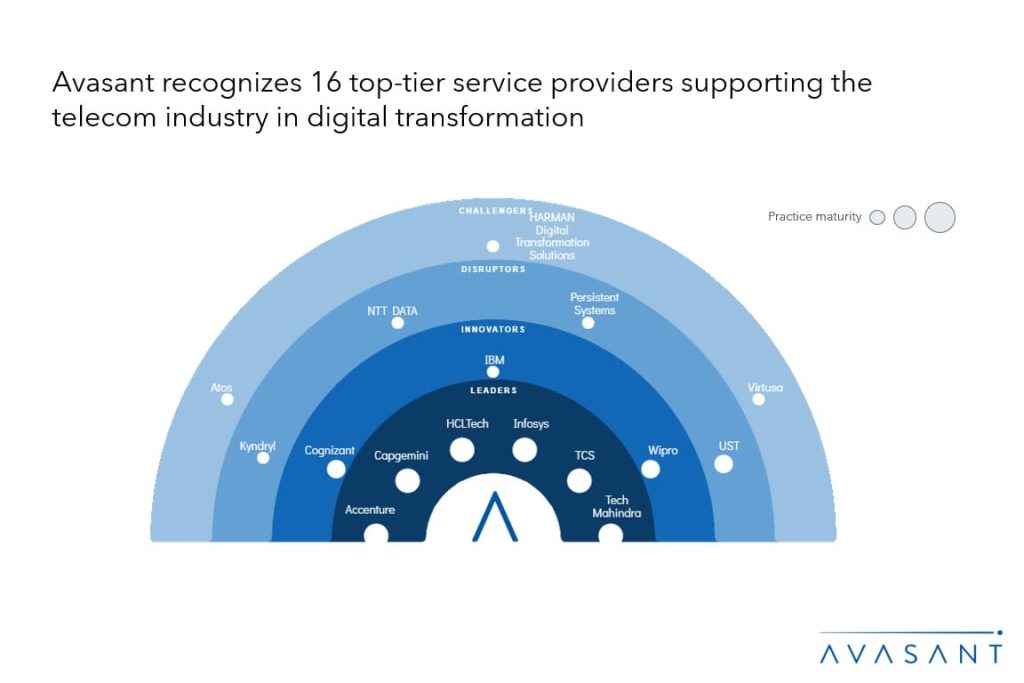
Telecom Digital Services: Creating New Revenue Streams Using Emerging Technologies
Telecom enterprises worldwide are leveraging emerging technologies to enhance customer experience and unlock operational efficiency in business processes. They are investing in 5G and edge computing to achieve higher connectivity speeds for new-age use cases such as remote patient monitoring and autonomous vehicles. Telcos are also doubling down on cybersecurity measures to comply with stringent regulations for customer data security. Lastly, they are evaluating the efficacy of generative AI for optimizing horizontal and vertical business processes.
Telecom Digital Services 2024 RadarView™
The Telecom Digital Services 2024 RadarView™ helps telecom enterprises craft a robust strategy based on industry outlook, best practices, and digital transformation. The report can also aid them in identifying the right partners and service providers to accelerate their digital transformation in this space. The 67-page report also highlights top market trends in the retail space and Avasant’s viewpoint.

Monetizing Service Provider Platforms: Holy Grail or a Case of Chasing a Chimera
It has been nearly two decades since I first started observing the technology industry as a bright-eyed and bushy-tailed young analyst. The one thing that has stayed constant in these years has been the service providers’ quest to bring nonlinearity to their revenues. Providers understand that hiring young engineers and staffing them on repeatable client projects quickly can be profitable, but costs are increasing and margins are shrinking. At that time, nonlinear revenue streams, which keep the costs stable even as revenue grows rapidly, will protect the operating margin of the provider and enable it to move to a new trajectory, as highlighted three years ago in our research byte – Leading with Products: The Next Stage in the Evolution of IT Service Providers. The holy grail for this nonlinearity has always been having a set of licensed software products. Leaders in service provider firms have looked on wistfully as product companies deliver stellar results quarter over quarter with exceptional margins. They then go on the quest to see how they can also build some product/platform revenue streams.

The Importance of Being Data-Driven in Implementing an IT VMO within the Public Utilities Sector
Imagine a city where electricity never falters, water flows reliably, and communications are seamless. Behind these essential services lies a complex web of vendors—ensuring everything runs smoothly yet managing these crucial partnerships is no small feat. Public utilities face a daunting task: maintaining the reliability of their extensive vendor networks. In an era demanding uninterrupted service and stringent oversight, the stakes couldn’t be higher. This is where an information technology vendor management office (IT VMO) emerges as a game-changer. Strategically centralized, the IT VMO orchestrates every facet of vendor interaction, from contract initiation, execution, and implementation to ongoing steady state management By capitalizing on data-driven methods, the IT VMO revolutionizes vendor management. Cutting-edge analytics and real-time insights elevate performance tracking and streamline contract oversight, propelling utilities toward operational excellence.

Unleashing the Potential of Your Technology Training Investment: 5 Strategies for a Seamless Implementation

Transforming the Future of Organizations: Insights from Industry Leaders on Digital Operating Models
The current tech landscape is characterized by surging technologies such as artificial intelligence, machine learning, cloud computing, and the Internet of Things. But though technological advancements and digital operating models promise significant benefits, challenges exist. These obstacles affect organizations’ efforts in achieving true agility and digital transformation. How then can businesses effectively navigate them to achieve their desired outcomes? This article delves into the key points from a panel discussion at Avasant’s recent Empowering Beyond Summit (EBS) 2024.
IT Spending Trends in Life Sciences 2024
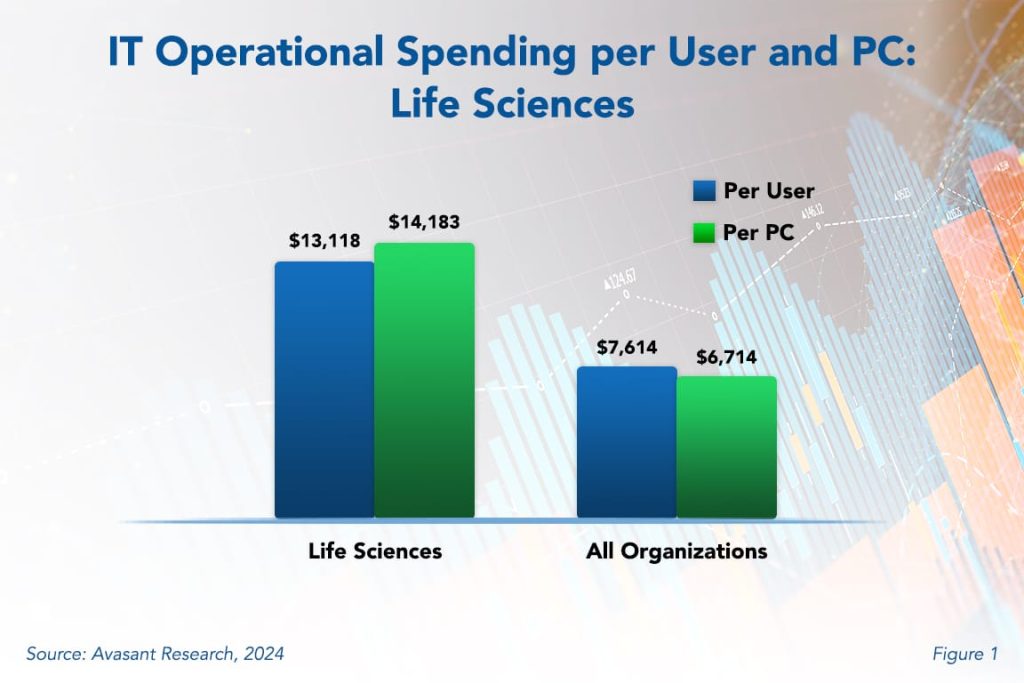
The life sciences sector is at a pivotal juncture, with IT spending trends reflecting a strategic embrace of digital technologies to address a myriad of challenges and opportunities. The past year has been marked by a concerted push toward digital transformation, with companies investing heavily in IT to drive innovation, streamline operations, and enhance patient outcomes.