Areas of Interest
Content Type
Industries
- Aerospace and defense
- Banking, Financial Services, and Insurance
- Energy and Resources
- Federal Government
- Healthcare and life sciences
- High-tech and telecommunications
- Higher Education
- Media and entertainment
- Private equity
- Public Sector
- Retail and manufacturing
- Social Impact Institutions
- Travel and transportation
Technologies
- Artificial Intelligence
- Automation
- Blockchain
- Business and data analytics
- Cloud
- Customer relationship management (CRM)
- Cybersecurity
- Digital Services
- Enterprise resource planning (ERP)
- Human capital management (HCM)
- Internet Of Things
- Machine Learning
- Networking
- Supply chain management (SCM)
- Virtual reality/Augmented reality
Areas of Interest


Latest Reports

Maneuvering Turbulent Times with AI-driven IT Services and Operations
In the current challenging economic environment, leading IT services providers are focusing on innovation, adaptation, and AI to ensure their future success. With the advent of generative AI, global IT services companies are investing in upskilling and reskilling the workforce and sharpening their focus by leveraging cloud and AI solutions to enhance service efficiencies. Some providers are investing heavily in AI research and development and focusing on platform-based operations to help enterprises reduce costs, improve efficiency, and accelerate innovation. We highlight the efforts of one such service provider, TCS, focusing on the TCS Analyst Day 2023 event held in October.

AI for Profit: How Generative AI is Reshaping Revenue Strategies
Most enterprises are leveraging generative AI for its exponential productivity gains across departments such as marketing, operations, and IT and for better alignment with user expectations. However, some innovative enterprises have initiated the use of generative AI to unlock new monetization prospects, allowing companies to strategically boost revenue streams and profitability. Enterprises across sectors such as high-tech, telecom, banking, and healthcare are leading the charge by introducing generative AI-powered solutions and services or adding new features as a service with a focus on policy, people, and partnerships. This, in turn, is driving other organizations to seek similar monetization opportunities.
Fostering Resilience in the Aerospace and Defense Sector through Digital Transformation
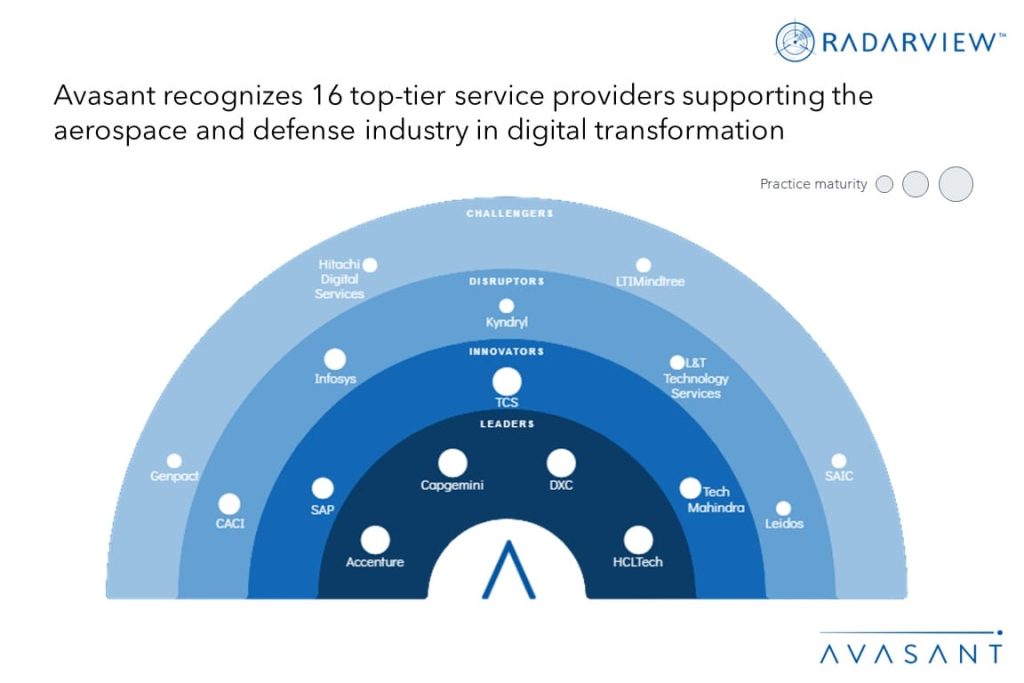
Aerospace and defense (A&D) enterprises are facing challenges arising from supply chain risks, regulatory compliance, increasing operational costs, heightened security measures, and pressure to meet sustainability goals. To address these critical issues, companies are actively harnessing the power of digital technologies to revolutionize their manufacturing processes, maintenance, repair, and overhaul (MRO) activities, and supply chain operations. Exploring advanced technologies, including generative AI, AR/VR, and digital twins, these organizations aim to enhance productivity and refine operational workflows. As this requires strong technological expertise and delivery capabilities, A&D enterprises are collaborating with service providers for digital transformation. Both demand-side and supply-side trends are covered in our Aerospace and Defense Digital Services 2023–2024 Market Insights™ and Aerospace and Defense Digital Services 2023–2024 RadarView™, respectively.

Aerospace and Defense Digital Services 2023–2024 Market Insights™
The Aerospace and Defense Digital Services 2023–2024 Market Insights ™ assists organizations in identifying important demand-side trends that are expected to have a long-term impact on any digital project in the aerospace and defense industry. The report also highlights key challenges that enterprises face today.

Aerospace and Defense Digital Services 2023–2024 RadarView™
The Aerospace and Defense Digital Services 2023–2024 RadarView™ can help aerospace and defense enterprises craft a robust strategy based on industry outlook, best practices, and digital transformation. The report can also aid them in identifying the right partners and service providers to accelerate their digital transformation in this space. The 69-page report also highlights top market trends in the aerospace and defense industry and Avasant’s viewpoint.

Can Amazon Q Be to Business Users and Developers What Q Is to Bond?
Amazon Q, introduced during AWS re:Invent 2023 in Las Vegas, is a corporate chatbot designed to automate content search and creation and provide summaries. It aids in handling enterprise knowledge bases and repositories while automating tasks such as ticket filing and case creation using generative AI and natural language processing, among others. This touches a variety of business user personas, including knowledge workers, data and analytics personnel, and call center managers and employees. It helps developers in debugging and enhancing code for improved performance. By automating alterations to source code, it significantly reduces the workload for developers. Although a late entrant, Amazon Q seems up for the challenge.
Nordics: Accelerating Data-driven Innovation through Technology
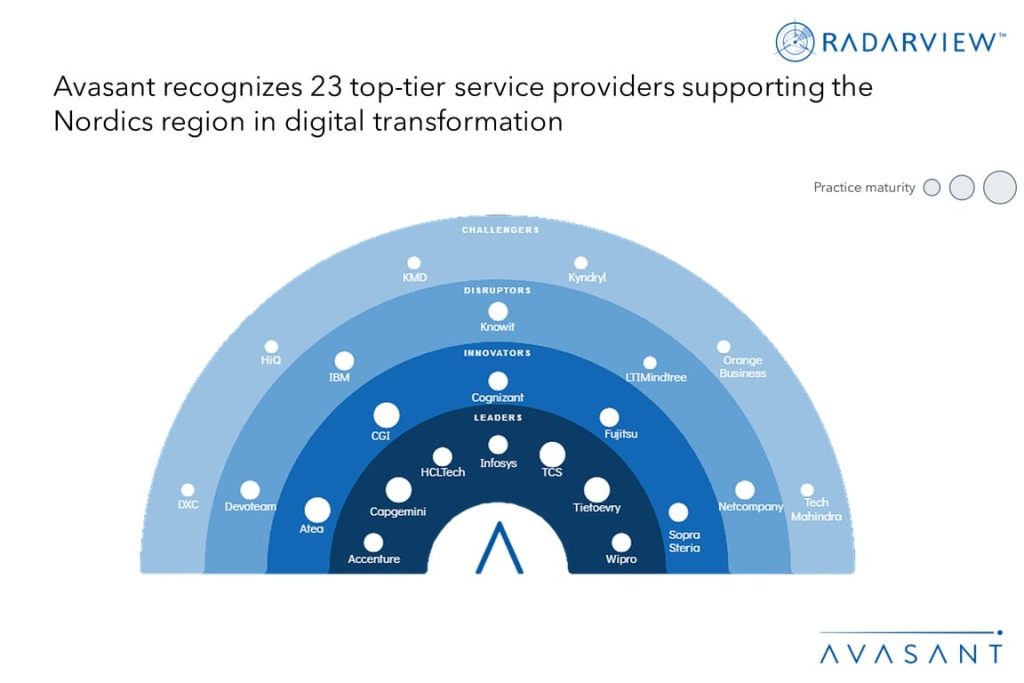
Nordic countries have been at the top of their game when it comes to digital competitiveness and sustainability goals. While governments are looking to further improve citizen services, establish smart cities, and enhance the ease of doing business, they are experiencing critical challenges such as facing digital talent shortages, ensuring cyber resilience, and protecting data sovereignty. Regional enterprises are proactively investing in advanced digital technologies such as AI, analytics, cloud, 5G, IoT, and AR/VR to fuel data-driven innovation, improve customer experience, and solidify their position as global firms while addressing national digitalization objectives. As this requires strong technological expertise and delivery capabilities, Nordic firms are collaborating with service providers for digital transformation. Both demand-side and supply-side trends are covered in our Nordics Digital Services 2023–2024 Market Insights™ and Nordics Digital Services 2023–2024 RadarView™, respectively.

Nordics Digital Services 2023–2024 Market Insights™
The Nordics Digital Services 2023–2024 Market Insights™ assists organizations in identifying important demand-side trends that are expected to have a long-term impact on any digital projects in the Nordic region. The report also highlights key challenges that enterprises face today.
Nordics Digital Services 2023–2024 RadarView™
The Nordics Digital Services 2023–2024 RadarView™ can help Nordic enterprises craft a robust strategy based on industry outlook, best practices, and digital transformation. The report can also aid them in identifying the right partners and service providers to accelerate their digital transformation in this space. The 90-page report also highlights top market trends in the Nordic region and Avasant’s viewpoint.

Current Fair Market Values December 2023
The Computer Economics Market Value Reports provide information on the most commonly traded machines and systems at the time the report is published. The values shown are the composites of a range of quotes acquired from sources within the industry deemed reliable, accuracy of the information presented is not guaranteed. Resources are eBay, Insight, NewEgg, CDW, ETB-Tech, Amazon, Savemyserver, TheServerStore, LoadBalancer, NetworkOutlet, Netsyst-Direct, TigerDirect, and others as well as online sales companies and appraisals.