Areas of Interest
Content Type
Industries
- Aerospace and defense
- Banking, Financial Services, and Insurance
- Energy and Resources
- Federal Government
- Healthcare and life sciences
- High-tech and telecommunications
- Higher Education
- Media and entertainment
- Private equity
- Public Sector
- Retail and manufacturing
- Social Impact Institutions
- Travel and transportation
Technologies
- Artificial Intelligence
- Automation
- Blockchain
- Business and data analytics
- Cloud
- Customer relationship management (CRM)
- Cybersecurity
- Digital Services
- Enterprise resource planning (ERP)
- Human capital management (HCM)
- Internet Of Things
- Machine Learning
- Networking
- Supply chain management (SCM)
- Virtual reality/Augmented reality
Areas of Interest


Latest Reports
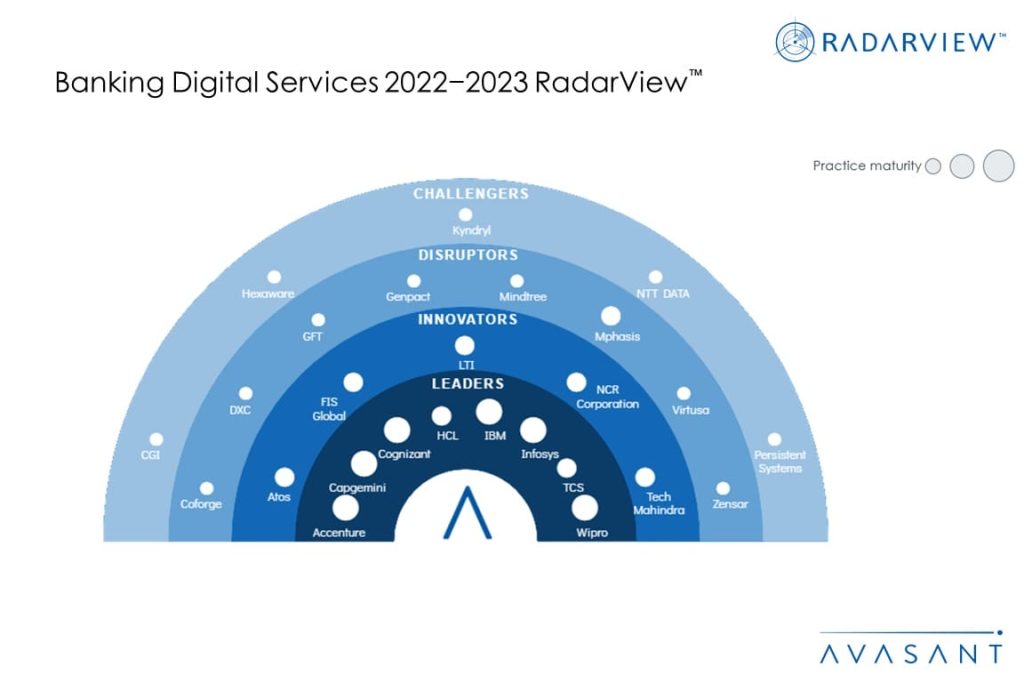
Digital Reinvention for Next-generation Banking Business Models
Macroeconomic factors such as volatile interest rates, financial and geopolitical crises, and lower GDP growth forecasts among advanced economies are putting significant pressure on banks . With the growth of fintech and digital-only banks, traditional banks are being challenged to reinvent themselves. Banks need to invest in artificial intelligence (AI) and data analytics in order to look at new business models and hyperpersonalized customer experience. These emerging trends are covered in Avasant’s Banking Digital Services 2022–2023 RadarView™.
Banking Digital Services 2022–2023 RadarView™
The Banking Digital Services 2022–2023 RadarView addresses banks’ needs and helps them identify and adopt the right technologies combined with appropriate implementation strategies. The 112-page report also identifies key service providers and system integrators to help banks in their digital transformation.
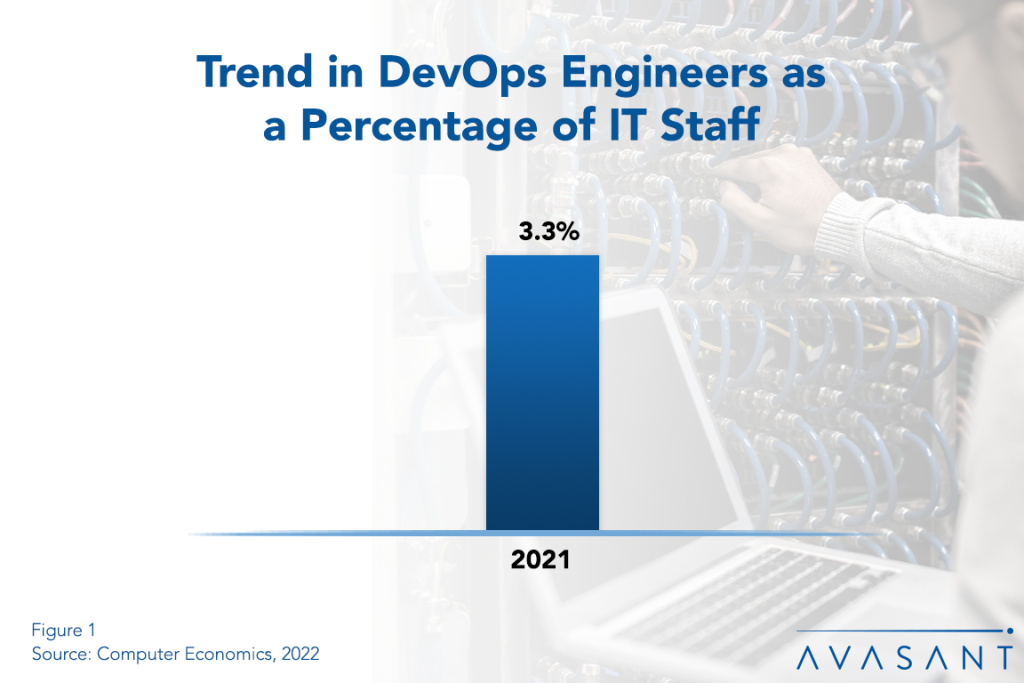
Factors Affecting DevOps Engineer Staffing Levels
DevOps is a natural extension of agile development into the deployment and operational phases of the system life cycle. It has been a way of life among modern, cloud-native software developers, and it is starting to become popular within enterprise IT organizations as well, especially those that invest in custom software development. Yet, even among such enterprises, DevOps engineers are a small percentage of the total IT staff. This Research Byte outlines the reasons for this.
DevOps Engineer Staffing Ratios 2022
DevOps is a natural extension of agile development into the deployment and operational phases of the system life cycle. It has been a way of life among modern, cloud-native software developers, and it is starting to become popular within enterprise IT organizations as well. This report provides metrics for benchmarking DevOps engineer staffing levels in the current environment. We provide four benchmarks by organization size and sector: DevOps engineering staff as a percentage of the IT staff, users per DevOps engineer, and applications per DevOps engineer. We conclude with recommendations on optimizing DevOps engineer staffing levels. (23 pp., 9 fig.)
Vendor Discount Report April 2022
The largest and best discounts are often only offered to the vendors’ best customers, and buyers may find it difficult to determine whether the discount offered is typical or whether a better deal can be negotiated. The Vendor Discounts Report is designed to give procurement personnel, lessors, lessees, and departmental manager’s insight and guidance regarding current discount structures on a variety of categories of equipment in the marketplace.
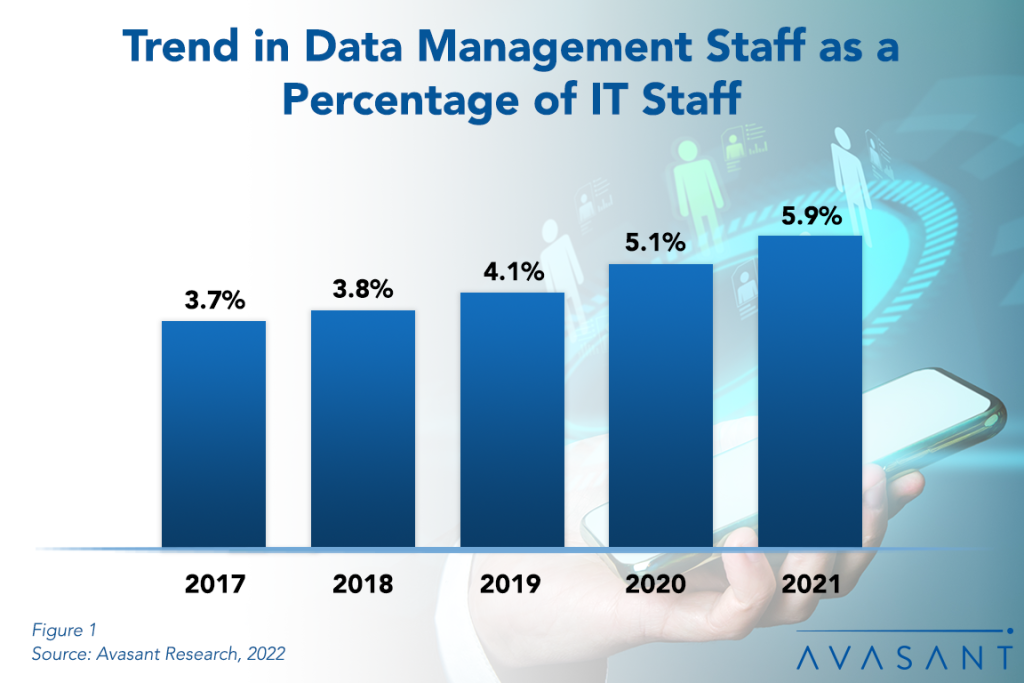
Exponential Data Growth Finally Spurs Demand for Data Management Staff
The data explosion continues to drive an increase in data management staffing. This Research Byte examines the reasons for the growing trend and provides a summary of our full report on data management staffing ratios.
Data Management Staffing Ratios
has increased significantly. In this study, we use four benchmarks to assess data management staffing levels: data management staff as a percentage of the IT staff, data management staff as a percentage of the Application Group, users per data management staff member, and applications per data management staff member.

Vendor Discount Report Oct 2021
The Vendor Discounts Report is designed to give procurement personnel, lessors, lessees and departmental manager’s insight and guidance regarding current discount structures on a variety of categories of equipment in the marketplace.

Beyond Metaverse—Why You Need an Omniverse Strategy
The digital age has triggered a rapid convergence of the human experience across physical, virtual, and augmented realities. These realities now exist in what is referred to as the metaverse. What is not commonly appreciated, however, is that there are multiple metaverses or “verses” that represent communities where people meet friends, work, play games, shop, and watch movies. It is a huge mistake for business leaders to think about these verses as one thing. Rather they are collectively the “omniverse,” the assemblage of what will become many verses owned by companies, governments, institutions, and other organized bodies. This report defines the aspects of a “verse” and provides a list of essential digital prerequisites necessary for businesses to prepare for their organizations to service their clients and conduct business in the omniverse.
Residual Value Forecast April 2022
Our quarterly Residual Value Forecast (RVF) report provides forecasts for the following categories of IT equipment: desktop computers, laptops, network equipment, printers, servers, storage devices, and other IT equipment. It also includes residual values for other non-IT equipment in the following categories: copiers, material handling equipment (forklifts), mail equipment, medical equipment, test equipment, and miscellaneous equipment such as manufacturing machinery and NC machines. Residual Value Forecasts are provided for five years for end-user, wholesale, and orderly liquidation values (OLV) prices.