Areas of Interest
Content Type
Industries
- Aerospace and defense
- Banking, Financial Services, and Insurance
- Energy and Resources
- Federal Government
- Healthcare and life sciences
- High-tech and telecommunications
- Higher Education
- Media and entertainment
- Private equity
- Public Sector
- Retail and manufacturing
- Social Impact Institutions
- Travel and transportation
Technologies
- Artificial Intelligence
- Automation
- Blockchain
- Business and data analytics
- Cloud
- Customer relationship management (CRM)
- Cybersecurity
- Digital Services
- Enterprise resource planning (ERP)
- Human capital management (HCM)
- Internet Of Things
- Machine Learning
- Networking
- Supply chain management (SCM)
- Virtual reality/Augmented reality
Areas of Interest


Latest Reports

Google Cloud’s Yellow Brick Road: The New Way to Cloud with AI-First Stack
This research byte highlights the industry’s shift toward autonomous, task-oriented AI agents, with 88% of enterprises expected to adopt them in some capacity in 2025. However, only 10% will scale the deployment of these agents. At Google Cloud Next 2025, this transformation was symbolized through a generative AI reinterpretation of The Wizard of Oz, underscoring Google’s vision for AI-driven cloud platforms. CEO Sundar Pichai emphasized AI as a foundational layer, not an add-on, with innovations like Gemini-powered models and agents guiding enterprises along a modern “yellow brick road”—toward open, secure, AI-first cloud ecosystems.

Oracle Cloud ERP Services 2024–2025 Market Insights™
The Oracle Cloud ERP Services 2024–2025 Market Insights™ assists organizations in identifying important demand-side trends that are expected to have a long-term impact on any Oracle Cloud ERP implementation or maintenance project. The report also highlights key challenges that enterprises face today in this space.
Oracle Cloud ERP Services: Redefining ERP Implementation and Support with Generative AI
Owing to the macroeconomic headwinds, customers are looking to modernize their legacy systems, including ERP, with minimal operational overhead. They are modernizing billing, order management, and settlement processes while exploring innovative commercial models such as subscription and pay-per-use pricing through Oracle Cloud ERP adoption. Enterprises are also piloting low-risk generative AI use cases, including automated ticket resolution, financial reporting automation, and the introduction of digital assistants, to reduce manual effort and improve accuracy. To support this shift, service providers are embedding generative AI into delivery platforms, adopting reusable assets, and embracing fixed-price models that enable faster, more cost-predictable ERP transformations.
Oracle Cloud ERP Services 2024–2025 RadarView™
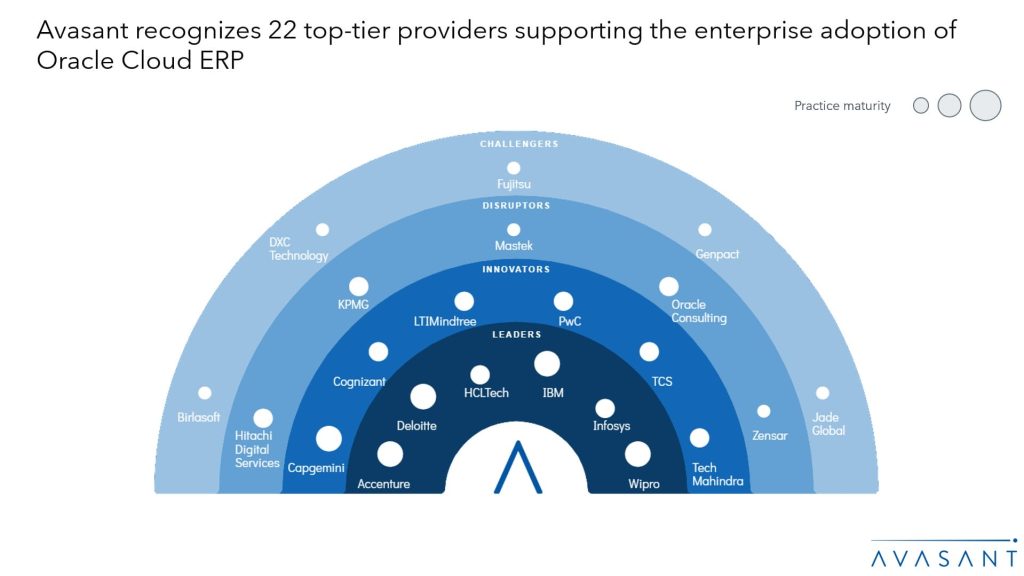
The Oracle Cloud ERP Services 2024–2025 RadarView™ assists organizations in identifying strategic partners for adopting Oracle Cloud ERP by offering detailed capability and experience analyses for service providers. It provides a 360-degree view of key Oracle Cloud ERP service providers across practice maturity, partner ecosystem, and investments and innovation to help enterprises identify the appropriate service partner. The 66-page report also highlights the top supply-side trends in the Oracle Cloud ERP services space and Avasant’s viewpoint on them.

Banking Digital Services 2025 Market Insights™
The Banking Digital Services 2025 Market Insights™ assists organizations in identifying important demand-side trends that are expected to have a long-term impact on any digital project in the banking industry. The report also highlights key challenges that enterprises face today in this space.
Banking Digital Services: Building Future-Ready Banks with Smart and Sustainable Tech
Banks are prioritizing cost reduction by adopting cloud-native infrastructure and composable architectures to modernize legacy systems and drive operational efficiency. Global capability centers (GCCs) are also helping banks access top talent while fostering innovation. To enhance customer engagement, banks are leveraging generative AI and advanced analytics to enable hyperpersonalized services. Additionally, banks are strengthening cybersecurity with AI-based threat detection and RegTech solutions for streamlined compliance. They are utilizing the “Sidecore” strategy to facilitate digital core upgrades without disrupting legacy systems. Digital wallets, crypto transactions, and digital currencies are expanding financial access, while ESG goals shape sustainable financial products and services.
Banking Digital Services 2025 RadarView™
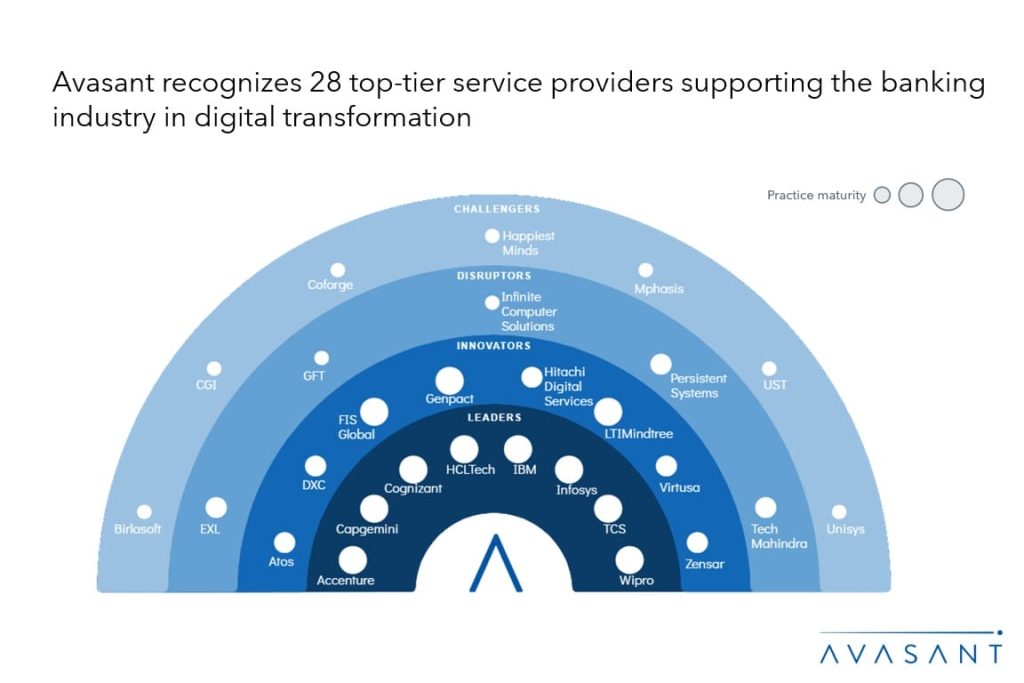
The Banking Digital Services 2025 RadarView™ helps banking enterprises craft a robust strategy based on industry outlook, best practices, and digital transformation. The report can also aid them in identifying the right partners and service providers to accelerate their digital transformation in this space. The 105-page report also highlights top market trends in the banking space and Avasant’s viewpoint.

Redefining Financial Hubs: Strategic Opportunities for BFSI Global Capability Centers in GIFT City, Gujarat

Cybersecurity Services 2025 Market Insights™
The Cybersecurity Services 2025 Market Insights™ assists organizations in identifying important demand-side trends that are expected to have a long-term impact on any cybersecurity project. The report also highlights key enterprise priorities, investment patterns, and evolving buyer expectations that are reshaping how cybersecurity services are evaluated and consumed.
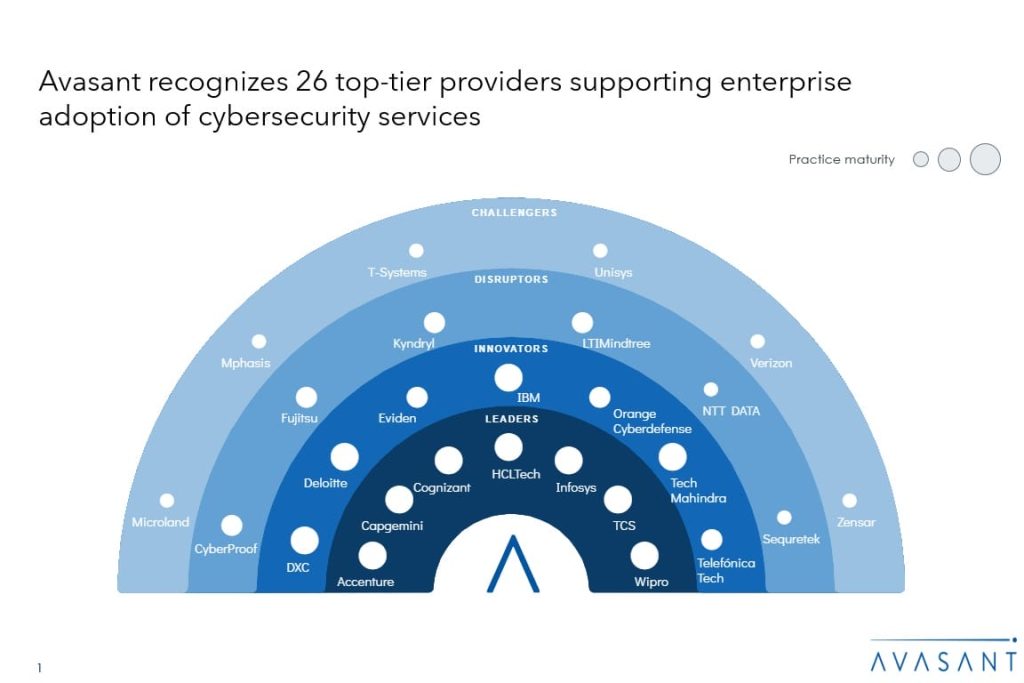
Cybersecurity Services: Enhancing Security through Streamlined Detection and Response with Gen AI
Between 2024 and 2025, a surge in cyberattacks impacted millions globally, targeting critical sectors such as healthcare, education, and telecom. These incidents highlight the growing threats posed by data extortion and state-sponsored espionage. In response, governments and regulators are strengthening their cyber defense through increased funding, stricter telecom requirements, and the introduction of regulations such as the Digital Operational Resilience Act (DORA). At the same time, leading service providers are exploring generative AI-driven tools to enhance threat detection, automate response actions, and improve vulnerability management. Both demand-side and supply-side trends are covered in our Cybersecurity Services 2025 Market Insights™ and Cybersecurity Services 2025 RadarView™, respectively.