Reports
Showing 2001–2016 of 4761 results
-

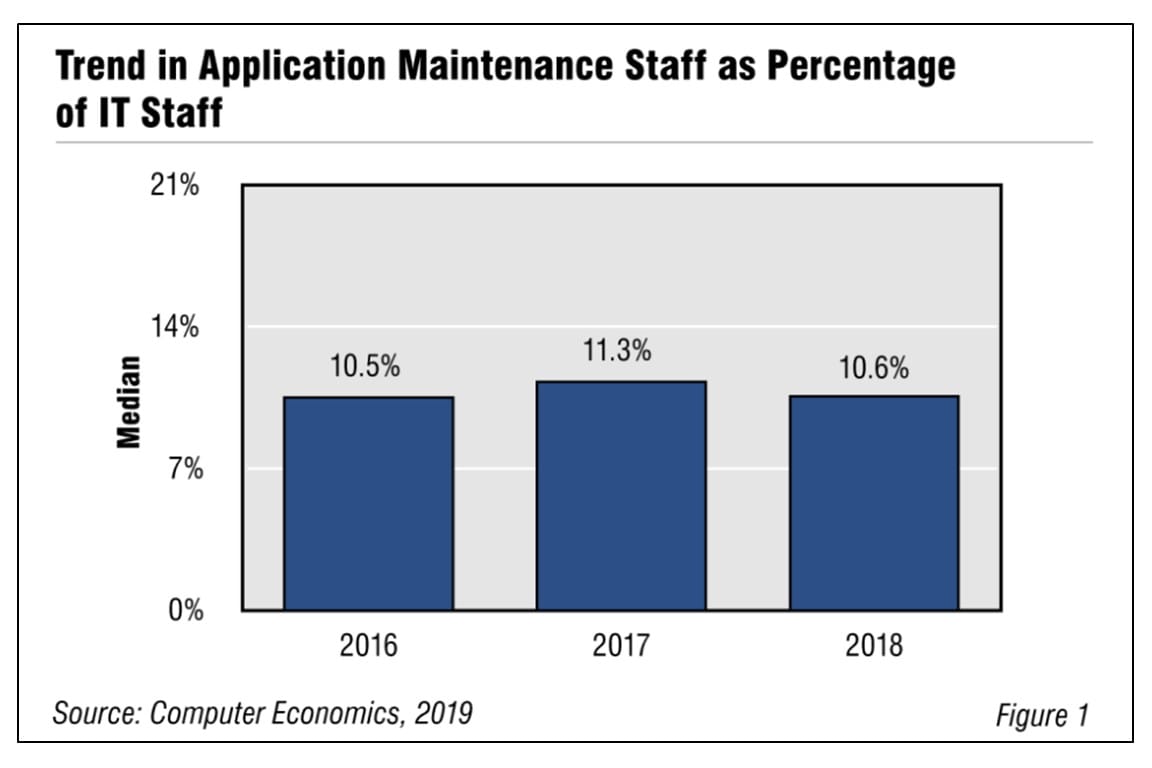
Application Maintenance Staff Getting Pulled in Two Directions
The share of the typical IT staff devoted to applications maintenance declined this year.. However, this metric is not yet showing a trend and is fluctuating as organizations grapple with expanding software portfolios at the same time they are converting some of their portfolios to SaaS, which should require less of a maintenance effort. This Research Byte provides a summary of our full report on application maintenance staffing ratios.
March, 2019
-

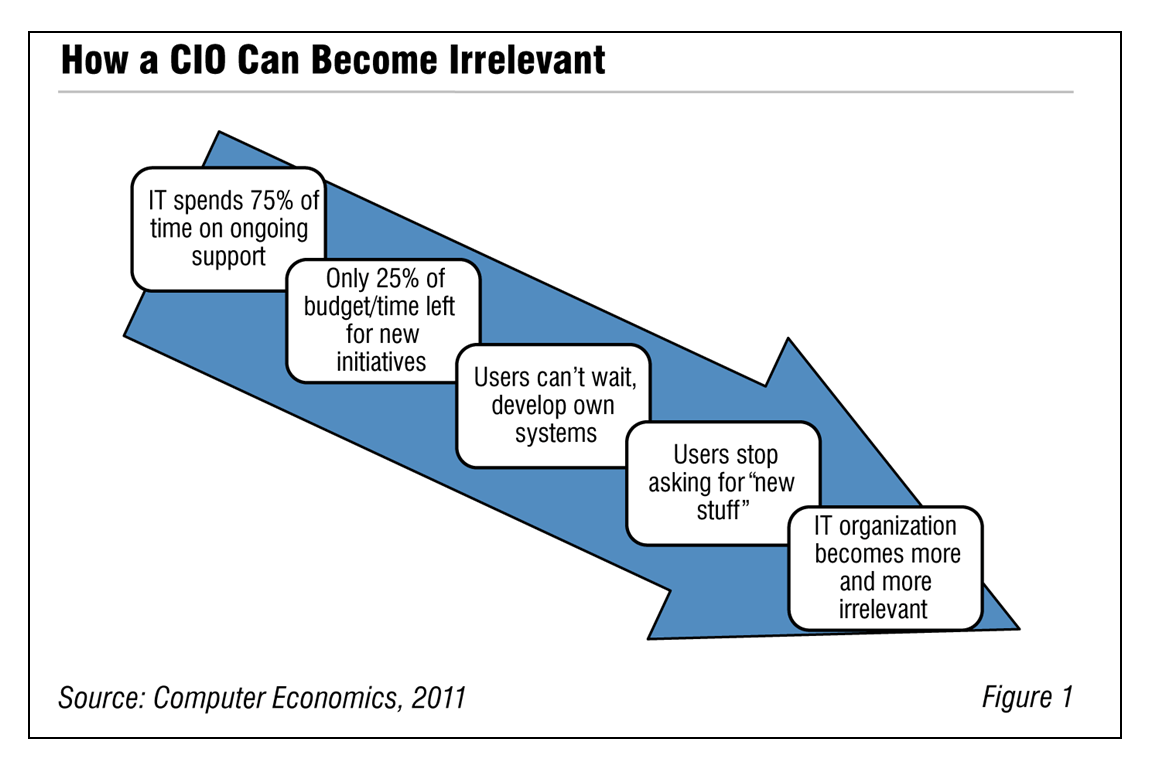
How CIOs Risk Becoming Irrelevant
During the late 1990s the median IT organization in North America experienced double-digit IT operational budget growth. Even as recently as 2006 to 2008, IT budgets were growing in the 4% to 5% range. But today, IT budgets are growing only 2 % at the median and the outlook for 2012 is unchanged.
December, 2011
-

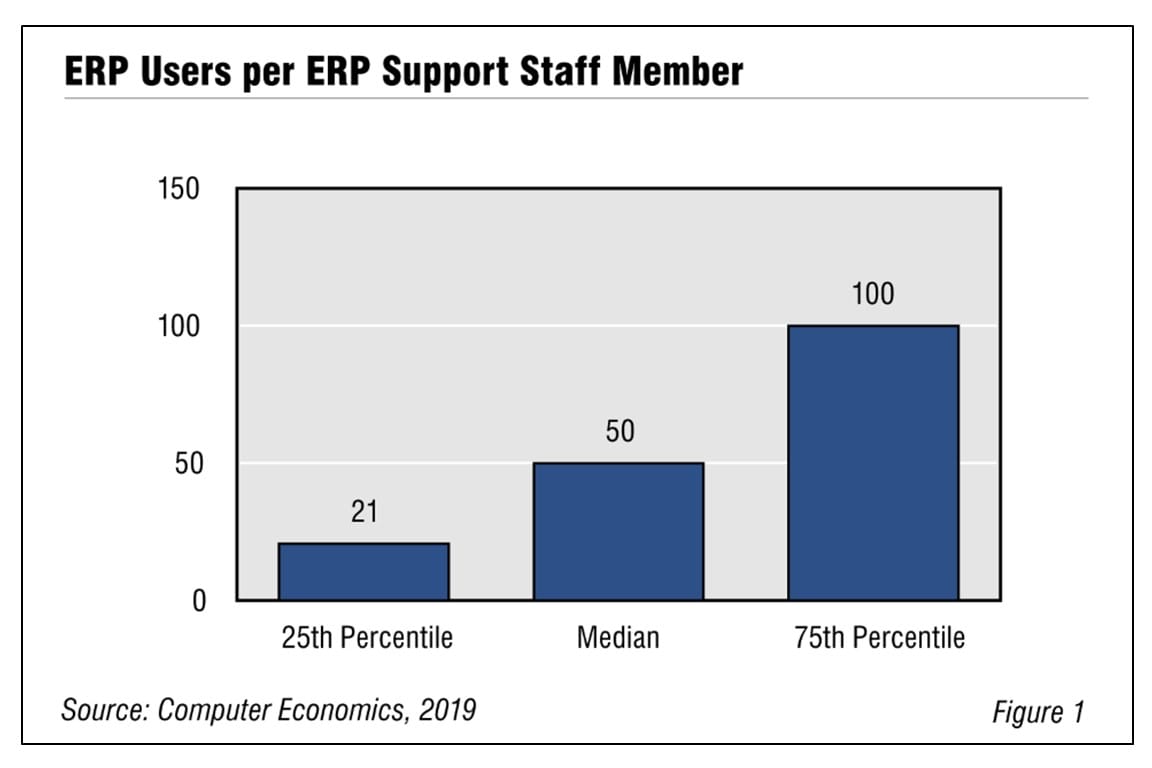
ERP Support Staffing Requirements—Consider All Factors
Right-sizing the support staff for an ERP system can be complicated. This is because users per ERP support staff member varies widely due to many factors: type of ERP system, its age, the extent of modification, company sector, and more. It is a moving target, and understanding IT support requirements for ERP systems is vital for IT leaders. This Research Byte provides a summary of our full report on ERP staffing ratios.
May, 2019
-

A Tug of War in Help Desk Staffing
Help desk staffing is in a state of flux right now, and right now increasing demands from the business are driving up headcount. In fact, the help desk staffing ratio took a big jump in 2019, bringing it to its highest level in the past five years. Some help desk roles are being expanded, but it remains to be seen if other factors will reduce demand for this important function. This Research Byte summarizes our full report on help desk staffing ratios.
January, 2020
-

ERP Support Staffing Ratios 2019
For many IT organizations, enterprise resource planning (ERP) systems are at the center of the application portfolio. In this report, we analyze ERP support requirements in several ways. First, we look at the ERP support staffing ratio, which is the number of ERP users divided by the number of ERP support personnel. We then assess this ratio by the size of the ERP installation. We also examine the data to determine the ratios by vendor: SAP, Oracle E-Business Suite, Oracle JD Edwards, Microsoft, Infor, and “all other” ERP systems.
May, 2019
-

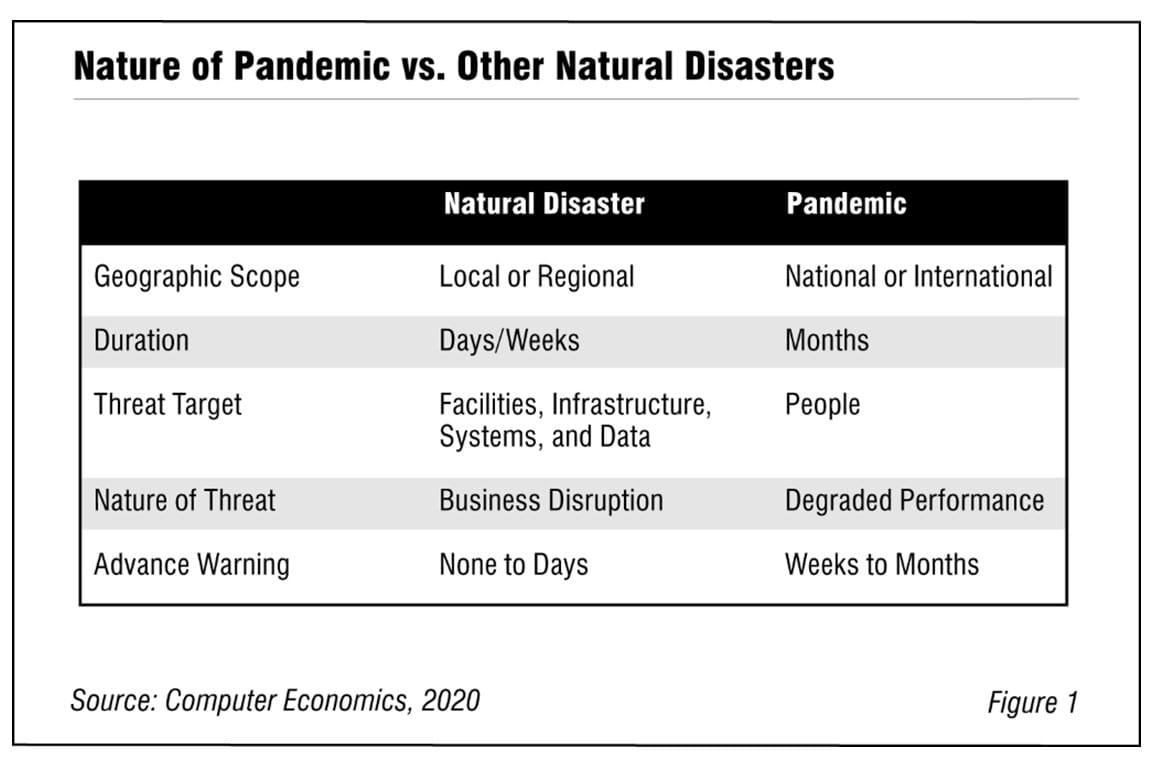
Business Continuity under a Pandemic Scenario
Pandemics are fundamentally different from the disasters commonly envisioned in disaster recovery and business continuity plans. The most recent threat of the Wuhan coronavirus highlights the fact that most organizations are not prepared for a pandemic scenario. This updated report outlines the specific ways in which pandemics are different from other types of disasters. It suggests three planning scenarios, and it outlines specific actions that IT risk managers should consider to prepare for them. If adequately prepared, the IT group will be able to continue to support critical business functions, and it can provide solutions to help the organization get through a pandemic.
February, 2020
-

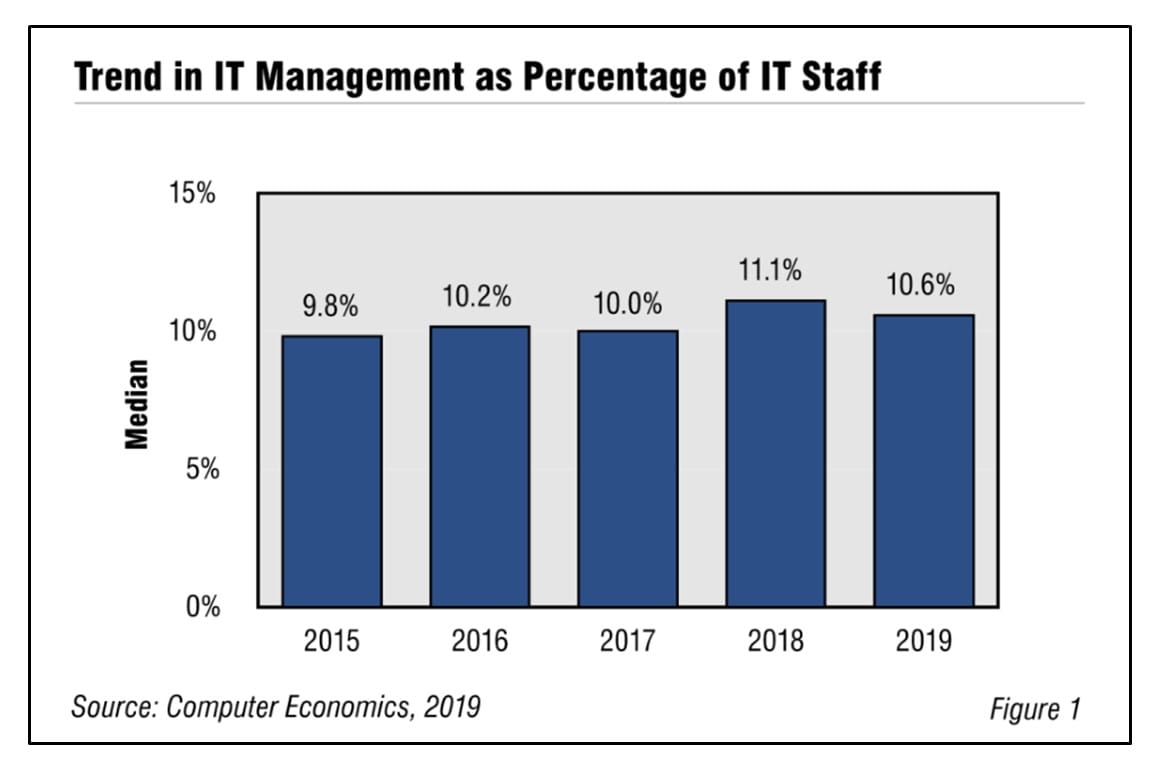
Why Have IT Manager Staffing Levels Suddenly Become More Volatile?
The ratio of IT managers to total IT staff has been a remarkably steady metric over the years. Nevertheless, this staffing ratio took a jump last year and fell back again this year. Although economic conditions can explain some of the volatility, there are other factors at work. This Research Byte examines possible causes.
August, 2019
-

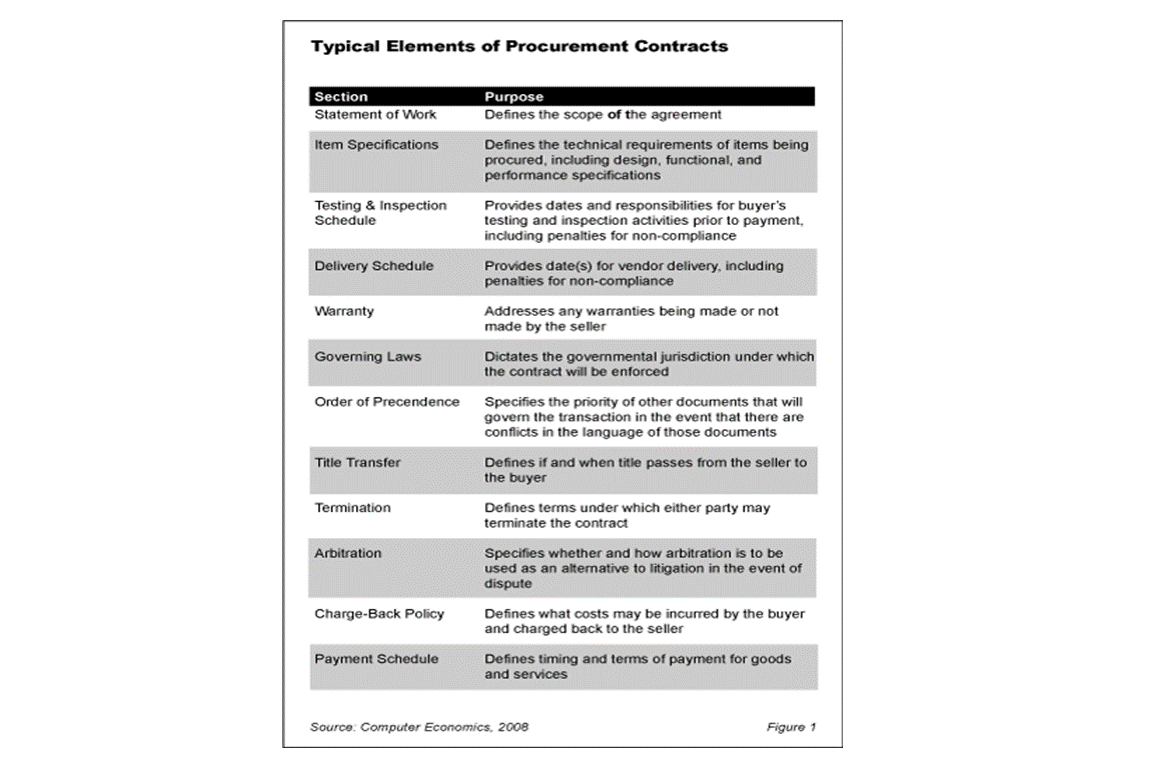
How to Evaluate IT Procurement Contracts
This report serves as a primer on IT procurement contracts. Our focus is primarily on contracts for IT services, though the principles apply to any type of IT procurement. We explain the typical elements of an IT procurement contract and the major types of contracts, including various types of fixed-price and cost-reimbursable agreements.
November, 2008
-

IT Management and Administration Staffing Ratios 2019
When it comes to IT managers, it is important to find the sweet spot. Too many, and the IT group can become top-heavy and bureaucratic, while too few can leave IT staff members feeling unsupported and without direction. This report examines how many IT managers a well-run IT organization typically requires, along with staffing metrics for two related administrative functions: IT finance/vendor management and clerical support.
August, 2019
-

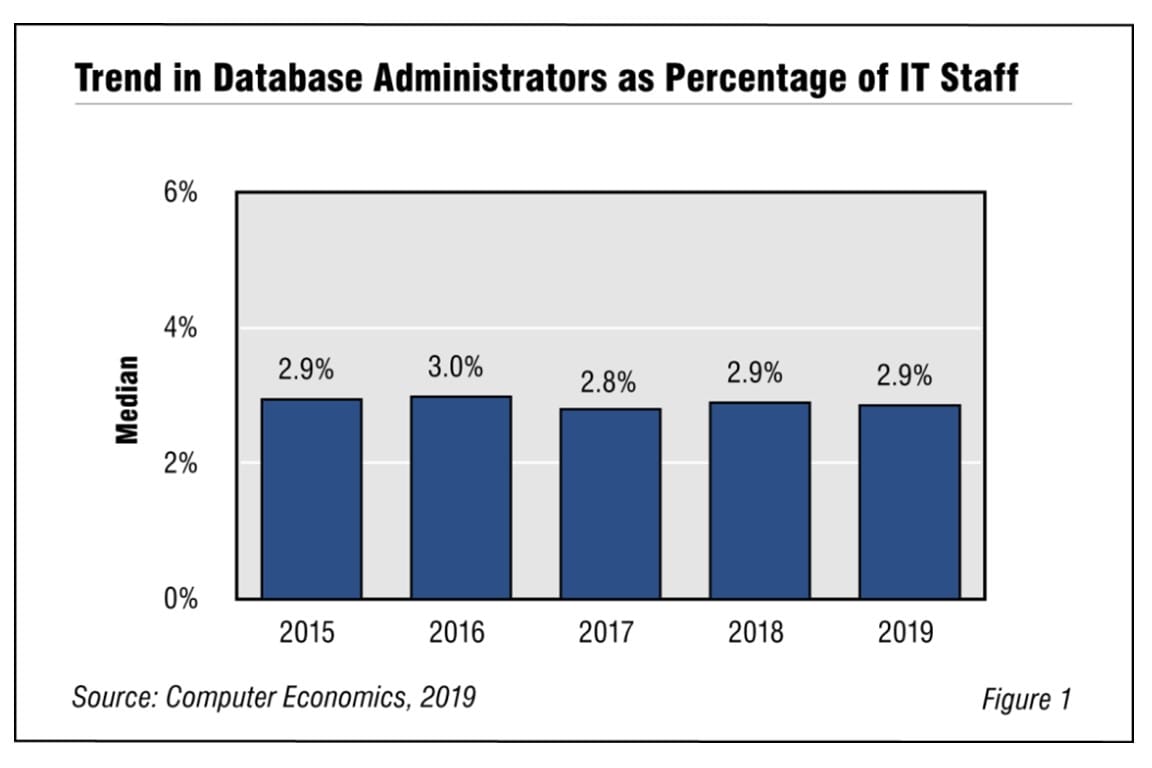
DBA Staff Levels Low and Going Nowhere
Businesses are capturing and analyzing more data than ever, and they must ensure that their databases are secure and readily accessible. But despite these increased data demands, companies have been restraining the growth of their in-house DBA staff in recent years. This Research Byte provides a summary of our full report on database administration staffing ratios.
October, 2019
-

Database Administration Staffing Ratios 2019
As enterprises collect more data and connect more applications, they must ensure that data is secure, reliable, and accessible. But despite these increased demands, companies are restraining the growth in their database administration staff. This report helps IT managers determine whether they are keeping pace with industry standards by providing four benchmarks: database administrators (DBAs) as a percentage of the IT staff, DBAs as a percentage of the Data Center Group, users per DBA, and business applications per DBA.
October, 2019
-

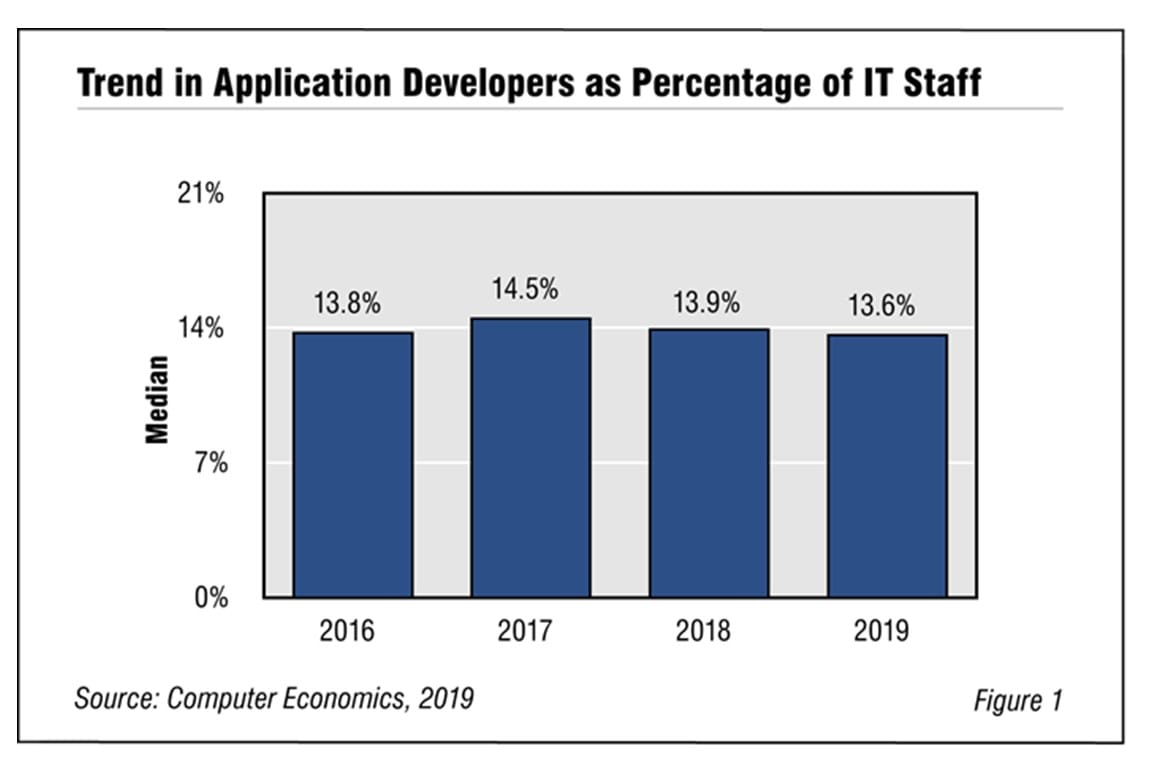
Application Developer Staffing Ratio Takes Another Dip
The ratio of application developers to the entire IT staff is a critical metric for IT managers. Why? Because developers tend to make up the largest part of most IT organizations, and they also tend to be among the higher-paid IT employees. Thus, it is vital for IT leaders to keep abreast of trends in application developer staffing ratios. This research byte summarizes our findings in the full report, Application Developer Staffing Ratios.
November, 2019
-

Application Developer Staffing Ratios 2019
With the use of agile and advent of DevOps, the way that applications are being developed in the enterprise is changing. With these changes, the need for application developers is in flux, and IT organizations can benefit from periodic assessment of their staffing levels. This study uses three metrics to make that assessment: developers as a percentage of the IT staff, users per developer, and applications per developer.
November, 2019
-

What’s Behind the Decline in Business Analysts?
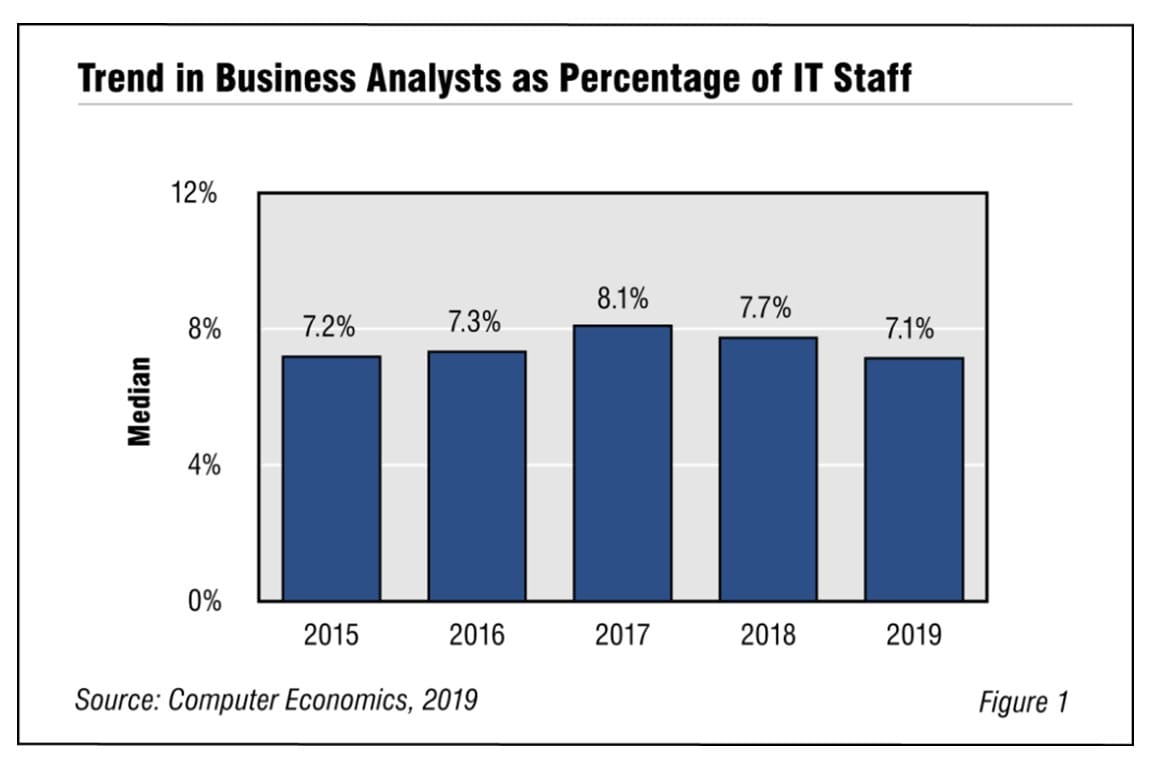
With digital transformation taking center stage in recent years, we have predicted that the business analyst role would continue to rise in prominence within IT organizations. However, the number of business analysts as a percentage of the total IT staff has dropped for the second straight year. Were we wrong, or are there other factors behind the decline?
January, 2020
-

Business Analyst Staffing Ratios 2020
Business analysts continue to play a critical role in IT organizations, although they declined again this year as a percentage of the IT staff. The business analyst serves as a bridge between the IT organization and business users. It is a multifaceted role that is important for ensuring that IT application systems meet business objectives. In this study, we assess staffing levels for the business analyst using four metrics: business analysts as a percentage of the IT staff, business analysts as a percentage of the Application Group, applications per business analyst, and users per business analyst.
January, 2020
-

Two-Factor Authentication Adoption and Best Practices 2020
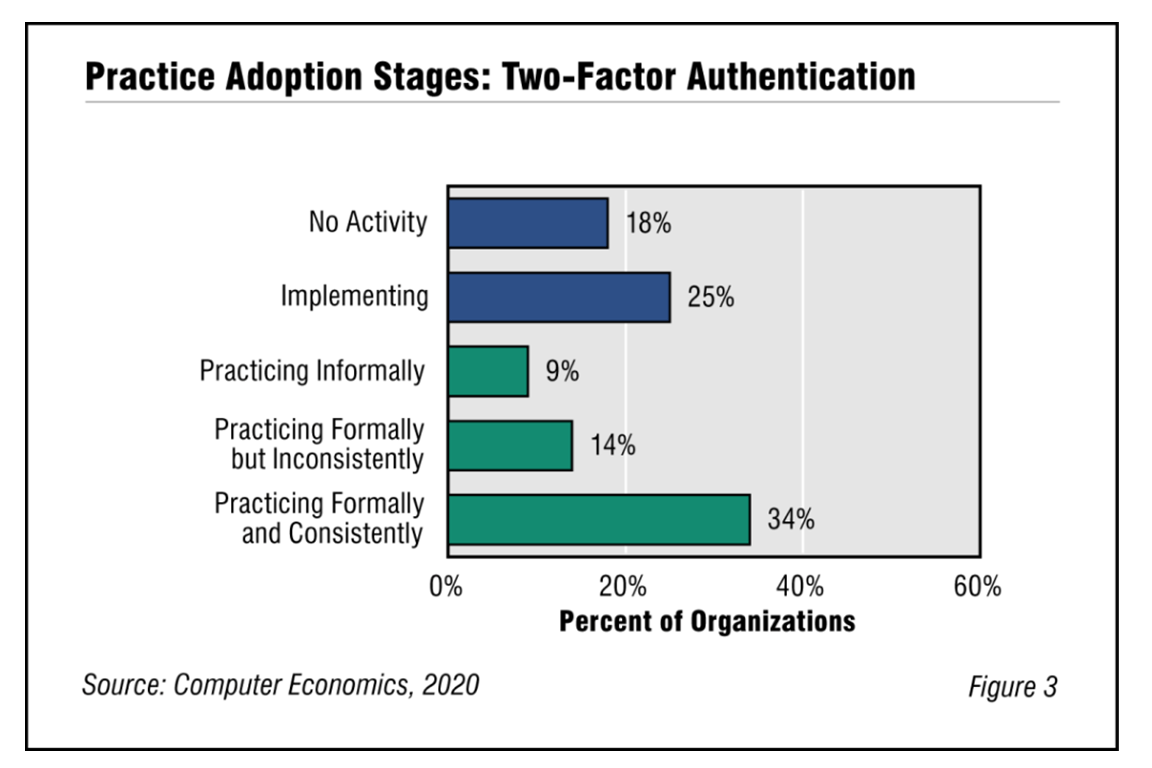
Two-factor authentication is an IT security best practice that provides an extra layer of protection for system access. It is a highly advisable security measure, but our annual survey of IT management best practices shows that not enough companies use it formally and consistently. This report begins with a brief explanation of two-factor authentication.
February, 2020