Areas of Interest
Content Type
Industries
- Aerospace and defense
- Banking, Financial Services, and Insurance
- Energy and Resources
- Federal Government
- Healthcare and life sciences
- High-tech and telecommunications
- Higher Education
- Media and entertainment
- Private equity
- Public Sector
- Retail and manufacturing
- Social Impact Institutions
- Travel and transportation
Technologies
- Artificial Intelligence
- Automation
- Blockchain
- Business and data analytics
- Cloud
- Customer relationship management (CRM)
- Cybersecurity
- Digital Services
- Enterprise resource planning (ERP)
- Human capital management (HCM)
- Internet Of Things
- Machine Learning
- Networking
- Supply chain management (SCM)
- Virtual reality/Augmented reality
Areas of Interest


Latest Reports

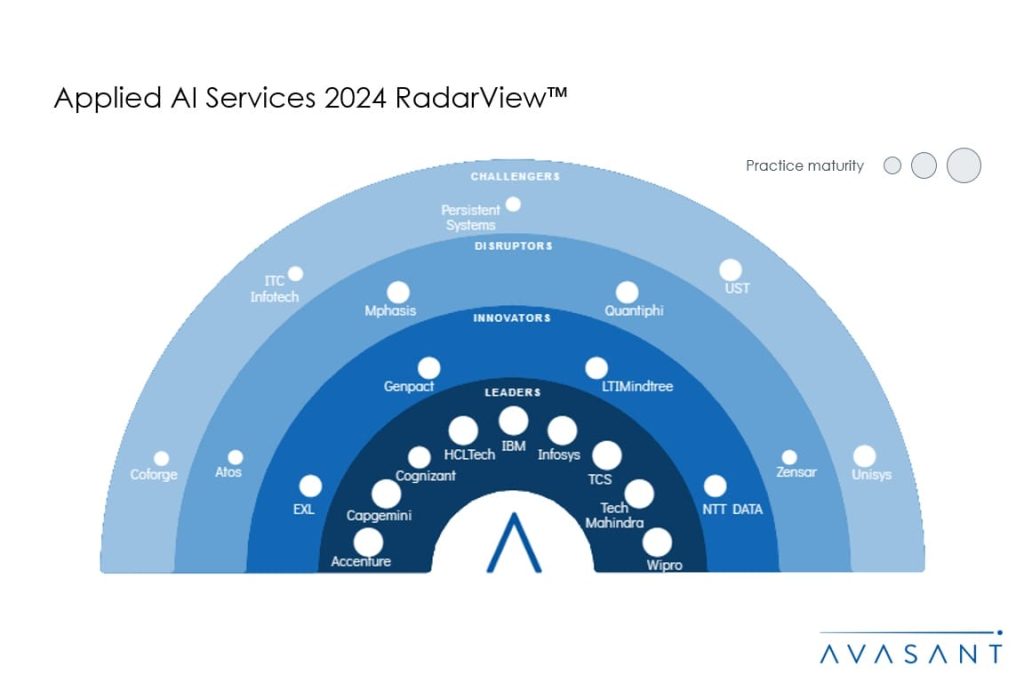
Applied AI Services 2024 Market Insights™
The Applied AI Services 2024 Market Insights assists organizations in identifying important demand-side trends that are expected to have a long-term impact on their AI projects. The report also highlights the key challenges enterprises face today in this space.

Navigating Pitfalls in the Transition to IT Managed Services
In the T&M model, the customer agrees to pay the contractor based on the time spent on the project and the cost of materials used. This model is often used when the scope of the project is not well-defined or is subject to change. It provides flexibility for both the customer and the contractor, as the customer can adjust the scope of the project as needed, and the contractor is compensated for any additional time or materials required. However, this model does not always work in a managed services environment.
Business Process Services – Provider Trends CQ4 2023 and CY 2023
In this quarterly report (calendar quarter 4, 2023) and annual report (calendar year, 2023), Avasant provides key information on trends in the business process services (BPS) space. It covers facts and figures about service providers (including revenue and resource trends), macro trends, and executive sentiment from the service provider community. The geographic coverage is global, with a larger share of data points from North America. The report builds on insights gathered through ongoing market research, data collection, and proprietary databases. It includes market data from providers accessed through multiple sources, such as public disclosures, market interactions, and sourcing data.
Maximizing Value in Multisourcing Environments with Streamlined Governance
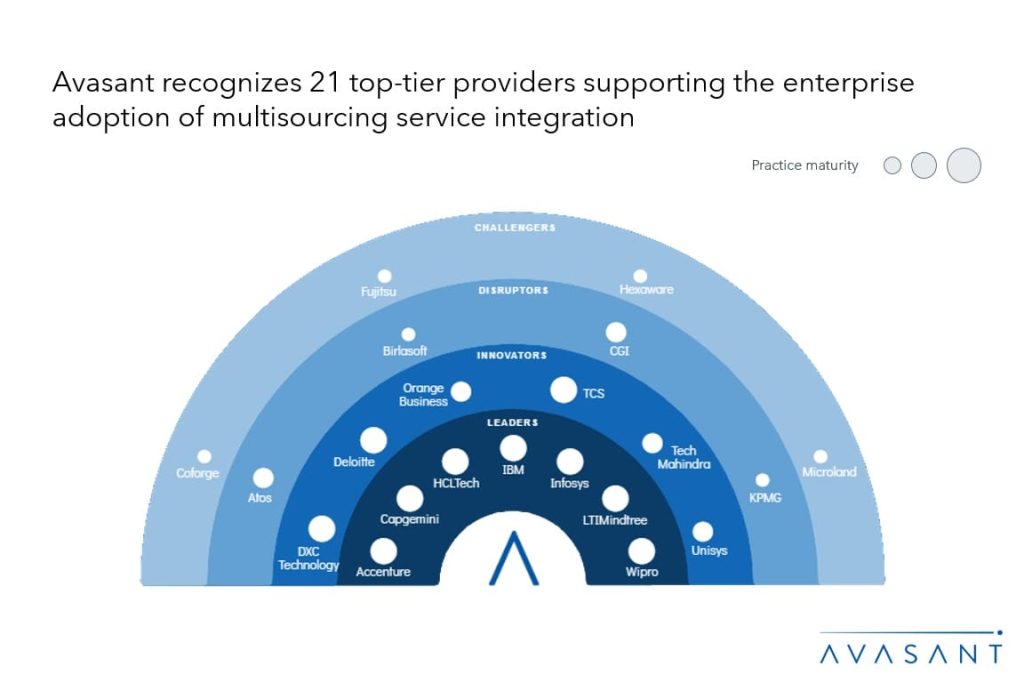
Multisourcing is a strategy that involves outsourcing different services to multiple vendors. However, around 85% of organizations face significant challenges such as ineffective communication and lack of cross-supplier collaboration while executing multisourcing service integration (MSI) services. Service providers take this narrative forward by implementing a comprehensive set of MSI capabilities such as effective risk mitigation strategies, centralized governance, and consistent service level agreements. Additionally, service providers also leverage generative AI for MSI services to streamline workflows, offer data-driven insights, and accelerate process execution.

Multisourcing Service Integration 2023–2024 Market Insights™
The Multisourcing Service Integration 2023–2024 Market Insights™ assists organizations in identifying important demand-side trends that are expected to have a long-term impact on any MSI project. The report also highlights MSI challenges that enterprises face today.
Multisourcing Service Integration 2023–2024 RadarView™
The Multisourcing Service Integration 2023–2024 RadarView™ assists organizations in identifying strategic partners for MSI by offering detailed capability and experience analyses for service providers. It provides a 360-degree view of key MSI service providers across practice maturity, partner ecosystem, and investments and innovation, thereby supporting enterprises in identifying the right MSI services partner. The 66-page report highlights top supply-side trends in the MSI space and Avasant’s viewpoint on them.

Optimizing Cost Savings in the Healthcare Industry through Nearshore Outsourcing: A Case Study
The healthcare industry is facing increasing pressure to reduce costs and improve efficiency, while maintaining high standards of quality and patient satisfaction. One of the ways that healthcare organizations can achieve these goals is by outsourcing some of their non-core functions to external vendors, such as IT, billing, customer service, data entry, and transcription. However, traditional offshore outsourcing models often pose challenges in terms of communication, cultural differences, time zones, and regulatory compliance. In this case study, we present how a leading healthcare provider in the United States leveraged nearshore outsourcing to optimize its cost savings and operational performance.

How to Set Up a Transformation Office for a Successful ERP Implementation
Enterprise resource planning (ERP) systems are complex and powerful software solutions that integrate and automate various business processes across an organization. They can provide significant benefits in terms of efficiency, productivity, data quality, and customer satisfaction. However, implementing an ERP system is not a simple task. It requires a substantial investment of time, money, and resources, and it involves a major change in the way the organization operates. Therefore, it is crucial to plan and manage the ERP implementation project carefully and strategically, to avoid common pitfalls and risks, and to ensure the desired outcomes are achieved.
Fair Market Values April 2024
The Computer Economics Market Value Reports provide information on the most commonly traded machines and systems at the time the report is published. The values shown are the composites of a range of quotes acquired from sources within the industry deemed reliable, accuracy of the information presented is not guaranteed. Resources are eBay, Insight, NewEgg, CDW, ETB-Tech, Amazon, Savemyserver, TheServerStore, LoadBalancer, NetworkOutlet, Netsyst-Direct, TigerDirect, and others as well as online sales companies and appraisals.