Areas of Interest
Content Type
Industries
- Aerospace and defense
- Banking, Financial Services, and Insurance
- Energy and Resources
- Federal Government
- Healthcare and life sciences
- High-tech and telecommunications
- Higher Education
- Media and entertainment
- Private equity
- Public Sector
- Retail and manufacturing
- Social Impact Institutions
- Travel and transportation
Technologies
- Artificial Intelligence
- Automation
- Blockchain
- Business and data analytics
- Cloud
- Customer relationship management (CRM)
- Cybersecurity
- Digital Services
- Enterprise resource planning (ERP)
- Human capital management (HCM)
- Internet Of Things
- Machine Learning
- Networking
- Supply chain management (SCM)
- Virtual reality/Augmented reality
Areas of Interest


Latest Reports
Current Fair Market Values April 2022
Our Fair Market Value (FMV) report provides data for the following categories of equipment: (1) IBM mainframe and midrange hardware and IBM peripherals; (2) Workstations, PCs, and servers from Compaq, Dell, HP, IBM/Lenovo, Lexmark, Okidata, Silicon Graphics, Sony, Sun, and Toshiba; (3) Network Communication gear from Cisco, Bay/Nortel, IBM, Intel, Lucent, and others. Fair Market Values are provided for end-user, wholesale, and orderly liquidation values (OLV) prices.
Maximizing the Value of Multi-Supplier Service Delivery
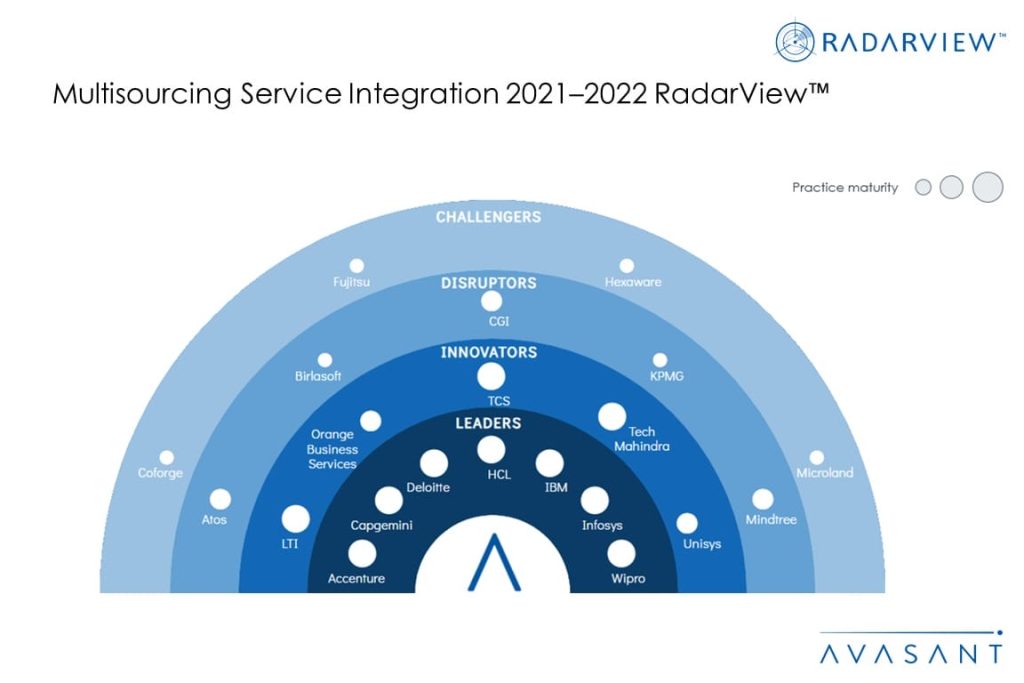
When an enterprise engages multiple vendors for IT service delivery, it is easy for those suppliers to lack coordination and collaboration among themselves and with the client. This results in an increased number of critical incidents, lack of process visibility, and siloed reporting. The multisourcing service integration model (MSI) is helping enterprises reduce incident resolution time, integrate multiple IT systems, and improve business and supplier accountability. Service providers are leveraging artificial intelligence/machine learning solutions and proprietary IT service management tools to reduce ticket volumes, synchronize service catalogs, and automate business processes. These trends, and others, are covered in our Multisourcing Service Integration 2021–2022 RadarView™.
Multisourcing Service Integration 2021–2022 RadarView™
The Multisourcing Service Integration 2021–2022 RadarView™ assists organizations in identifying strategic partners for multisourcing service integration (MSI) by offering detailed capability and experience analyses for service providers. It provides a 360-degree view of key MSI service providers across practice maturity, partner ecosystem, and investments and innovation, thereby supporting enterprises in identifying the right MSI services partner. The 69-page report also highlights top market trends in the MSI space and Avasant’s viewpoint.
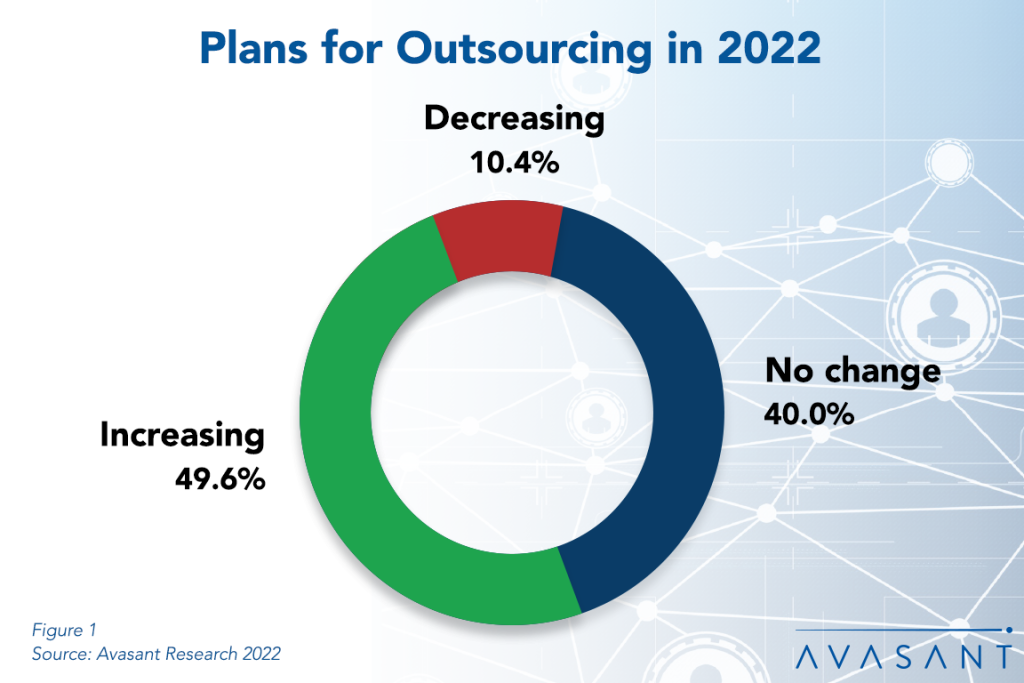
IT Outsourcing Statistics 2022
Outsourcing levels are growing as more organizations take advantage of the cost flexibility that service providers offer. IT leaders are expecting to increase their outsourcing budgets this year, and they expect to reap outsourcing benefits of streamlined processes and reduced operational costs. The study profiles outsourcing activity for 11 IT functions. For each IT function, we measure the frequency and level of outsourcing.
IT Outsourcing Rises in the Face of Global Crises
Outsourcing levels are growing as more organizations take advantage of the cost flexibility that service providers offer. IT leaders are expecting to increase their outsourcing budgets this year, according to our new IT Outsourcing Statistics 2022 study, and they expect to reap outsourcing benefits of streamlined processes and reduced operational costs. This Research Byte summarizes the factors behind the upward trend in IT outsourcing.
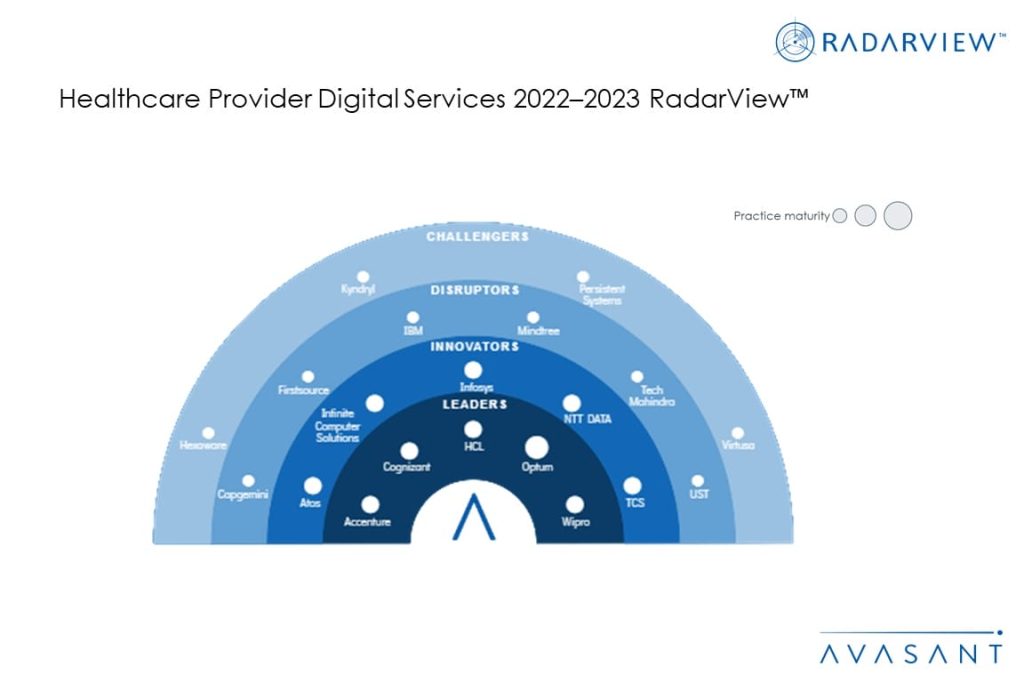
Healthcare Provider Digital Services 2022–2023 RadarView™
The Healthcare Provider Digital Services 2022–2023 RadarView™ can help providers craft a robust strategy for digital transformation based on industry outlook and best practices. The report can aid businesses in identifying the right partners and service providers to accelerate digital adoption. The 94-page report also identifies key service providers and system integrators that can help enterprises in their digital transformation journeys.
Telehealth: An Emerging Healthcare Delivery Model
Healthcare providers are increasingly investing in telehealth as it facilitates remote patient monitoring, enables wellness management, and reduces dependency on staff. They are not only offering a convenient and cost-effective care delivery model but also generating revenue by treating patients across different geographies. However, there are some challenges such as compliance, high dependency and investment in technology, and data integration. These emerging trends are covered in Avasant’s Healthcare Provider Digital Services 2022–2023 RadarView™.
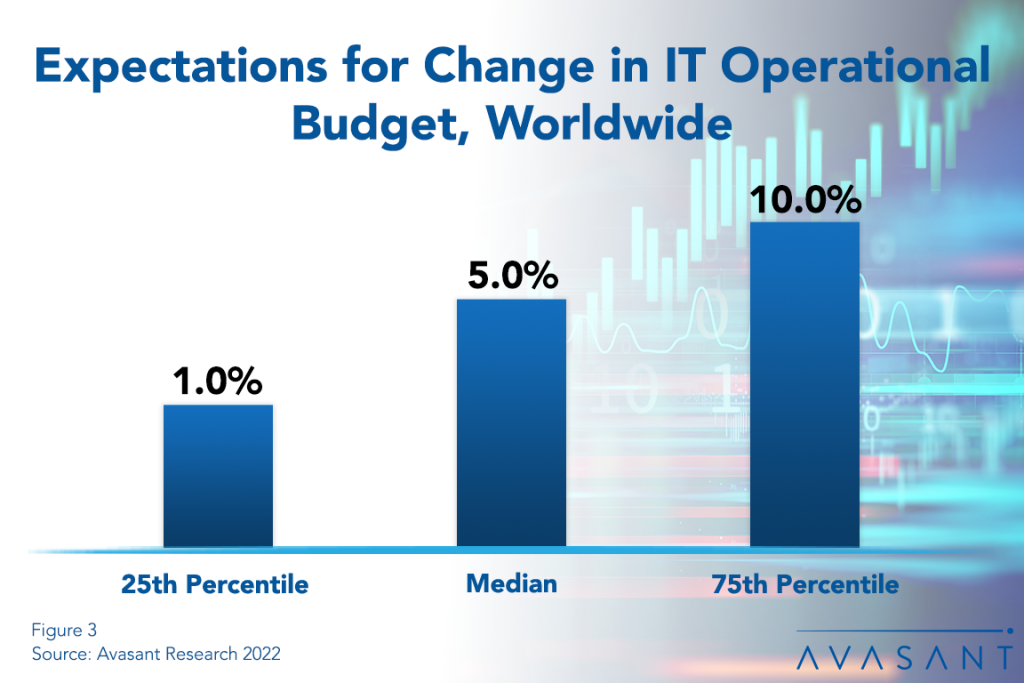
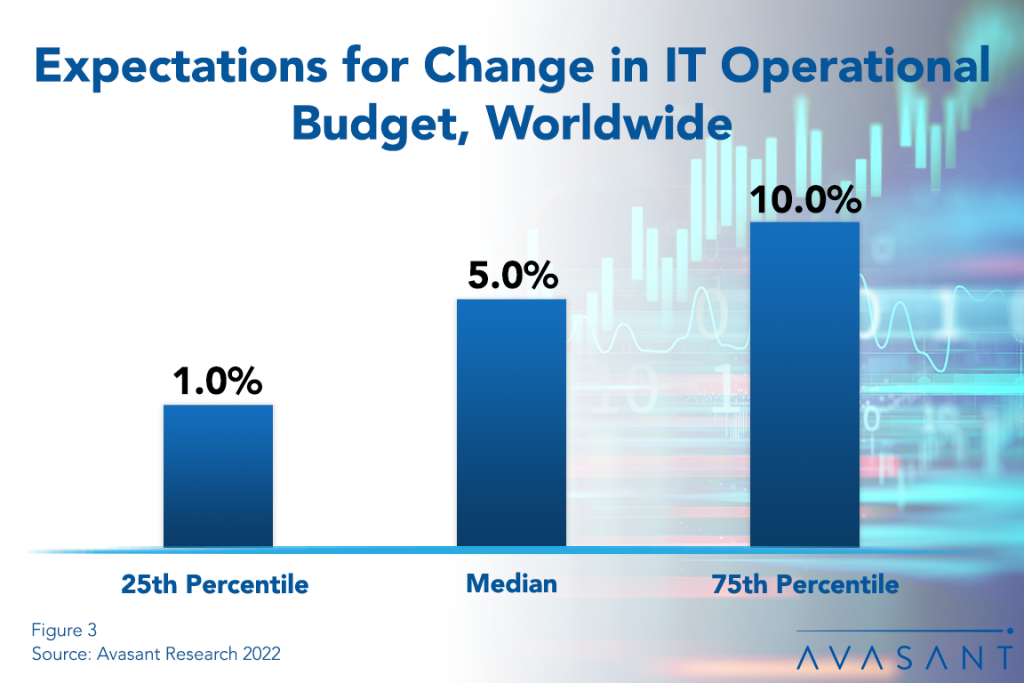
Global Events Raining on Positive IT Budget Parade
Going into 2022, we seemed poised for a broad, strong recovery. IT budget increases were large. Staffing levels were increasing. And growth could be found across nearly all sectors. Although there are fears of rising inflation and global conflict, our annual study of the IT spending outlook finds that IT leaders worldwide still have a positive outlook on the year ahead. This research byte summarizes the full study.