Areas of Interest
Content Type
Industries
- Aerospace and defense
- Banking, Financial Services, and Insurance
- Energy and Resources
- Federal Government
- Healthcare and life sciences
- High-tech and telecommunications
- Higher Education
- Media and entertainment
- Private equity
- Public Sector
- Retail and manufacturing
- Social Impact Institutions
- Travel and transportation
Technologies
- Artificial Intelligence
- Automation
- Blockchain
- Business and data analytics
- Cloud
- Customer relationship management (CRM)
- Cybersecurity
- Digital Services
- Enterprise resource planning (ERP)
- Human capital management (HCM)
- Internet Of Things
- Machine Learning
- Networking
- Supply chain management (SCM)
- Virtual reality/Augmented reality
Areas of Interest


Latest Reports
Driving Innovation in Digital Health through AI and Analytics
In a post-Covid reality, value-based healthcare organizations are harnessing the business intelligence of accurate, timely, and actionable data to make better decisions and achieve optimal outcomes. Today, AI and real-time Analytics work hand-in-glove with digital health solutions, executed through prudent utilization models. AI technology is a game changer in healthcare payer and service delivery and is increasingly crucial for the future success of the industry. Integrated digital health solutions have elevated the customer experience, transforming how we understand and address health and wellbeing. In 2022, consumer-centric healthcare disruptors are taking the lead in digital readiness, significantly outperforming the traditional healthcare ecosystem; a trend that will only maintain trajectory.
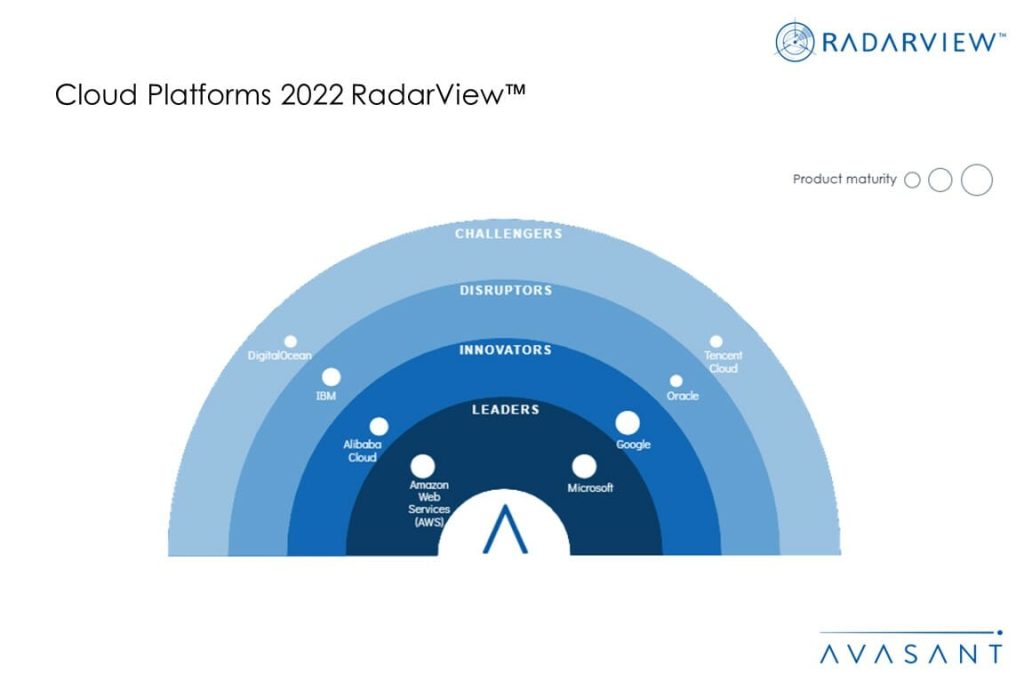
Cloud Platform Providers Moving up the Technology Stack
Continuing the trend from recent years, the cloud remains the top spending priority for enterprises, led by cloud applications and cloud infrastructure. The major drivers include cost optimization, the need to provide a reliable infrastructure, and using hybrid models to best handle data storage and compliance. To meet this continued growth, cloud platform providers are enhancing their capabilities to speed the migration of cloud applications and provide value higher up the technology stack. These emerging trends are covered in Avasant’s Cloud Platforms 2022 RadarView™.
Cloud Platforms 2022 RadarView™
The Cloud Platforms 2022 RadarView™ addresses the need for enterprises to leverage cloud platforms to accelerate their digital journeys, embrace the cloud, and identify the right cloud platform providers to partner with. The 42-page report also provides our point of view on how cloud platform providers cater to enterprises’ changing needs through a wide portfolio of products and services, thus delivering a general ranking based on key dimensions of product maturity, enterprise adaptability, and innovation road map.

Navigating Deals in Turbulent Times
Challenged by a complex combination of economic, geo-political, & humanitarian crises, businesses have been set on a path towards accelerated transformation. As a result, we are now in a constant state of simultaneous innovation and cost reduction. This report, presented by our Chairman & CEO, Kevin Parikh at Avasant’s Partner Connect 2022, highlights the impact of the world altering events to businesses and our clients, and how they are influencing the deal landscape of today.
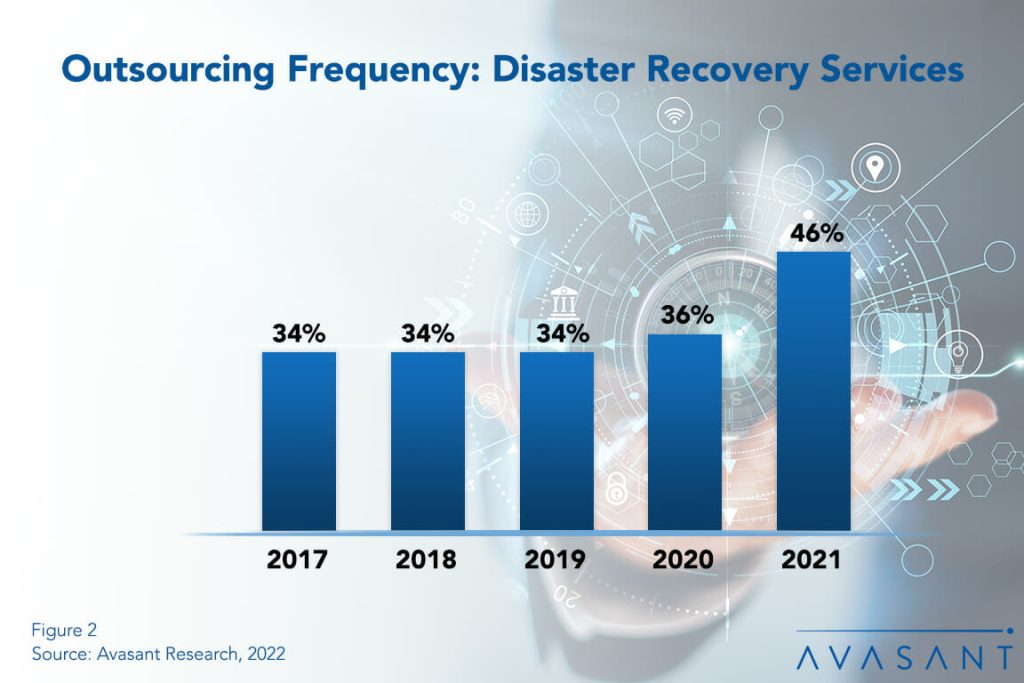
Organizations Increasingly Looking for Outside Help with Disaster Recovery
If there were ever any questions about the need for disaster recovery planning, those doubts were dispelled over the past few years. A worldwide pandemic, power outages, wars, and cyberattacks exposed those organizations that were not fully prepared to respond to those disruptions. But what if the IT organization does not have the resources or the capability to do it all in-house? This is why many organizations are turning to disaster recovery outsourcing providers to step into the gap. This Research Byte analyzes the five-year trend in DR outsourcing.
Disaster Recovery Outsourcing Trends and Customer Experience 2022
Experiences over the past two years have revealed that many organizations were not adequately prepared for a worldwide pandemic from a business continuity perspective. But most enterprises responded by establishing remote working environments on short notice and built out the network infrastructure and security measures to support them. Now, emerging from pandemic lockdowns, most businesses are retaining these remote work capabilities, even if they are to support a hybrid work model. Businesses are now more resilient, not just in facing another pandemic but in supporting remote work in the event of other natural or man-made disasters.
The Evolution of Procurement: Bringing Resilience and Agility in a Time of Disruption
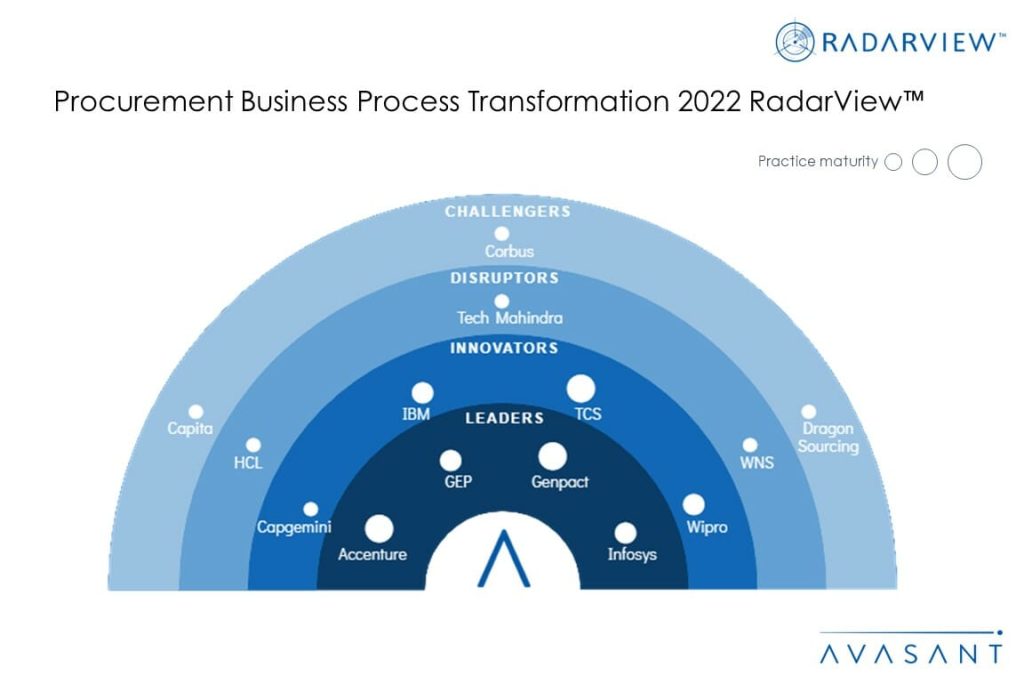
The procurement business function has traditionally been cost-focused. However, supply chain disruptions from recent global crises have shown the need for a more agile procurement process. CPOs are responding by planning for inflation with advanced purchasing, using AI to find alternate sourcing options to deal with disruptions, and even personalizing the requisition experience for all employees to look more like e-commerce. To meet these evolving demands, enterprises are increasingly turning to service providers to transform their procurement functions. Service provider procurement business process transformation revenue grew by 13% between March 2021 and March 2022. These trends and others are covered in our Procurement Business Process Transformation 2022 RadarView™ .
Procurement Business Process Transformation 2022 RadarView™
The Procurement Business Process Transformation 2022 RadarView™ assists enterprises in identifying strategic partners for their procurement business process transformation by featuring detailed capability and experience analyses of leading service providers. It provides a 360-degree view of key procurement service providers across practice maturity, domain ecosystem, and investments and innovations, thus helping enterprises in evaluating leading players in the procurement business process transformation space. The 58-page report also highlights top market trends in the procurement business process transformation space and Avasant’s viewpoint on them.

From Optimization to Automation: Achieving Greater Business Value in the Cloud
IT has undergone a fundamental and permanent change over the past two years. While enterprises had already embarked on their digital journey, the rapid shift to remote working during the pandemic, and the need for digital channels for customer engagement further propelled the demand for cloud services. For many IT organizations today, any new financial investment is prioritized toward cloud spending. The two main uses of these funds are: investing in cloud infrastructure to leverage advanced technologies like artificial intelligence (AI), machine learning (ML), and the Internet of Things (IoT); and migrating legacy workloads to cloud native or (creating) modernized workloads to enhance digital engagement with customers, accommodate a remote workforce and bring agility into their operations.
Driving digital transformation with IT and OT convergence
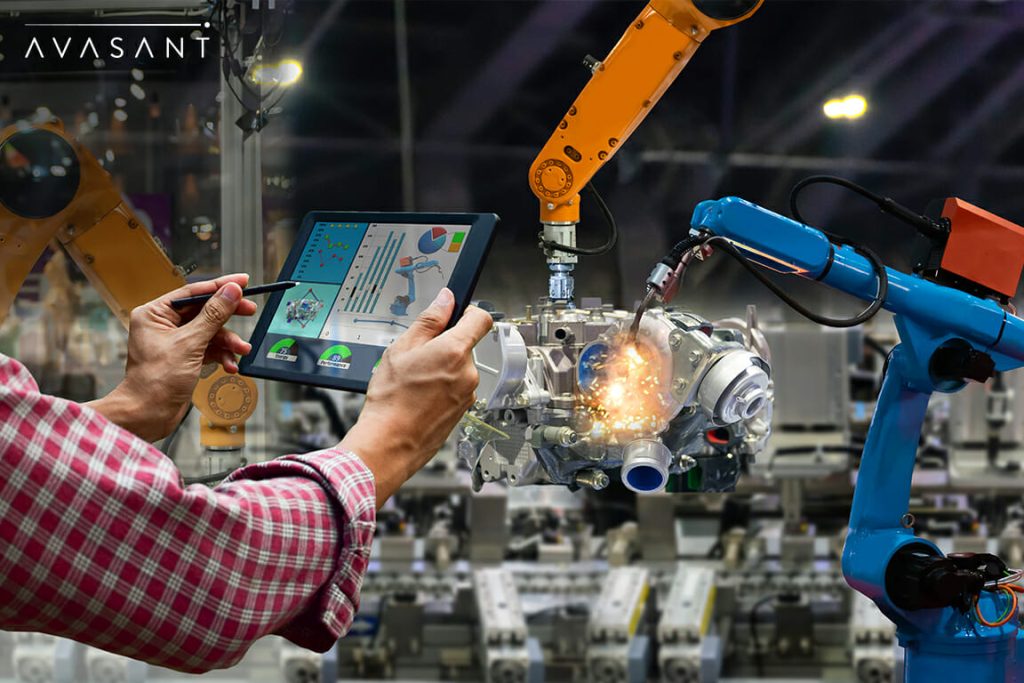
Manufacturers are under constant pressure to increase automation, lower costs, and leverage smart manufacturing. But, in doing so, they face multiple challenges. These include scaling their digitalization initiatives, bridging data silos, and future-proofing systems. These goals require greater integration of data between what is commonly known as information technology (IT) and operational technology (OT). This research byte outlines what manufacturers should do to integrate IT and OT to reap the full benefits of digital transformation. We also highlight one services firm, Hitachi Vantara, as an example of a service provider addressing this emerging need through its set of products and services for IT and OT convergence.