Areas of Interest
Content Type
Industries
- Aerospace and defense
- Banking, Financial Services, and Insurance
- Energy and Resources
- Federal Government
- Healthcare and life sciences
- High-tech and telecommunications
- Higher Education
- Media and entertainment
- Private equity
- Public Sector
- Retail and manufacturing
- Social Impact Institutions
- Travel and transportation
Technologies
- Artificial Intelligence
- Automation
- Blockchain
- Business and data analytics
- Cloud
- Customer relationship management (CRM)
- Cybersecurity
- Digital Services
- Enterprise resource planning (ERP)
- Human capital management (HCM)
- Internet Of Things
- Machine Learning
- Networking
- Supply chain management (SCM)
- Virtual reality/Augmented reality
Areas of Interest


Latest Reports
AR/VR Delivers Better Data and More Immersive Experience
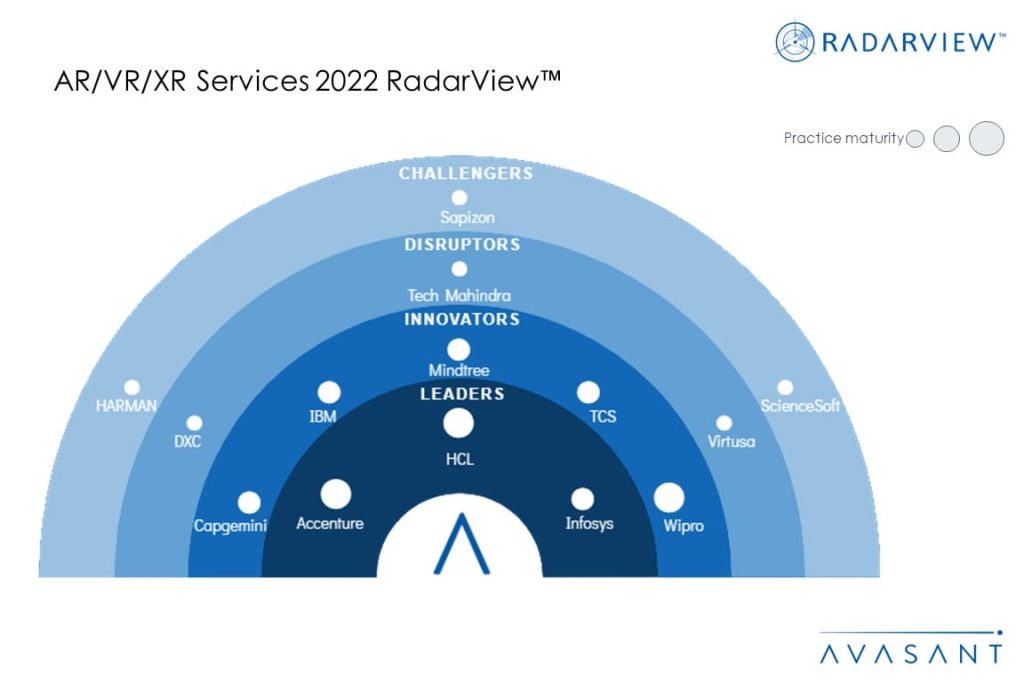
Augmented reality (AR), virtual reality (VR), and extended reality (XR) have not yet been adopted at scale. However, businesses are starting to realize the opportunities they can unlock with AR/VR/XR. Enterprise digital leaders are deploying AR/VR/XR with the goal of creating more immersive experiences for employees and customers, enhancing data visualization, and improving manufacturing and maintenance processes. Nevertheless, high device and implementation costs remain hurdles for enterprise digital transformation engagements. These trends, and others, are covered in our AR/VR/XR Services 2022 RadarView™.
AR/VR/XR Services 2022 RadarView™
The AR/VR/XR Services 2022 RadarView™ assists organizations in identifying strategic partners for augmented reality/virtual reality/extended reality (AR/VR/XR) by offering detailed capability and experience analyses of service providers. It provides a 360-degree view of key AR/VR/XR service providers across practice maturity, partner ecosystem, and investments and innovation, supporting enterprises in identifying the right AR/VR/XR services partner. The 60-page report also highlights top market trends in the AR/VR/XR space and Avasant’s viewpoint.
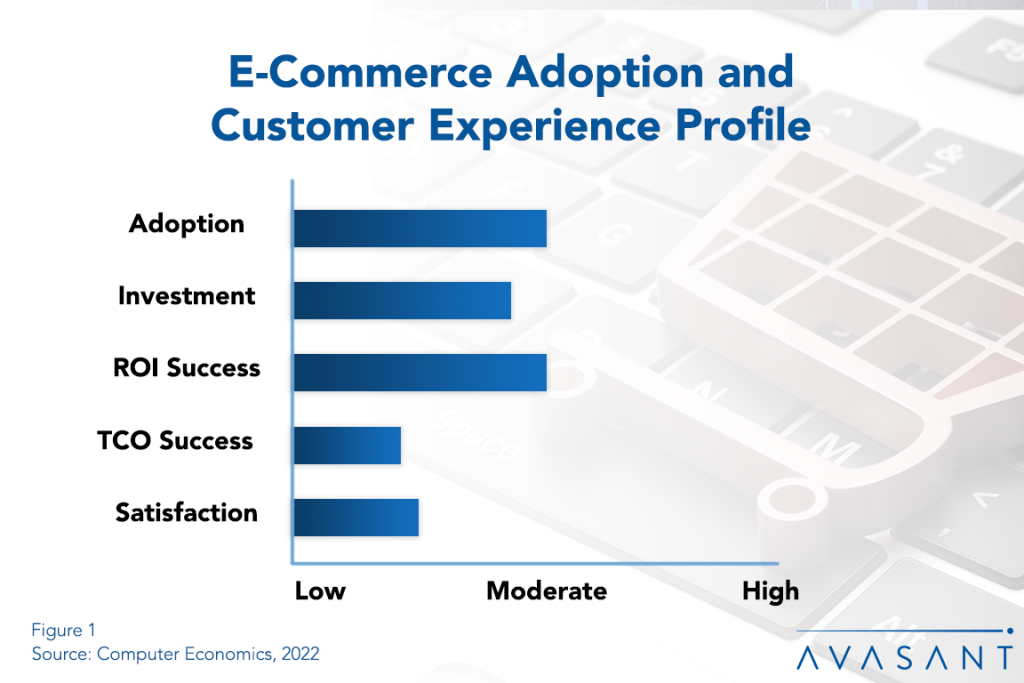
E-Commerce Adoption Trends and Customer Experience 2022
E-commerce technology, while mature, is still evolving. This report provides an overview of e-commerce adoption and investment trends, providing data on how many organizations have the technology in place, how many are in the process of implementing it, and how many are expanding implementations. We also look at the ROI experience, TCO experience, and considered or planned uses for new e-commerce investment. We conclude with important principles to apply in planning and implementing e-commerce systems.
E-Commerce Complexity Causes Customer Experience Challenges
E-commerce technology, while mature, is still evolving. Customer experience is now the focal point as e-commerce systems enable hyperpersonalization. But e-commerce has become increasingly complex resulting in low TCO success and satisfactions rates. This Research Byte provides a summary of our full report on e-commerce adoption trends and customer experience.
Travel and Hospitality Digital Services: Reimagining the Customer Experience Through Hyperpersonalization
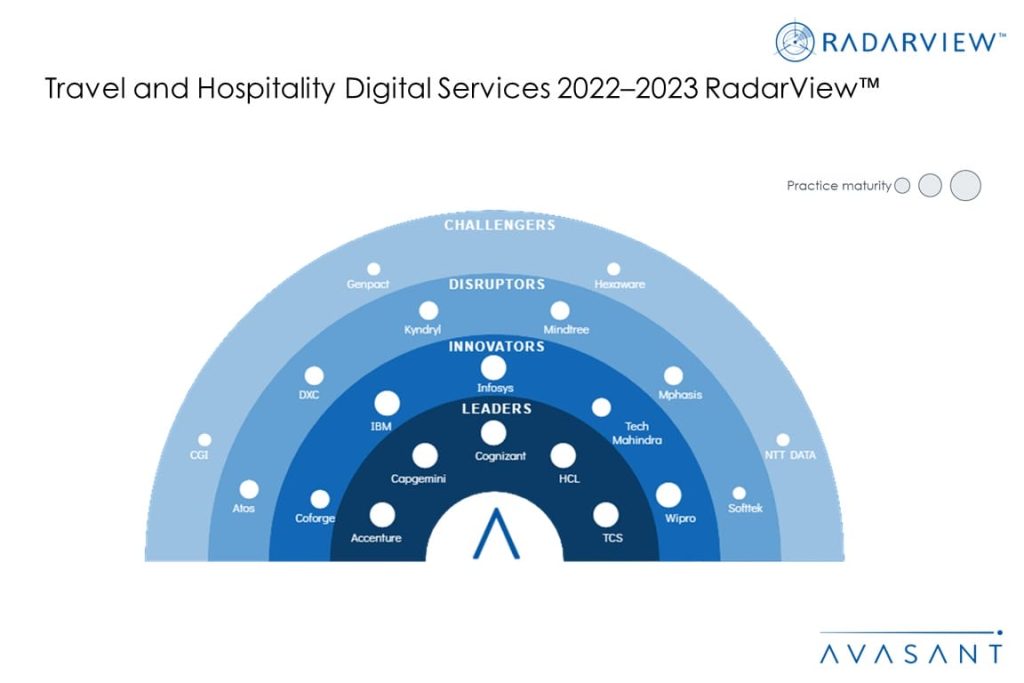
The travel and hospitality industry today is driven by contactless technologies, challenges posed by the pandemic, and the emergence of new customer segments. There is an increasing demand for faster services and customized offerings. Travel and hospitality companies are expanding integration of digital technologies in their offerings and also exploring new technology areas such as the omniverse to disrupt this space and deliver an enhanced level of customer experience. However, all of this requires investment and seamless orchestration of multiple technologies. These emerging trends are covered in Avasant’s Travel and Hospitality Digital Services 2022–2023 RadarView™.
Travel and Hospitality Digital Services 2022–2023 RadarView™
The Travel and Hospitality Digital Services 2022–2023 RadarView™ can help enterprises craft a robust strategy based on industry outlook, best practices, and digital transformation. The report can also aid companies in identifying the right partners and service providers to accelerate their digital transformation. The 93-page report also identifies key service providers and system integrators that can help businesses in their digital transformation journeys.
Supply Chain Management Adoption Trends and Customer Experience 2022
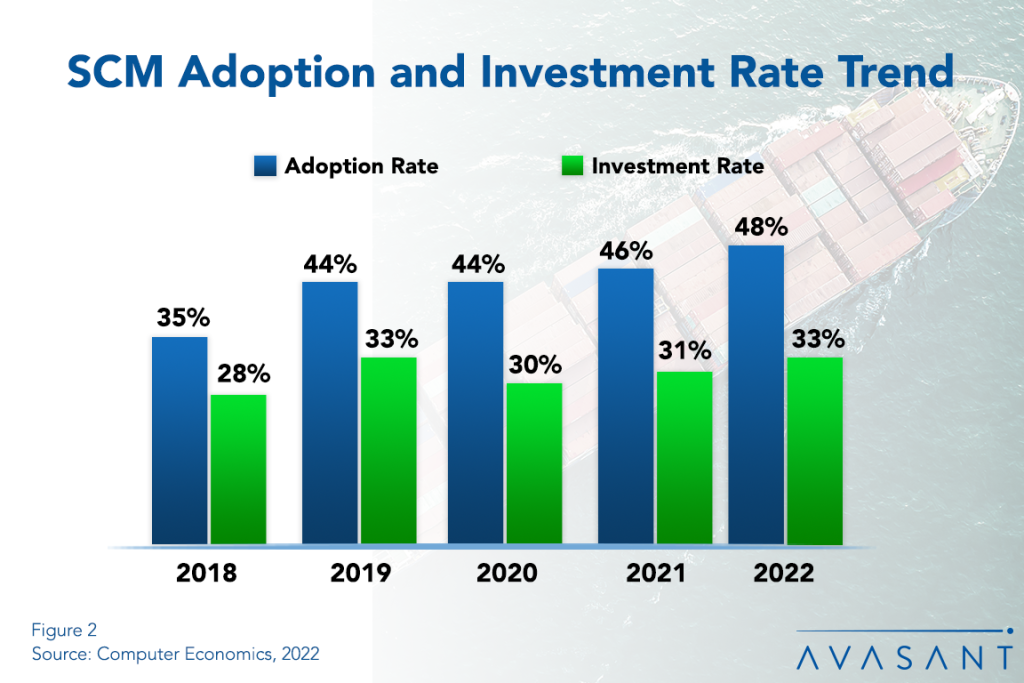
Supply chain management has become a hot topic. From empty grocery shelves to cargo ships lined up at ports, the term “supply chain” is on everyone’s lips. This report quantifies the current adoption and investment trends for SCM technology, as well as the benefits driving companies to expand their implementations. We assess these trends by organization size and sector and look at the ROI and TCO experiences of organizations that have adopted SCM. We conclude with practical advice for those planning new investments in SCM.
Global Crises Fueling New Investments in Supply Chain Management
Global crises continue to push supply chain management systems to the brink. Delays and shortages have led business leaders to question their longstanding commitment to lean inventory, just-in-time manufacturing, and reliance on long offshore supply chains. This Research Byte provides a summary of our full report on supply chain management adoption and customer experience.
Digital Retail Services: Orchestrating an Omnichannel Experience
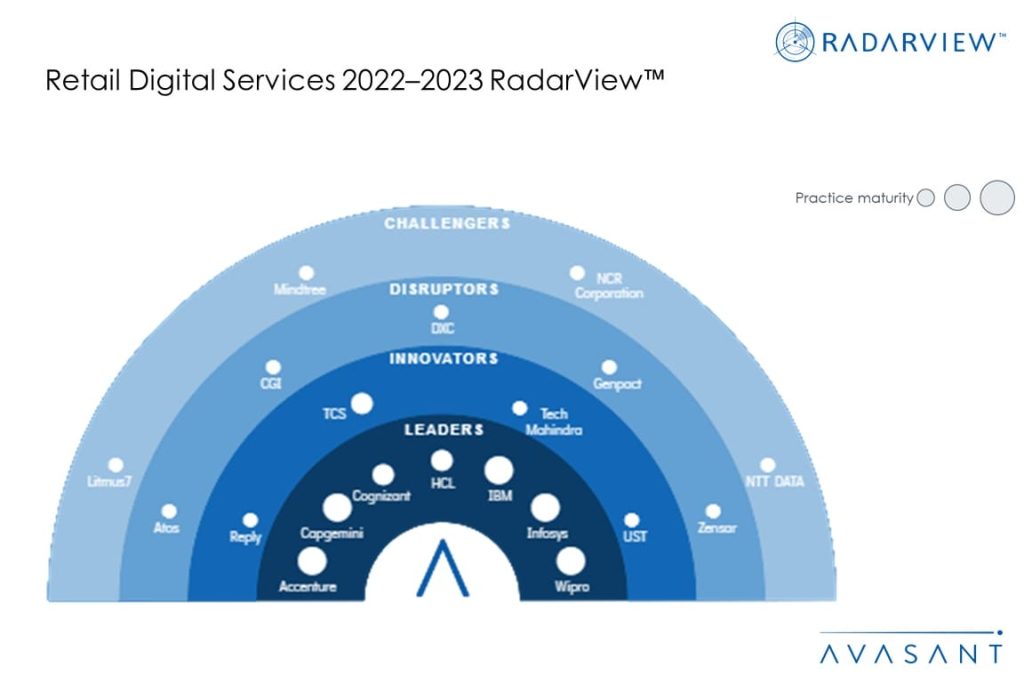
Retail is increasingly hyperpersonal and omnichannel. Pandemic lockdowns and supply chain disruptions have actually raised the bar for consumer expectations as they found they could have anything delivered right to their doorstep. That raised bar means that retailers are increasingly relying on data and AI to map consumer sentiment and needs, and they are deploying digital technology including virtual reality and other immersive technologies to improve the customer experience. However, all of this requires investment and seamless orchestration of multiple technologies. This is best done with partners. These emerging trends are covered in Avasant’s Retail Digital Services 2022–2023 RadarView™.
Retail Digital Services 2022–2023 RadarView™
The Retail Digital Services 2022–2023 RadarView™ can help retailers craft a robust strategy for digital transformation based on industry outlook and best practices. The report can aid businesses in identifying the right partners and service providers to accelerate digital adoption. The 95-page report also identifies key service providers and system integrators that can help enterprises in their digital transformation journeys.