Areas of Interest
Content Type
Industries
- Aerospace and defense
- Banking, Financial Services, and Insurance
- Energy and Resources
- Federal Government
- Healthcare and life sciences
- High-tech and telecommunications
- Higher Education
- Media and entertainment
- Private equity
- Public Sector
- Retail and manufacturing
- Social Impact Institutions
- Travel and transportation
Technologies
- Artificial Intelligence
- Automation
- Blockchain
- Business and data analytics
- Cloud
- Customer relationship management (CRM)
- Cybersecurity
- Digital Services
- Enterprise resource planning (ERP)
- Human capital management (HCM)
- Internet Of Things
- Machine Learning
- Networking
- Supply chain management (SCM)
- Virtual reality/Augmented reality
Areas of Interest


Latest Reports

Avasant Quantum Series: Quantum Sensing in Business – What Every Enterprise Leader Needs to Know
Quantum sensing is a breakthrough technology that leverages the principles of quantum mechanics to measure physical phenomena with exceptional precision. Unlike traditional sensors, quantum sensors can detect minute changes in gravity, magnetic fields, motion, and time, often in environments where classical systems fail. With advantages such as ultrahigh sensitivity and resilience in harsh or GPS-denied conditions, quantum sensing is moving rapidly from research labs into real-world pilots, particularly in sectors such as defense, aerospace, and healthcare. As the technology matures, enterprises are encouraged to focus on high-value, high-complexity use cases where traditional sensing falls short. To fully capitalize on its potential, organizations should partner with specialized innovators, explore codevelopment opportunities, and begin building internal readiness through targeted talent development and infrastructure planning.

Property and Casualty Insurance Digital Services 2025 Market Insights™
The Property and Casualty Insurance Digital Services 2025 Market Insights™ assists organizations in identifying important demand-side trends that are expected to have a long-term impact on any digital project in the P&C insurance industry. The report also highlights key challenges that enterprises face today in this space.
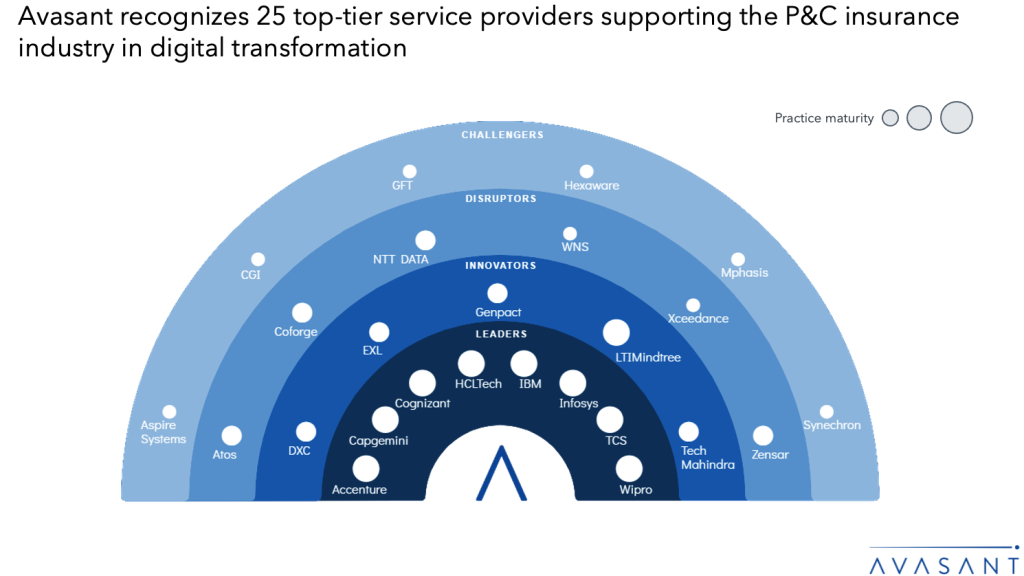
Property and Casualty Insurance Digital Services: Ushering in the AI-First Era with Agentic Intelligence
Property and Casualty Insurance Digital Services 2025 RadarView™
The Property and Casualty Insurance Digital Services 2025 RadarView™ can help enterprises craft a robust strategy based on industry outlook, best practices, and digital transformation. The report can also aid them in identifying the right partners and service providers to accelerate their digital transformation. The 98-page report also highlights top supply-side trends in the P&C insurance digital services space and Avasant’s viewpoint.

Responsible AI Platforms 2025 Market Insights™
The Responsible AI Platforms 2025 Market Insights™ assists organizations in identifying important demand-side trends for navigating the AI operations management landscape and achieving operational efficiency. The report also highlights the key challenges enterprises face today in this space.
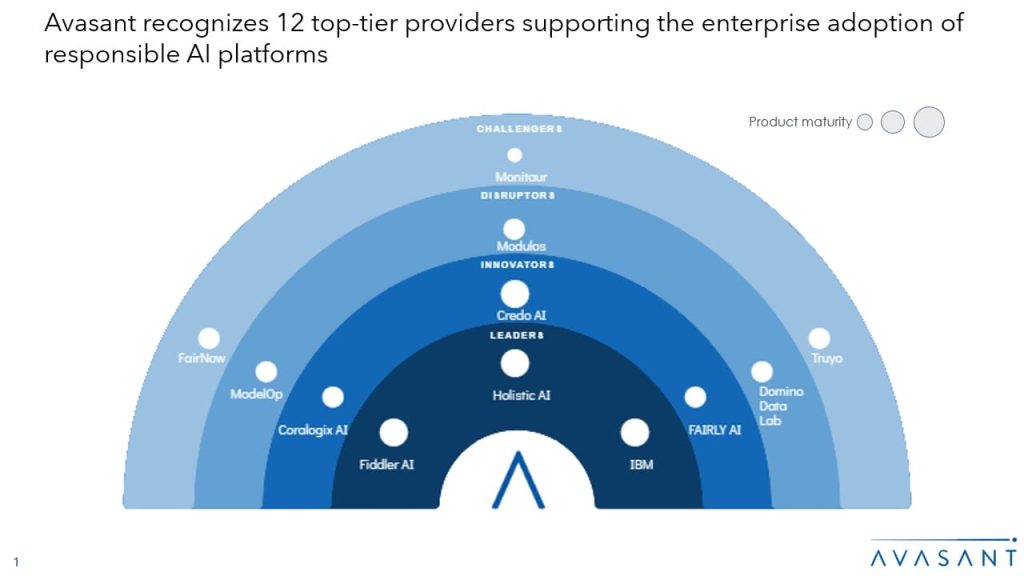
Responsible AI Platforms: Enabling Stringent Responsible AI Measures in the Agentic AI Era
Responsible AI (RAI) is becoming central to enterprise AI strategies, driven by rising AI-related incidents, global regulatory mandates, and the need for embedded governance in enterprise systems. Governments now require AI disclosures, audits, and risk-based assessments, especially in high-risk sectors such as finance and healthcare. In response, RAI vendors are integrating features such as telemetry-based observability, blockchain auditing, adversarial behavior tracking, and domain-specific compliance tools. Platforms are also expanding support with prebuilt governance templates, regulatory toolkits, and AI cost tracking modules to help enterprises manage risks and meet evolving compliance requirements. Both demand- and supply-side trends are covered in Avasant’s Responsible AI Platforms 2025 Market Insights™ and Responsible AI Platforms 2025 RadarView™, respectively.
Responsible AI Platforms 2025 RadarView™
The Responsible AI Platforms 2025 RadarView™ assists organizations in identifying strategic partners for RAI solutions by offering detailed capability and experience analyses for platform vendors. It provides a 360-degree view of key RAI platform vendors across the dimensions of platform maturity, partner ecosystem, and investments and innovation, thereby supporting enterprises in identifying the right platform vendors. The 43-page report highlights top supply-side trends in the RAI space and Avasant’s viewpoint on them.

Data Management and Business Intelligence Staffing Sees Notable Increase After Years of Stability
In the past four years, organizations have maintained data management and business intelligence (DMBI) head count at about 5.4% of the IT staff. However, our latest data shows a significant increase. Traditionally, productivity gains from cloud-based business analysis and reporting tools mitigated the need for more staff. But there is a new business focus. This Research Byte summarizes our full report on data management and business intelligence staffing.
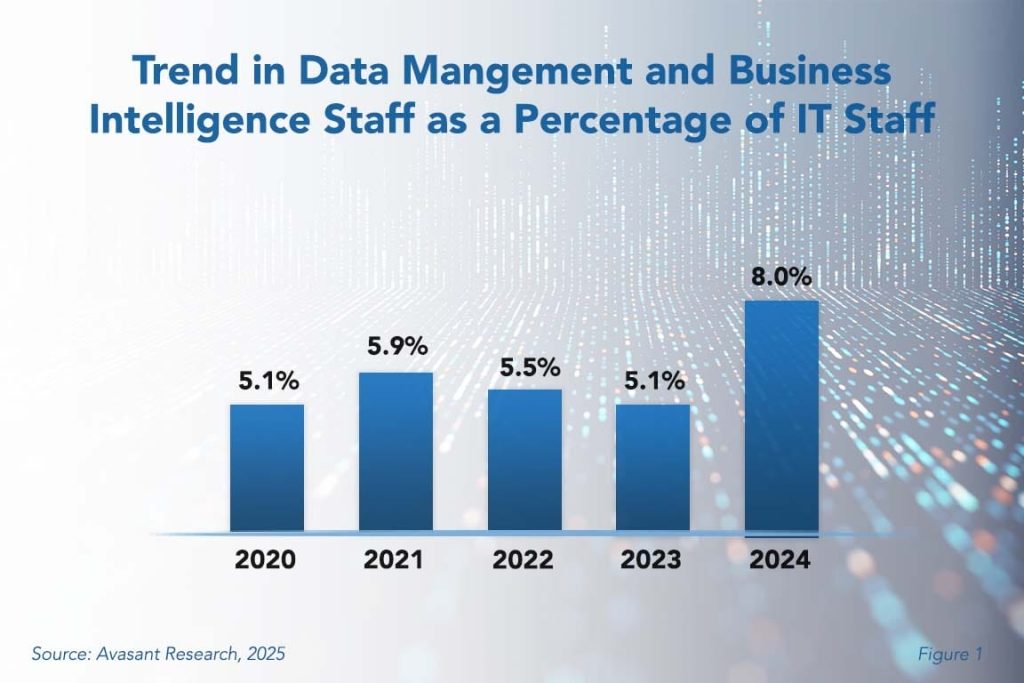
Data Management and Business Intelligence Staffing Ratios 2025
Organizations are increasingly relying on data-driven strategic decisions to maintain a competitive edge, and the demand for actionable insights is skyrocketing. However, the sheer volume of data, driven by IoT, social media, and e-commerce, is overwhelming existing data management and business intelligence (DMBI) capabilities.

App Developers Make Up a Record Low Percentage of IT Staff
In just five years, the proportion of application developers within IT departments has declined sharply from nearly a quarter of the entire IT staff to just over one-tenth. But this notable shift is not necessarily a sign of mass layoffs among application developers. In fact, we have seen no evidence to suggest that fewer developers are working in IT departments. Rather, it signals a change in the overall composition of IT teams and an evolving role for application developers within the organization. This research byte summarizes our full report on application developer staffing ratios.