
 Grid View
 List View
-
Finance and Accounting Budgets, Staffing, and Process Metrics 2024/2025: Chapter 6: Healthcare Payors
Chapter 6 provides benchmarks for health insurance companies. The firms in this sector include companies that sell medical and dental insurance along with healthcare providers that also offer health insurance plans and function as healthcare payors.
January, 2025
-

Human Resources Budgets, Staffing, and Process Metrics 2024/2025: Chapter 10: Process Manufacturing
Chapter 10 provides benchmarks for process manufacturers. Process manufacturers are defined as those where the production process adds value by mixing, separating, forming, or chemical reaction. The sector includes manufacturers of chemicals, petrochemicals, semiconductors, pharmaceuticals, dietary supplements, food and beverage products, cosmetics, building materials, packaging materials, steel, glass, paper products, and other process-manufactured goods.
March, 2025
-

Procurement Budgets, Staffing, and Process Metrics 2025/2026: Chapter 15: Transportation and Logistics Sector Benchmarks
Chapter 15 provides comprehensive benchmarks for procurement staffing and spending within the transportation and logistics industry. This sector includes freight and shipping companies, airlines, rail operators, trucking firms, warehouse providers, and third-party logistics (3PL) service providers. The 15 respondents from this sector vary in size, ranging from companies with annual sales of approximately $500 million to those exceeding $20 billion.
November, 2025
-
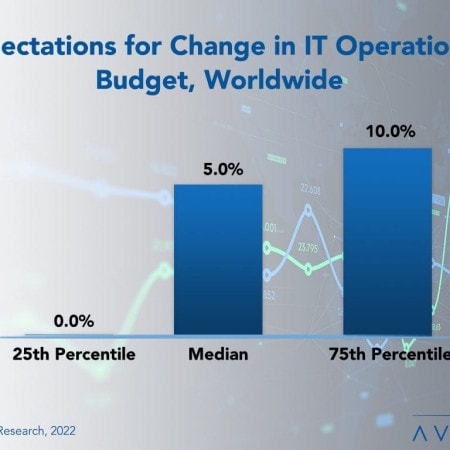
Worldwide IT Spending And Staffing Outlook 2023
Despite most of our survey respondents agreeing that the economy will be worse in 2023 than in 2022, IT spending increases are broad and strong. However, in this annual report of the IT spending and staffing outlook for 2023, we believe there is another major factor at play. We find that IT is no longer seen as a cost center but as a strategic driver of growth. Because of this, business leaders are giving their IT departments greater resources to help plan for the coming recession rather than asking them to tighten their belts.
February, 2023
-
IT Spending and Staffing Benchmarks 2023/2024: Chapter 9: Wholesale Distribution Sector Benchmarks
Chapter 9 provides benchmarks for wholesale distributors. The category includes wholesale distributors of building products, home furnishings, home improvement products, auto parts, industrial components, fuel supply, electronics, food and beverage, and other products. The 31 respondents in the sample range in size from a minimum of about $50 million to $10 billion in revenue.
July, 2023
-
IT Spending and Staffing Benchmarks 2023/2024: Chapter 36: Government Agencies Subsector Benchmarks
Chapter 36 provides benchmarks for federal, state, and regional government agencies. The category includes public health agencies, courts and law enforcement agencies, organizations that provide IT services to government agencies, social service agencies, state parks, and other federal, state, and regional government units. The 21 respondents in the sample have operating budgets that range in size from about $62 million to about $40 billion.
July, 2023
-
IT Spending and Staffing Benchmarks 2023/2024: Chapter 33: Professional Services Subsector Benchmarks
Chapter 33 provides benchmarks for professional services organizations. The 20 respondents in the sample range in size from a minimum of about $50 million to about $2 billion in annual revenue. The sector includes firms that provide professional services, including legal, accounting, financial advice, consulting, marketing, and other services.
July, 2023
-
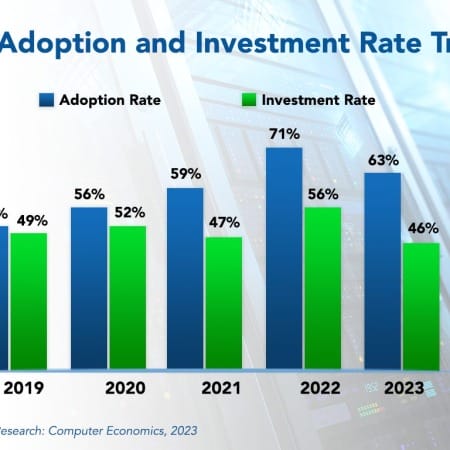
IaaS Adoption Trends and Customer Experience 2023
Infrastructure as a Service (IaaS) has grown significantly in adoption and investment over the last few years as companies seek to become more agile. This growth continues to be driven by the increased need for companies to become more efficient while reducing the cost of their day-to-day operations.
October, 2023
-
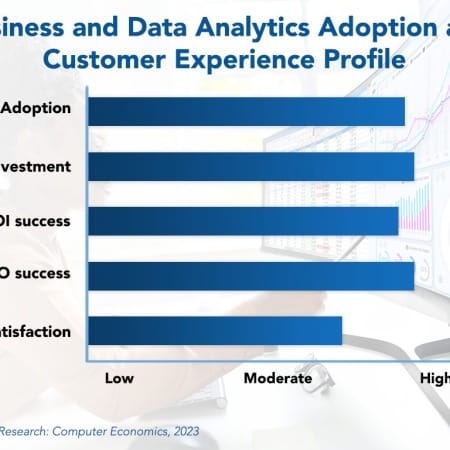
Business and Data Analytics Adoption Trends and Customer Experience 2023
Enterprises may be entering a new paradigm when it comes to business and data analytics. This may be characterized as the third phase of data usage inside the IT department. First came the use of retrospective data, where data was collected and used to analyze and understand previous performance. Second came predictive analytics, where past data was used to predict the future and make enterprise decisions. Most organizations are still mastering this phase.
December, 2023
-
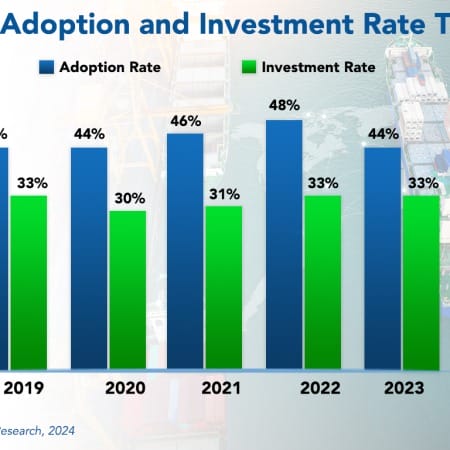
Supply Chain Management Adoption Trends and Customer Experience 2024
Supply chain management (SCM) has become a hot topic in recent years. From grocery shelves running out of toilet paper and cleaning supplies during the pandemic, to shortages of semiconductors leading to auto dealers running out of cars to sell, to cargo ships lined up at the ports of Los Angeles and Long Beach, the term “supply chain” was on everyone’s lips. But given the resolution of global supply chain issues over the past year, what does this mean for future adoption and investments of SCM systems?
February, 2024
-

Encryption Best Practices 2024
Encryption best practices protect sensitive or confidential information, both in storage and in transit. Data encryption software and algorithms translate data into another form or code so that only those with access to a secret key—a decryption key—can read it. Banking details, health records, financial information, or other sensitive personal information must be encrypted so it cannot be intercepted, accessed, or read.
March, 2024
-

Data Governance Best Practices 2024
Businesses are increasingly implementing and embracing digital solutions to optimize enterprise processes and deliver value to customers. However, this digital transformation generates higher volumes of data. How do organizations manage this ever-increasing volume and variety of data? Data governance policies hold the solution. According to our IT Management Best Practices study, 82% of organizations have data governance policies in place this year.
May, 2024
-

IT Spending Trends in Nonprofits and Charitable Organizations 2024
For nonprofits and charitable organizations, enhancing operational efficiency and expanding service reach are top priorities. Strategic IT investments are essential for nonprofits to maximize their impact and achieve their goals. However, organizations in this sector must navigate challenges such as limited funding and a shortage of technical expertise to implement these investments. This report delves into the current IT spending patterns within these organizations, highlighting the growing reliance on IT services to create tailored digital solutions. The report concludes by emphasizing the importance of aligning IT strategy with organizational goals and leveraging technology to drive innovation and service delivery.
August, 2024
-

IT Spending and Staffing Benchmarks 2024/2025: Chapter 13: Transportation and Logistics
Chapter 13 provides benchmarks for the transportation and logistics sector. The 31 respondents in this sample range in size from a minimum of $55 million to over $100 billion. The category includes organizations that operate buses, trucks, railways, airlines, barges, and ships. The sector also includes logistics companies that transport goods, transportation companies, and regional transportation authorities that move people.
September, 2024
-

IT Spending and Staffing Benchmarks 2024/2025: Chapter 42: Government Agencies
Chapter 42 provides benchmarks for federal, state, and regional government agencies. This category includes public health agencies, courts and law enforcement agencies, and organizations that provide IT services to government agencies, social service agencies, state parks, and other federal, state, and regional government units. The 15 respondents in the sample have operating budgets that range in size from about $62 million to about $40 billion.
September, 2024
All Subscriptions
Search results for "" ( 5626 )