Areas of Interest
Content Type
Industries
- Aerospace and defense
- Banking, Financial Services, and Insurance
- Energy and Resources
- Federal Government
- Healthcare and life sciences
- High-tech and telecommunications
- Higher Education
- Media and entertainment
- Private equity
- Public Sector
- Retail and manufacturing
- Social Impact Institutions
- Travel and transportation
Technologies
- Artificial Intelligence
- Automation
- Blockchain
- Business and data analytics
- Cloud
- Customer relationship management (CRM)
- Cybersecurity
- Digital Services
- Enterprise resource planning (ERP)
- Human capital management (HCM)
- Internet Of Things
- Machine Learning
- Networking
- Supply chain management (SCM)
- Virtual reality/Augmented reality
Areas of Interest


Latest Reports
Workday HCM Services 2021–2022 RadarView™
The Workday HCM Services 2021–2022 RadarView™ helps enterprises define their approach for Workday HCM adoption and identify the right implementation partner to support them in their journey. It assesses Workday service providers based on their ability to offer implementation and managed services with limited disruption. The 58-page report also provides our point of view on how Workday service providers are catering to the changing needs of enterprises through a wide portfolio of accelerators and preconfigured solutions, thus delivering a general ranking based on key dimensions of practice maturity, partner ecosystem, and investment and innovation.
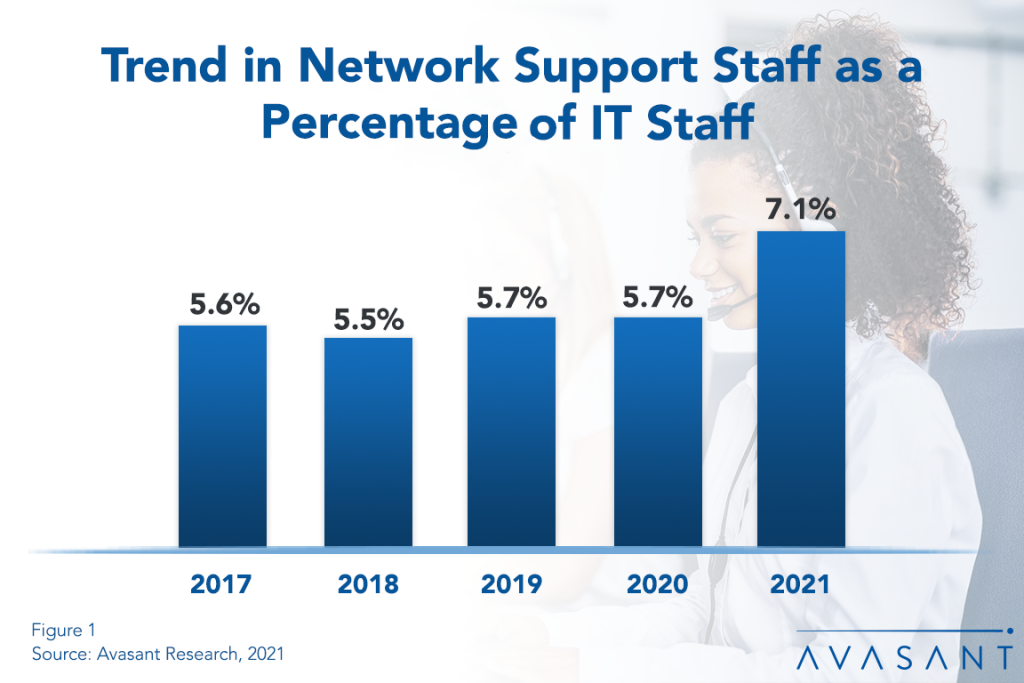
Hybrid Work Stimulating Demand for Network Support Personnel
Although the level of network support staffing plateaued in previous years, there are now signs of resurgence. This is largely the result of the COVID-19 pandemic, with remote and hybrid work styles increasing the demand for network support personnel. This Research Byte summarizes the five-year trend in network support staffing ratios.
Network Support Staffing Ratios 2021
Computer networks are more important than ever. Although the level of network support staffing has plateaued in previous years, there are signs of resurgence. This report will help IT managers determine whether their organization is keeping pace with improvements in network management by comparing their network support staffing ratios against industry benchmarks. We provide four benchmarks: network support staff as a percentage of the IT staff, network support staff as a percentage of the Network and Communications Group, network devices per network support staff member, and users per network support staff member. We provide benchmarks by organization size and sector. We conclude with recommendations for optimizing the cost of network support staff.
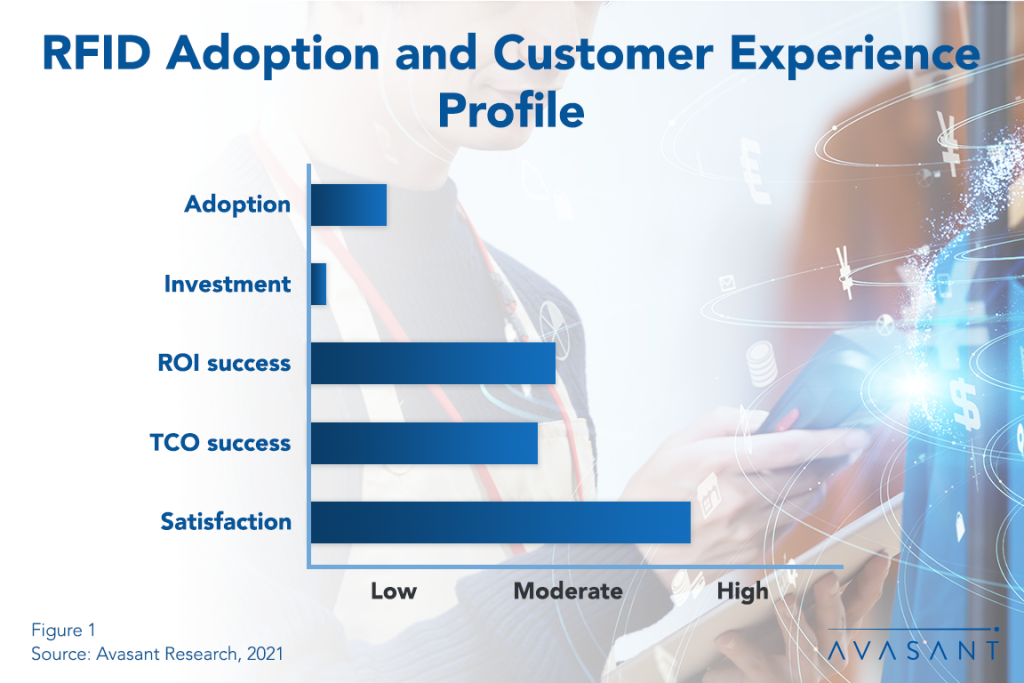
RFID Slowly Gaining Ground but Tagged with Cost Concerns
Radio-frequency identification (RFID) is gaining ground in certain industry sectors and applications where its benefits are clear. But adoption of the technology has been relatively slow, due to its expensive upfront costs, high number of tags and frequencies, and the difficulty integrating the technology into systems. This Research Byte summarizes the full report, RFID Adoption Trends and Customer Experience.
RFID Adoption Trends and Customer Experience 2021
Radio-frequency identification is gaining ground in certain industry sectors and applications where its benefits are clear. Although RFID may one day become even more widespread than barcodes, it will take longer than its advocates hope for. This report quantifies the current adoption and investment trends for RFID technology as well as the benefits driving companies to expand their RFID implementations. We assess these trends by organization size and sector and examine the ROI and TCO experiences of adopters. We conclude with practical advice for planning new investments in RFID technologies.
Hybrid Cloud: From Optimization to Automation
As organizations increasingly move workloads to the cloud, there has been a gradual shift from merely lifting and shifting systems to cloud to a truly cloud-native architecture for modernization and automation. IT leaders are looking to incorporate intelligent cloud management practices such as artificial intelligence for IT operations (AIOps), DevOps, and financial operations (FinOps) to reduce deployment efforts and optimize cloud spend. To address this shift, traditional service providers are building their own tools and accelerators and acquiring next generation cloud service providers.
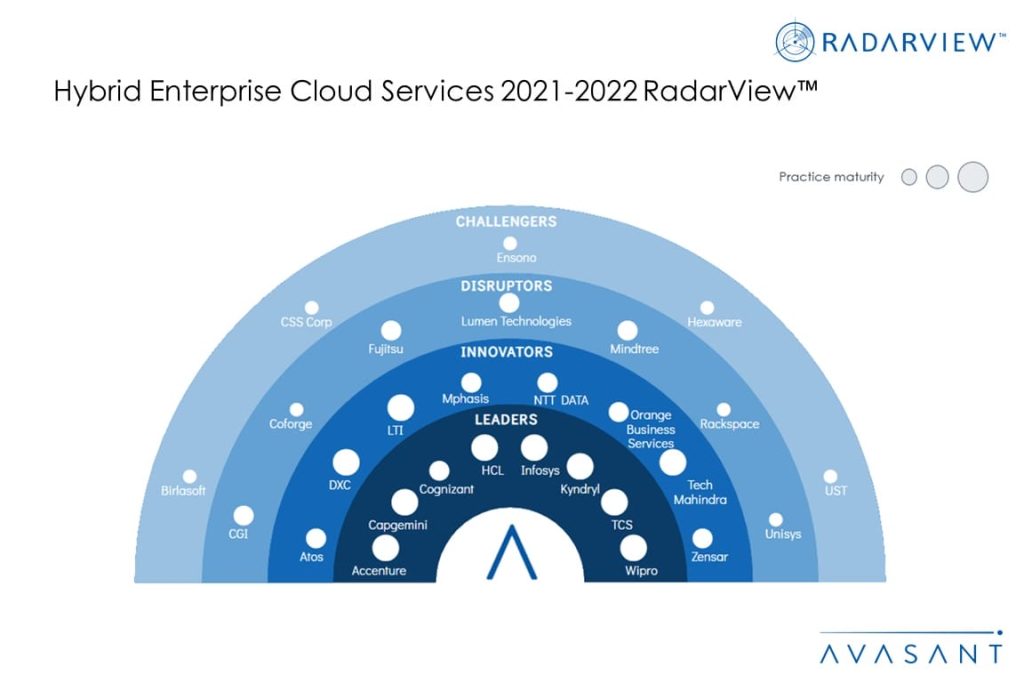
Hybrid Enterprise Cloud Services 2021–2022 RadarView™
The Hybrid Enterprise Services 2021–2022 RadarView™ provides information to assist enterprises in charting out their action plan for developing a hybrid cloud environment. It identifies key global service providers and system integrators that can help expedite their digital transformation journeys. It also brings out detailed capability and experience analyses of leading providers to assist organizations in identifying strategic partners. The 87-page report also highlights top industry trends in the hybrid cloud space and Avasant’s viewpoint on them. It delivers a general ranking across the key dimensions of practice maturity, partner ecosystem, and investment and innovation.
Data-driven Transformation Leads Next Disruption in Canada
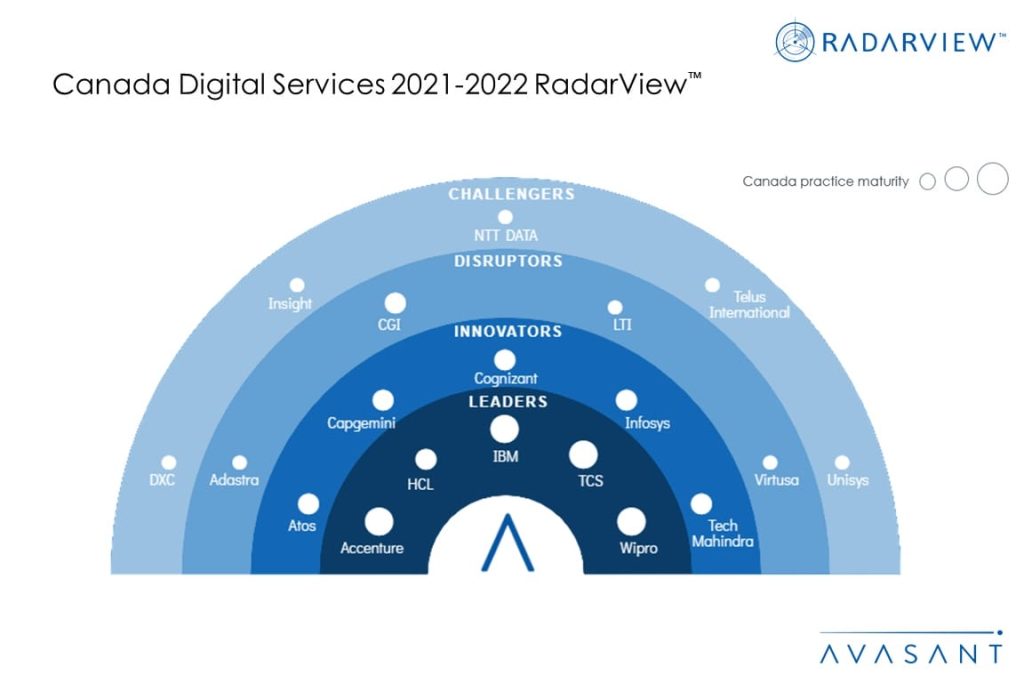
Strong digital adoption in Canada has been benefitting the economy and aiding recovery from the pandemic. However, 72% of active digital projects in the region are focused on improving operational efficiencies and 20% of digital projects aim to meet evolving customer expectations. To elevate customer experience, regional firms are now enabling data-driven transformation by adopting artificial intelligence (AI) and analytics. But, they are facing challenges in upskilling talent and strengthening their cybersecurity posture. These emerging trends are covered in Avasant’s Canada Digital Services 2021–2022 RadarView™.

Canada Digital Services 2021–2022 RadarView™
The Canada Digital Services 2021–2022 RadarView™ addresses Canadian enterprises’ needs and helps them identify and adopt the right technologies combined with appropriate implementation strategies. The 91-page report also identifies key service providers and system integrators that can help these enterprises in business transformation.
Service Providers Facilitating the Jump from Legacy Systems to Oracle Cloud ERP
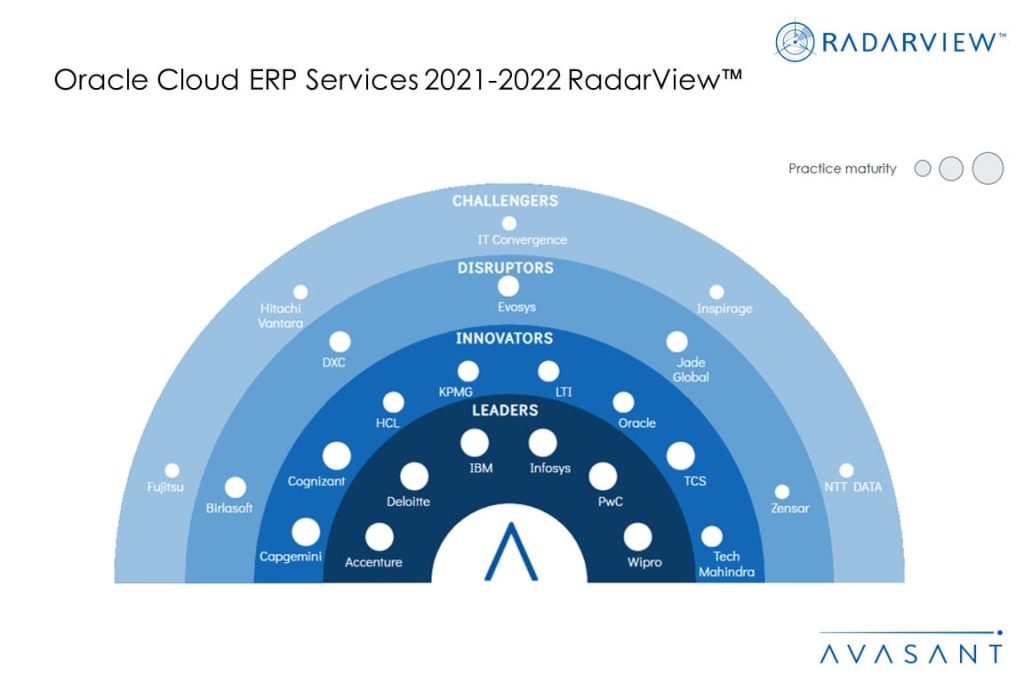
Over the past two years, enterprises have accelerated their adoption of Oracle Cloud Enterprise Resource Planning (ERP), in many cases to replace older, highly customized ERP systems. The unified platform provided by Oracle Cloud ERP is an integrated environment that helps optimize business processes, improves process visibility, and is better able to handle increasing customer demand.