Areas of Interest
Content Type
Industries
- Aerospace and defense
- Banking, Financial Services, and Insurance
- Energy and Resources
- Federal Government
- Healthcare and life sciences
- High-tech and telecommunications
- Higher Education
- Media and entertainment
- Private equity
- Public Sector
- Retail and manufacturing
- Social Impact Institutions
- Travel and transportation
Technologies
- Artificial Intelligence
- Automation
- Blockchain
- Business and data analytics
- Cloud
- Customer relationship management (CRM)
- Cybersecurity
- Digital Services
- Enterprise resource planning (ERP)
- Human capital management (HCM)
- Internet Of Things
- Machine Learning
- Networking
- Supply chain management (SCM)
- Virtual reality/Augmented reality
Areas of Interest


Latest Reports
The Evolving Future of Clinical and Care Management: From Utilization to Intelligence-driven Care
Clinical and care management has undergone a fundamental shift in recent years, moving from reactive, utilization-focused models to proactive, patient-centered approaches that prioritize prevention, personalization, and care continuity. The integration of technologies such as generative AI, automation, analytics, and digital triage tools has enabled more precise risk stratification, faster prior authorizations, and smarter care coordination. Organizations are embedding clinical decision support tools and virtual care capabilities across the care continuum, improving both outcomes and operational efficiency. Looking ahead, the future of clinical and care management lies in building intelligent, scalable ecosystems where data flows seamlessly across providers, payors, and patients. This will be driven by AI-powered population health tools, adaptive care pathways, and real-time clinical insights that enable early interventions and reduce unnecessary utilization, ultimately reshaping how care is delivered and managed.
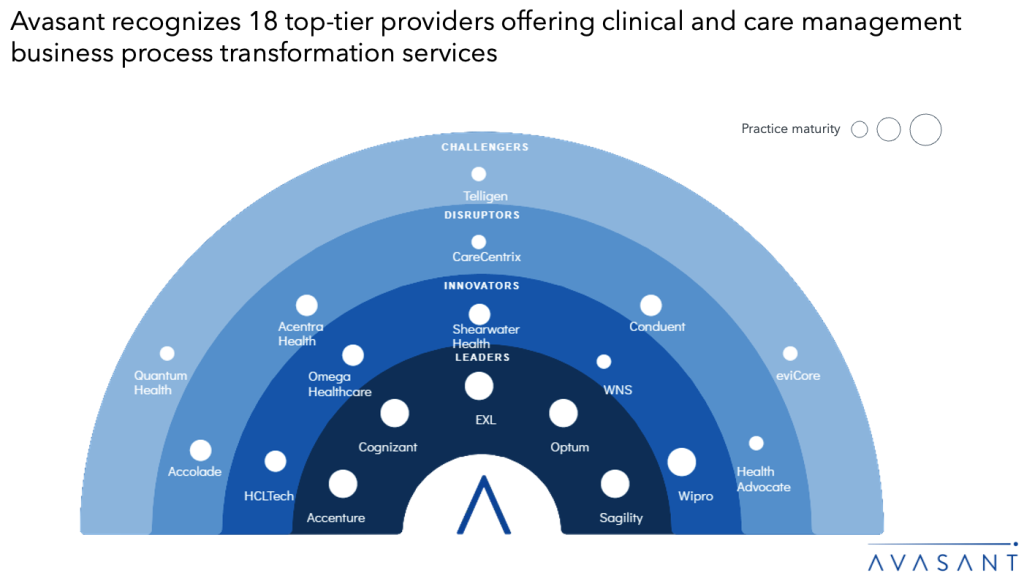
Clinical and Care Management Business Process Transformation 2025 RadarView™
The Clinical and Care Management Business Process Transformation 2025 RadarView™ provides information to assist enterprises in building a clinical and care management strategy and charting an action plan for clinical and care management operations service transformation. It identifies service providers that can help expedite global clinical and care management services transformation. It also brings out detailed capability and experience analyses of leading providers to assist businesses in identifying the right strategic partners. The 59-page report highlights key industry trends in the clinical and care management transformation space and Avasant’s viewpoint.

From Complexity to Clarity: Divestitures Reshaping the Future of Retail and CPG
The retail and consumer packaged goods (CPG) industry is facing mounting pressure to adapt to rapidly evolving market dynamics with global uncertainties, geopolitical tensions, and restrictive trade policies leading to challenging environments for business. As the business landscape is evolving fast, enterprises are dynamically reshaping their portfolios to maintain a competitive edge, and divestitures have emerged as a strategic lever to unlock value and sharpen focus. The transformative power of digital technology and continued advancement in AI, shifting consumer behaviors, complying with sustainability and ESG regulatory requirements, strategic realignment, and reducing overall risk are forcing legacy retail and CPG companies to rethink their business models. This allows organizations to refocus on core brands, shed underperforming or non-aligned assets, and unlock value in businesses that may thrive better outside the parent company’s structure.

Advanced Network Services 2025 Market Insights™
The Advanced Network Services 2025 Market Insights™ assists organizations in identifying important demand-side trends that are expected to have a long-term impact on any of their advanced network projects. The report also highlights key advanced network implementation challenges that enterprises face today.
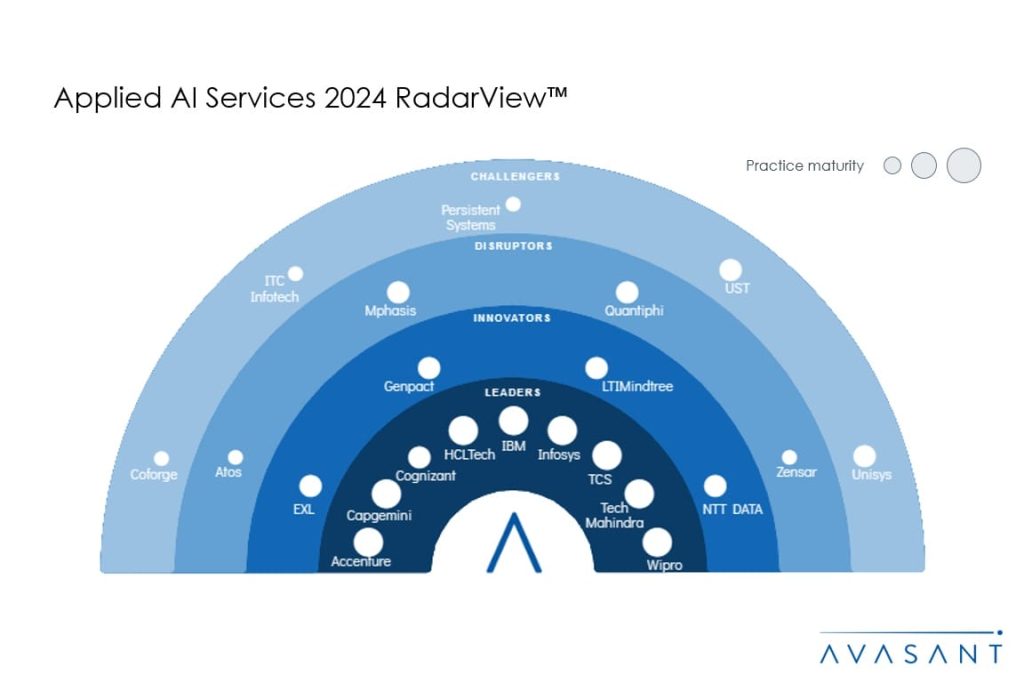
Advanced Network Services: Building a Flexible Foundation with Rapid Network Reconfiguration and Seamless Workload Mobility
Advanced Network Services 2025 RadarView™
The Advanced Network Services 2025 RadarView™ assists organizations in identifying strategic partners for advanced network services by offering detailed capability and experience analyses for service providers. It provides a 360-degree view of key advanced network service providers across practice maturity, partner ecosystem, and investments and innovation, thereby supporting enterprises in identifying the right advanced network services partner. The 64-page report highlights top supply-side trends in the advanced network services space and Avasant’s viewpoint on them.
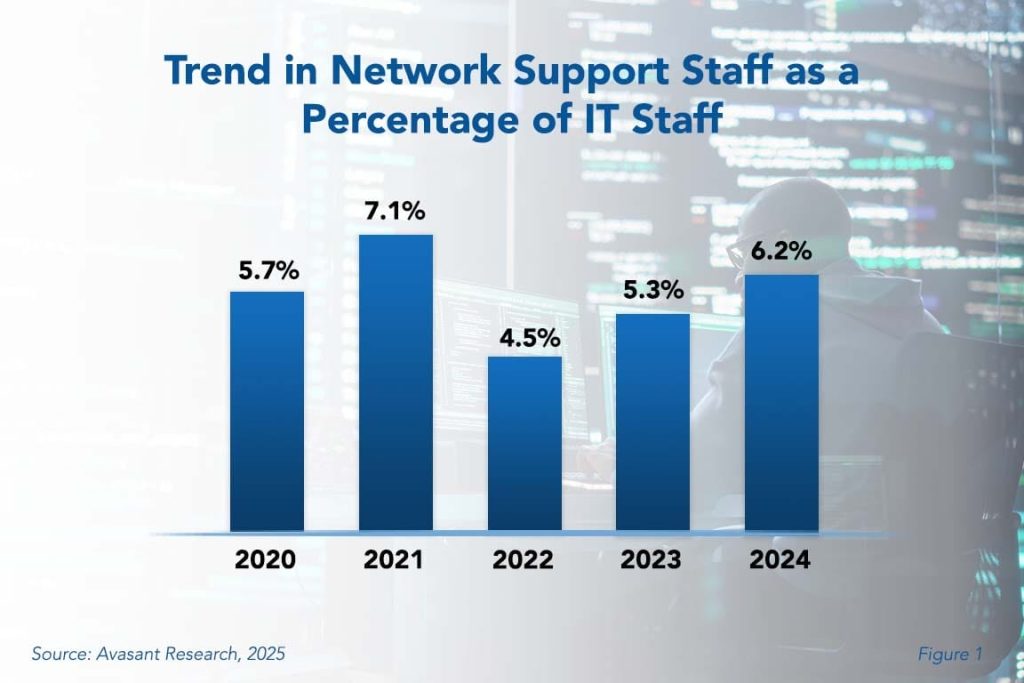
Network Support Staffing Ratios 2025
Following a sharp decline in 2022, the demand for network support personnel has increased and they now make up a larger portion of the IT staff than they have since 2021. Network staffing has been highly volatile in recent years due to economic and technological factors, ranging from the COVID-19 pandemic to the growth of AI.

Network Support Staffing Rebounds
Over the past three years, network support staff have constituted a larger proportion of the IT staff. While the initial surge in remote work has stabilized and the use of advanced technologies has increased, hybrid work models remain prevalent. Consequently, the need for robust IT infrastructure and cybersecurity measures persists. This Research Byte highlights the causes of this notable increase and suggests how businesses can continue to adapt to changes in IT services and staffing requirements.

Navigating Contract Management in Divestitures
Managing contracts during divestitures is a challenging process that needs careful preparation and implementation. Early artificial intelligence (AI) integration can improve accuracy, expedite procedures, and yield insightful information, which will make managing intricate contracts and guaranteeing compliance simpler.

Banking Process Transformation 2025 Market Insights™
The Banking Process Transformation 2025 Market Insights™ assists enterprises in identifying important demand-side trends that are expected to have a long-term impact on any banking process transformation engagement. The report also highlights key challenges that banking entities face today.