
 Grid View
 List View
-
Software-Defined Networking Adoption Trends and Customer Experience
Software-defined networking (SDN) continues the trend of virtualizing everything in the data center. Server, storage, and desktop virtualization might be more accepted and mature, but SDN completes a puzzle that allows for an efficient, automated data center that can be quickly reconfigured. This study quantifies the current adoption and investment trends for SDN as well as the benefits driving companies to expand their SDN implementations. We assess these trends by organization size, sector, and geography. We look at the ROI and TCO experiences of adopters along with current investment levels. We conclude with practical advice for planning new investments in SDN. (18 pp., 9 fig.)[Research Byte]
March, 2017
-
Self-Driving Cars and IT’s Automation Problem
Machine learning saves time and money, and it frees humans from tedious tasks. However, there is an interesting and little-discussed downside to automation—human reaction time. This research byte applies some early lessons learned with self-driving cars and applies them to the challenge of automation in the data center.
February, 2017
-
Social Business/Collaboration Systems Adoption High with Good ROI
The adoption rate for social business/collaboration tools continues to be high, and businesses are finding good returns on investment. This Research Byte reviews the adoption and customer experience profile of this technology.
February, 2017
-
Social Business/Collaboration Systems Adoption Trends and Customer Experience
Social business/collaboration tools are a vital part of the productivity of the modern workforce. When deployed correctly, organizations have had excellent financial success with these systems. This study quantifies the current adoption and investment trends for social business/collaboration tools, as well as the benefits driving companies to expand their implementations of such systems. We assess these trends by organization size, sector, and geography. We look at the ROI and TCO experiences of adopters along with overall customer satisfaction. We conclude with practical advice for planning new investments in social business systems. (20 pp., 9 fig.)[Research Byte]
February, 2017
-
Fewer Companies Outsourcing Disaster Recovery
While most organizations keep the critical disaster recovery function in-house, outsourcing can be very helpful to take advantage of skills and resources that are difficult or expensive to maintain. In this Research Byte we review the five-year trend in the frequency of disaster recovery outsourcing.
February, 2017
-
Disaster Recovery Outsourcing Trends and Customer Experience 2017
Because information technology plays a significant role in the functioning of nearly all business operations, it is essential for IT organizations to be able to restore services after a disaster. This report analyzes the percentage of organizations outsourcing disaster recovery capabilities (frequency), the scope of work outsourced (level), and the change in the amount of work being outsourced (trend). We also present data on the cost and service experiences of IT organizations that outsource disaster recovery, and we identify the business sectors most likely to outsource their disaster recovery operations. (18 pp., 9 fig.) [Research Byte]
February, 2017
-
Enterprise Architecture Not Widely Embraced
Enterprise architecture is an IT best practice that provides a high-level description of the organization in its desired state. But despite the benefits of this approach, enterprise architecture remains a moderately adopted best practice. In this Research Byte we review the practice rate trend for enterprise architecture.
February, 2017
-
Enterprise Architecture Adoption and Best Practices
While large IT project failures generate headlines, an even larger risk may be the incoherence that comes from developing new systems and capabilities without an overall vision or plan. Enterprise architecture is an IT best practice that provides a high-level description of the organization in its desired state. In this study, we analyze how many organizations have adopted enterprise architecture, how many have fully embraced the practice, and how many are likely to adopt the practice in the future. We conclude with an assessment of the various approaches to enterprise architecture and recommendations on best practices. (14 pp., 5 fig.) [Research Byte]
February, 2017
-
Cloud ERP: Three Things to Like about Acumatica
One of the most rapidly growing new entrants to the ERP market is Acumatica. This Research Byte identifies three characteristics of Acumatica that are somewhat novel in the ERP world. Although Acumatica may be unnecessarily limiting itself to small companies, buyers may want to give it a look.
February, 2017
-
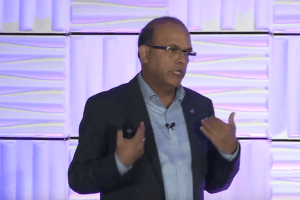
The Digital Age for Traditional Organizations
For companies that were fundamentally founded on traditional models, the move toward digital is critical. However, these companies typically face more challenges than their digital native counterparts. Some are even digital skeptics that still view IT as a supporting and back office function, even as data shows that companies farthest along the on the digital maturity curve are 8 times more likely to have gained share than the 15% of companies that are least mature.
February, 2017
-
IT Project Portfolio Management Best Practice Adoption
Just as a mutual fund manager manages a portfolio of stocks, IT executives use project portfolio management (PPM) to maximize the ROI of their IT projects as a portfolio. Although the majority of organizations have adopted PPM as a best practice, there is room for this discipline to grow and mature. In this study, we look at PPM adoption trends by organization size and industry. We conclude with an overview of PPM tools and best practices. (15 pp., 5 fig.) [Research Byte]
February, 2017
-
Use of Project Portfolio Management Continues to Fluctuate
Just as a mutual fund manager manages a portfolio of stocks, IT executives use project portfolio management (PPM) to maximize the ROI of their IT projects as a portfolio. But although the majority of organizations have adopted PPM as a best practice, there is room for this discipline to grow.
February, 2017
-
Help Desk Personnel as a Percentage of IT Staff Drops Slightly
When viewed as a percentage of the IT staff, the ranks of help desk personnel dipped slightly during the past year—although the ratio in 2016 was in line with the percentages from 2012-2014. In this Research Byte, we review the trend in help desk staff as a percentage of the IT staff.
February, 2017
-
Help Desk Staffing Ratios 2017
The help desk not only plays a key role in maintaining user productivity, it also serves as the day-to-day face of the IT department. This study provides staffing benchmarks for this important function. We look at the trend in help desk staffing over a five-year period and provide two benchmarks by organization size and sector: help desk staff as a percentage of the IT staff and users per help desk staff member. Because companies organize the end-user support function in different ways, we also provide benchmarks for a combined help desk and desktop support staff. (19 pp., 7 fig.) [Research Byte]
February, 2017
-
Business and Data Analytics Tops Tech Trends List
Business and data analytics ranks No. 1 among the top technologies that organizations are investing in for 2017, based on the Computer Economics Technology Trends 2017 report. In this Research Byte we review the adoption and investment rates of twelve technologies in our annual report.
February, 2017
Areas of Interest
Search results for "" ( 5626 )