
 Grid View
 List View
-

IT Spending and Staffing Benchmarks 2025/2026: Chapter 43: Construction and General Contracting Subsector Benchmarks
Chapter 43 provides benchmarks for construction and general contracting companies. The 22 respondents in the sample range in size from about $150 million to over $80 billion in annual revenue. This subsector includes commercial, residential, and industrial construction contractors, as well as engineering and infrastructure development companies.
August, 2025
-

Shokworks’ Blockchain Breakthroughs
Companies are faced with a multitude of technologies to invest in from AI, blockchain, data analytics, automation, and more. But seeing past the technology and understanding how to deploy it to get real-world business results is key. When engaging a provider to help, this becomes doubly important. There are many companies that dabble in blockchain, but few know how to get the best results. One of these is Shokworks Inc., a Dallas-based company that is pioneering creative, viable solutions that span industries, from sports to education to entertainment and more.
October, 2024
-

European IT Spending and Staffing Benchmarks 2025/2026: Chapter 33: Technical Services
Chapter 33 provides benchmarks for technical services organizations. The 18 respondents in the sample range in size from a minimum of about €110 million to about €70 billion in annual revenue. This subsector includes firms that provide technical services, such as engineering, architectural, scientific, research, and other services.
September, 2025
-

IT and Apps Managed Services Pricing and Solution Trends: H2 2024
In this report, Avasant provides key information on solutions and pricing trends for the IT and apps managed services industry within the past 6–12 months. The report covers several aspects, including market trends, pricing model trends, and pricing and staffing trends in the space. The geographical scope of the report is global, although there is an emphasis on data points from North America. The report leverages valuable insights from our enterprise interactions, ongoing market research, data collection through primary research, and the AvaMark™ Price Benchmarking database.
February, 2025
-

European IT Spending and Staffing Benchmarks 2025/2026: Chapter 18: Media and Information Services
Chapter 18 provides benchmarks for the media and information services sector. This sector includes publishing, broadcasting, entertainment, and digital media organizations, as well as other media and information services companies. The 17 respondents in the sample have annual revenues ranging from about €50 million to around €10 billion.
September, 2025
-

Proactive Risk Management in Complex Vendor Networks
Working with multiple vendors offers key advantages, such as cost savings and quality improvements. More importantly, engaging multiple vendors helps reduce reliance on a single supplier, which protects the organization from potential supply chain disruptions, financial instability, or operational failures on behalf of one vendor. However, this benefit comes with the challenge of managing a more complex network of vendor relationships. To mitigate risks effectively in a multi-vendor environment, businesses need clear contract management, strategic vendor selection, greater transparency, and rigorous performance monitoring. Balancing risk reduction with operational efficiency is key to ensuring successful mitigation without disrupting the organization.
July, 2025
-

Rethinking B2B Marketing Execution:The Age of Execution Reinvention
In Rethinking B2B Marketing Execution: The Age of Execution Reinvention, a report by Avasant commissioned by 2X, we examine how enterprise CMOs are redesigning how work gets done. The data is clear: the current model can’t keep up with pipeline goals, but leaders are already shifting.
August, 2025
-

Intelligent Sourcing to Autonomous Sites: How AI is Redefining Construction
The engineering and construction (E&C) industry has historically lagged in digital adoption, ranking among the least digitized sectors globally. While industries such as manufacturing built robust digital backbones, construction remained anchored in legacy systems and labor-intensive practices. Avasant’s IT Spending Trends in Construction and Trade Services 2024 highlights that IT budgets in construction are not only smaller in proportion to revenue but also stretched thin across fragmented organizations and project-based models. For small and mid-sized contractors, the industry’s backbone, these constraints often limit investment in next-generation platforms.
September, 2025
-

IT and Apps Managed Services Provider Trends: Quarterly Report for CQ2 2025
In this quarterly report (calendar quarter 2, 2025), Avasant provides key information on IT and apps managed services provider trends. The report covers key information on the IT services industry and the provider ecosystem. It covers the service provider facts and figures (including revenue and resource trends) and executive sentiment from the service provider community. The report covers trends across a gamut of IT services, including but not limited to IT infrastructure, application, and end-user services. The geographic coverage for the report is global. It builds on insights gathered through ongoing market research, data collection, and proprietary databases. It includes market data from providers accessed through multiple sources such as public disclosures, market interactions, and deals data.
October, 2025
-

Digital Engineering Services 2025–2026 RadarView™
The Digital Engineering Services 2025–2026 RadarView™ can help enterprises identify the right partners and service providers to implement their digital engineering strategy by providing detailed capability and experience analysis for leading service providers. The report provides a 360-degree view of key providers for digital engineering services across practice maturity, partner ecosystem, and investments and innovations. The 70-page report also highlights top supply-side trends in the digital engineering space and Avasant’s viewpoint.
November, 2025
-

State and Local Government Digital Services 2024 Market Insights™
The State and Local Government Digital Services 2024 Market Insights™ assists organizations in identifying important demand-side trends that are expected to have a long-term impact on any digital project in the state and local government space. The report also highlights key challenges that enterprises face today.
July, 2024
-
Banking Process Transformation 2023 RadarView™
The Banking Process Transformation 2023 RadarView™ assists banks and financial companies in identifying strategic partners for banking process transformation by featuring detailed capability and experience analyses of service providers in this space. It provides a 360-degree view of the service providers across practice maturity, domain ecosystem, and investments and innovation, thereby supporting enterprises in identifying the right partner in the banking process transformation space. The 68-page report highlights top supply-side trends in the banking process transformation arena and Avasant’s viewpoint on them.
May, 2023
-

Digital CX Services 2023 Market Insights™
The Digital CX Services 2023 Market Insights™ assists organizations in identifying important demand-side trends that are expected to have a long-term impact on any digital CX services project. The report also highlights key challenges that enterprises face today.
August, 2023
-

United Kingdom (UK) Digital Services 2023–2024 RadarView™
The United Kingdom (UK) Digital Services 2023–2024 RadarView can help enterprises based in the UK to craft a robust strategy based on regional outlook, best practices, and digital transformation. The report can also aid them in identifying the right partners and service providers to accelerate their digital transformation in this space. The 102-page report also highlights top market trends in the UK region and Avasant’s viewpoint.
December, 2023
-
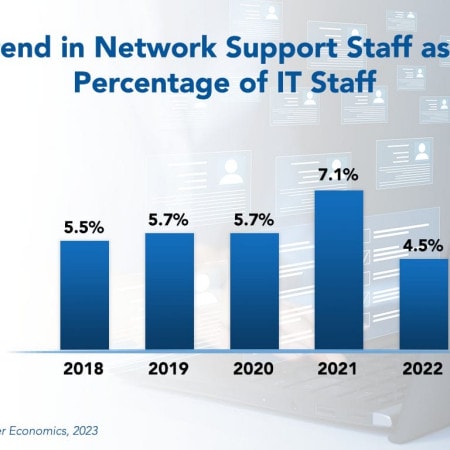
Network Support Staffing Ratios 2023
The COVID-19 pandemic increased the number of employees working from home. This accelerated an already increasing demand for network support staff brought on by cloud transformation and caused the number of network support personnel to spike in 2021. However, 2022 trends show a decrease in network support staffing to below pre-pandemic levels. This may be due to businesses reverting to “normal” operations, an increase in automation, a growth in other IT areas, or a combination of these and other factors.
May, 2023
Areas of Interest
Search results for "" ( 5626 )