
 Grid View
 List View
-
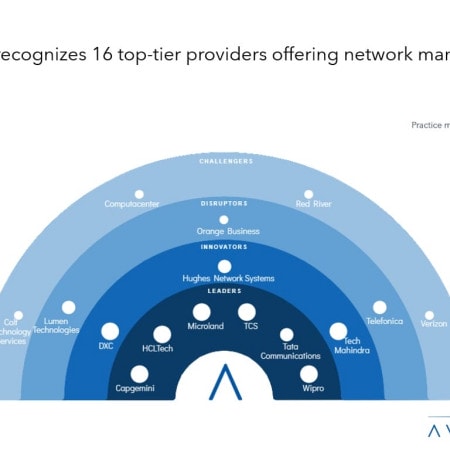
Network Managed Services: Optimizing Network Operations Effectively
Enterprises encounter several challenges in managing their network infrastructure, such as scalability issues, security vulnerabilities, and resource limitations. In today’s dynamic digital environment, it is crucial for businesses to overcome these challenges to adapt to evolving demands and remain competitive and resilient. This requires comprehensive assessments, strategic planning, and tailored technology implementation. Furthermore, effective network monitoring, maintenance, and troubleshooting are vital to ensuring seamless operations and minimizing downtime. Additionally, service providers are helping enterprises with proactive security measures, compliance adherence, and efficient resource utilization, empowering enterprises to focus on core objectives while effectively managing network complexities.
April, 2024
-

Deloitte’s Global Restructuring – Streamlining for the Future
Deloitte’s decision to undertake its most significant restructuring in a decade reflects the challenges faced by major consultancy firms amid an expected market slowdown. The goal of the restructuring is to reduce the number of Deloitte’s primary business units from five to four, streamlining its operations. The largest Big Four professional services firm is planning to reorganize its global structure and streamline its advisory businesses to reduce the organizational complexity and free up more partners to work with clients, driven by the need to cut costs and simplify operations amid anticipated market challenges.
May, 2024
-

Incorporating Technology Levers and Digital Expertise to Meet Evolving Supply Chain Needs
The supply chain landscape is undergoing a transformative shift, propelled by the convergence of pandemic-induced disruptions, shipping challenges, geopolitical instabilities, and inflationary pressures. Traditionally linear and siloed supply chain operations, from sourcing and procurement to manufacturing, distribution, and disposition, are now being reimagined. Digitalization is the linchpin in this evolution, streamlining decision-making and optimizing processes to mitigate costs. Where cost-minimization in sourcing and distribution once reigned, the focus has pivoted to resilience, adaptability, and visibility have become critical priorities in navigating the complexities of today’s supply chain dynamics.
June, 2024
-

Intelligent Process Mining Platforms: Delivering Intuitive Business Intelligence and Process Transparency
The emergence of generative AI has transformed the landscape of process mining. Platform providers have expanded their capabilities to extract unstructured data from enterprise environments and deliver insights through natural language queries. Enterprises are increasingly prioritizing rapid process optimization with personalized recommendations. Moreover, they utilize what-if scenario simulations and digital twin technology to forecast and evaluate business impacts early. To capitalize on market opportunities, platform providers are augmenting process mining offerings through product enhancements, strategic partnerships, and acquisitions.
July, 2024
-

Transforming the Future of Organizations: Insights from Industry Leaders on Digital Operating Models
The current tech landscape is characterized by surging technologies such as artificial intelligence, machine learning, cloud computing, and the Internet of Things. But though technological advancements and digital operating models promise significant benefits, challenges exist. These obstacles affect organizations' efforts in achieving true agility and digital transformation. How then can businesses effectively navigate them to achieve their desired outcomes? This article delves into the key points from a panel discussion at Avasant’s recent Empowering Beyond Summit (EBS) 2024.
July, 2024
-

Data Center Managed Services: Evaluating Cloud Strategies Amid the Surge in On-Premises Repatriation
Enterprises are reconsidering their cloud strategies due to rising costs, security concerns, and regulatory requirements. To address these challenges, they are implementing cloud repatriation to regain control and enhance performance by moving their workloads to on-premises data centers. On the other hand, service providers are using generative AI to optimize costs with automated infrastructure provisioning, enhance security by predicting threats, and improve compliance through real-time observability and control. Both demand-side and supply-side trends are covered in our Data Center Managed Services 2024 Market Insights™ and Data Center Managed Services 2024 RadarView™, respectively.
September, 2024
-

United Kingdom (UK) Digital Services: Driving Regional Growth through Innovative Solutions for a Digital Future
The digital services sector in the UK is rapidly evolving due to technological advancements and policy frameworks that are shaping the region’s digital landscape. There has been significant growth in the adoption of digital services across various sectors, driven by increased market competition from digital natives and changing consumer preferences. The UK government is also prioritizing digital transformation projects to enhance service delivery while addressing cybersecurity threats and regulatory compliance. This adoption aims to forge a digital ecosystem and foster innovation, shaping the future of digital services in the UK.
September, 2024
-

Embracing Turbulent Markets by Enabling New Investment Avenues and Driving Down Costs
In today’s turbulent financial markets, the business landscape is rapidly evolving, driven by multiple factors, including the Great Wealth Transfer from older generations to younger, tech-savvy investors. This shift drives demand for smart advisory services facilitated by advanced analytics and personalized strategies. Additionally, there is a growing appetite for alternative investments and digital assets as investors diversify portfolios and new asset classes necessitate novel trade life cycles. Amid this evolution, the financial landscape is seeing a decline in M&As and initial public offerings (IPOs), focusing on reducing operational costs. Regulatory changes, such as the shift toward T+1 settlement cycles and the rise of ESG scores as an investment criterion, open new avenues as firms leverage digital technologies, including generative AI, to navigate these challenging times. Both demand-side and supply-side trends are covered in our Financial Services Digital Services 2024 Market Insights™ and Financial Services Digital Services 2024 RadarView™, respectively.
October, 2024
-

Breakthrough Development Through Digitalization in the Mexico Region
Mexican enterprises are adopting digital technologies to meet the growing consumer demand in healthcare, retail, and manufacturing industries while enhancing operational efficiency to achieve their sustainability goals. They are increasingly incorporating AI, cybersecurity, and cloud technologies to develop new solutions and have accelerated their digital transformation initiatives. Additionally, there is a focused effort to position Mexico as a hub for digital talent by encouraging investments and forming strategic partnerships with technology companies and government entities. Both demand-side and supply-side trends are covered in our Mexico Region Digital Services 2024 Market Insights™ and Mexico Region Digital Services 2024 RadarView™, respectively.
November, 2024
-

Intelligent ITOps Services: Service Providers Elevate ITOps with Generative AI Infusion
Over the past year, growing enterprise focus on unified IT observability, poly-cloud management, and workplace automation has driven increased demand for embedded site reliability engineering, generative AI digital assistants, FinOps-enabled cloud monitoring, and advanced workforce analytics. Consequently, service providers are enhancing their ITOps capabilities with centralized AIOps platforms and dedicated generative AI initiatives. Both demand- and supply-side trends are covered in Avasant’s Intelligent ITOps Services 2024–2025 Market Insights™ and Intelligent ITOps Services 2024–2025 RadarView™, respectively.
December, 2024
-

Utilizing Generative AI and Intelligent Automation to Digitize the Consumer Goods Industry
Consumer packaged goods (CPG) companies are increasingly investing in AI-driven marketing technologies to enhance campaign effectiveness, establish brand differentiation, and improve ROI. They are also leveraging IoT solutions to optimize supply chain efficiency and ensure product availability while utilizing blockchain technology to guarantee product authenticity. Moreover, the use of generative AI is helping CPG companies identify new market opportunities and aid in product development. In manufacturing, companies are adopting smart practices like 3D printing, collaborative robots, and AI to reduce operational waste and minimize inventory needs. Additionally, they are rethinking product packaging to meet their ESG goals while maintaining sustainable supply chains for raw material procurement.
December, 2024
-

Despite High Adoption, HCM Systems Fail to Deliver on Satisfaction and ROI
Despite widespread adoption, disappointing satisfaction and return on investment levels plague many human capital management (HCM) implementations. HCM is a core function, but many organizations struggle to realize the full potential of these systems. Is HCM falling short of its initial promise? This Research Byte summarizes the full report, HR/HCM Adoption Trends and Customer Experience.
February, 2025
-

IT Management Staffing Making a Comeback
IT management staffing is making a notable comeback, driven by the demands of AI integration, rising cybersecurity threats, and the evolving needs of the modern workforce. At the heart of this trend lies a story of adaptation and opportunity as businesses strive to balance innovation with the growing demands of modern technology. This Research Byte delves further into current IT management and administration staffing trends.
April, 2025
-

Healthcare Payer BPT: Accelerating Value-Based Care, Digital Transformation, and Member-Centric Strategies
The healthcare payer services industry is undergoing significant transformation, propelled by mounting margin and regulatory pressures, rapid technological advances, and rising member expectations. A rise in hospital and medical expenses, claims adjustment, and administrative expenses have eroded payers’ net income, intensifying the need for operational efficiency. Members now demand integrated, personalized engagement when navigating health benefits, prompting payers and service providers to modernize claims and care management processes. These dynamics have fueled robust growth in healthcare payer business process transformation services, as reflected by a 10%–20% increase in both active clients and revenue growth among service providers during FY 2023–2024. Both demand- and supply-side trends are covered in Avasant’s Healthcare Payer Business Process Transformation 2025 Market Insights™ and Healthcare Payer Business Process Transformation 2025 RadarView™, respectively.
May, 2025
-

App Developers Make Up a Record Low Percentage of IT Staff
In just five years, the proportion of application developers within IT departments has declined sharply from nearly a quarter of the entire IT staff to just over one-tenth. But this notable shift is not necessarily a sign of mass layoffs among application developers. In fact, we have seen no evidence to suggest that fewer developers are working in IT departments. Rather, it signals a change in the overall composition of IT teams and an evolving role for application developers within the organization. This research byte summarizes our full report on application developer staffing ratios.
June, 2025
Areas of Interest
Search results for "" ( 5626 )