Areas of Interest
Content Type
Industries
- Aerospace and defense
- Banking, Financial Services, and Insurance
- Energy and Resources
- Federal Government
- Healthcare and life sciences
- High-tech and telecommunications
- Higher Education
- Media and entertainment
- Private equity
- Public Sector
- Retail and manufacturing
- Social Impact Institutions
- Travel and transportation
Technologies
- Artificial Intelligence
- Automation
- Blockchain
- Business and data analytics
- Cloud
- Customer relationship management (CRM)
- Cybersecurity
- Digital Services
- Enterprise resource planning (ERP)
- Human capital management (HCM)
- Internet Of Things
- Machine Learning
- Networking
- Supply chain management (SCM)
- Virtual reality/Augmented reality
Areas of Interest


Latest Reports
Reinventing Digital Commerce through Infrastructure Upgrade and Next-Gen Commerce
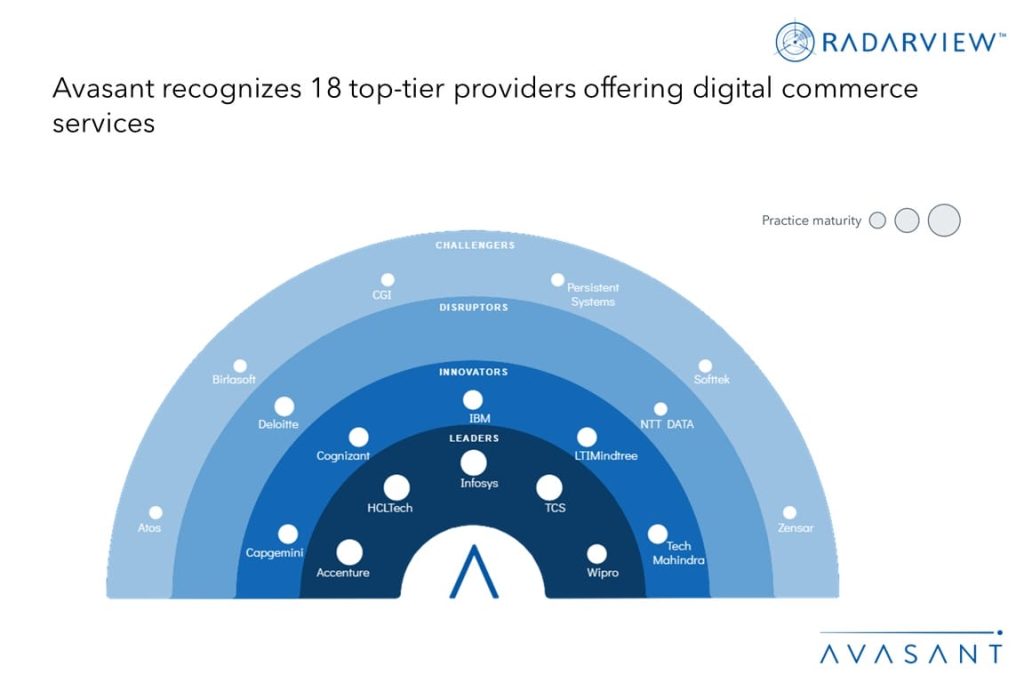
Enterprises are increasingly shifting their focus from traditional e-commerce models like B2B and B2C to D2C, B2B2C, and online marketplaces to increase market reach and drive business agility and growth. To enable this, they are adopting new order fulfillment strategies that help reshape digital commerce operations, boost delivery speeds, and reduce costs. They are also upgrading their legacy digital commerce infrastructure and uplifting customer engagement through next-generation commerce to drive scalability and flexibility. Further, personalization boundaries are being pushed by digital commerce platform vendors who integrate generative AI capabilities in their current solutions. Aligned with these trends, service providers’ priorities are underscored by investments in next-generation commerce, expanding partner ecosystems, and practice growth. Both demand- and supply-side trends are covered in Avasant’s Digital Commerce Services 2023–2024 Market Insights™ and Digital Commerce Services 2023–2024 RadarView™, respectively.

Digital Commerce Services 2023–2024 Market Insights™
The Digital Commerce Services 2023–2024 Market Insights™ assists organizations in identifying important demand-side trends that can help enterprises identify key areas and use cases and develop a strategy around digital commerce services transformation. The report also highlights the adoption of digital commerce solutions and services by key industries and use cases implemented by enterprises.
Digital Commerce Services 2023–2024 RadarView™
Avasant’s Digital Commerce Services 2023–2024 RadarView assists organizations in identifying strategic partners for digital commerce services transformation by offering detailed capability and experience analyses for service providers. It provides a 360-degree view of key digital commerce services providers across practice maturity, partner ecosystem, and investments and innovation to help enterprises identify the appropriate service partner. The 57-page report also highlights the top supply-side trends in the digital commerce services space and Avasant’s viewpoint on them.
Disaster Recovery Plan Testing Best Practices 2024
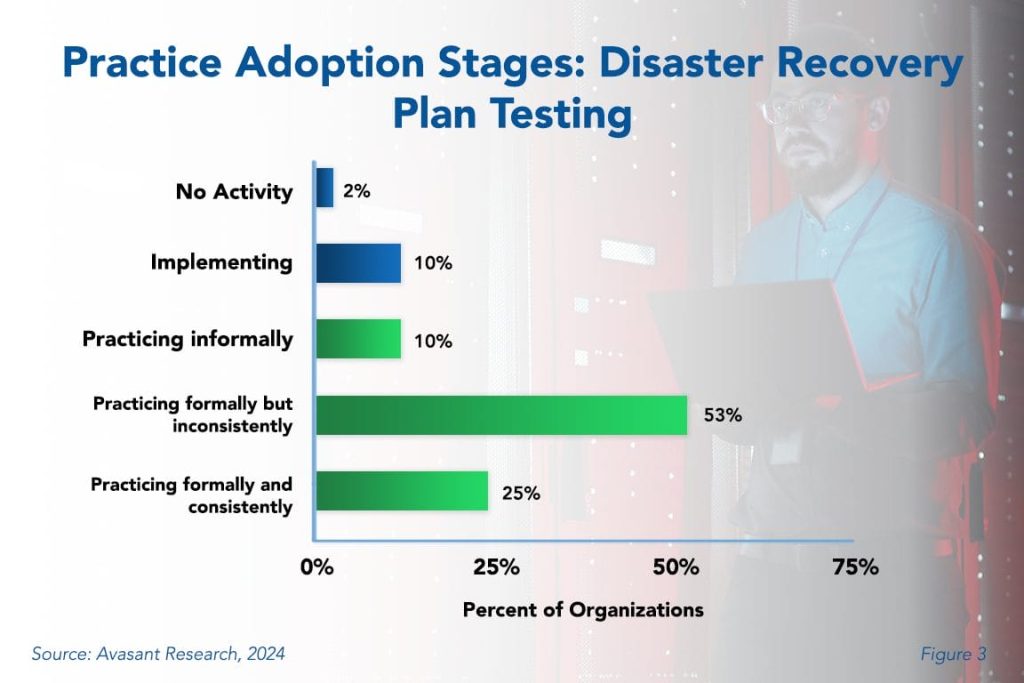
In today’s unpredictable business environment, there is an increasing reliance on data and digital systems to operate efficiently. With this comes the need for robust disaster recovery (DR) plans and testing to reduce the impact of unforeseen events. The effectiveness of a DR plan can only be truly validated through routine testing. However, while this practice is growing, few organizations are testing their DR plans formally and consistently. This Research Byte summarizes our full report on disaster recovery plan testing as a best practice.
Disaster Recovery Plan Testing: A Formal but Inconsistent Practice
In today’s unpredictable business environment, there is an increasing reliance on data and digital systems to operate efficiently. With this comes the need for robust disaster recovery (DR) plans and testing to reduce the impact of unforeseen events. The effectiveness of a DR plan can only be truly validated through routine testing. However, while this practice is growing, few organizations are testing their DR plans formally and consistently. This Research Byte summarizes our full report on disaster recovery plan testing as a best practice.
Click with Caution: Why Every Company Needs to Enforce Personal Use Policies
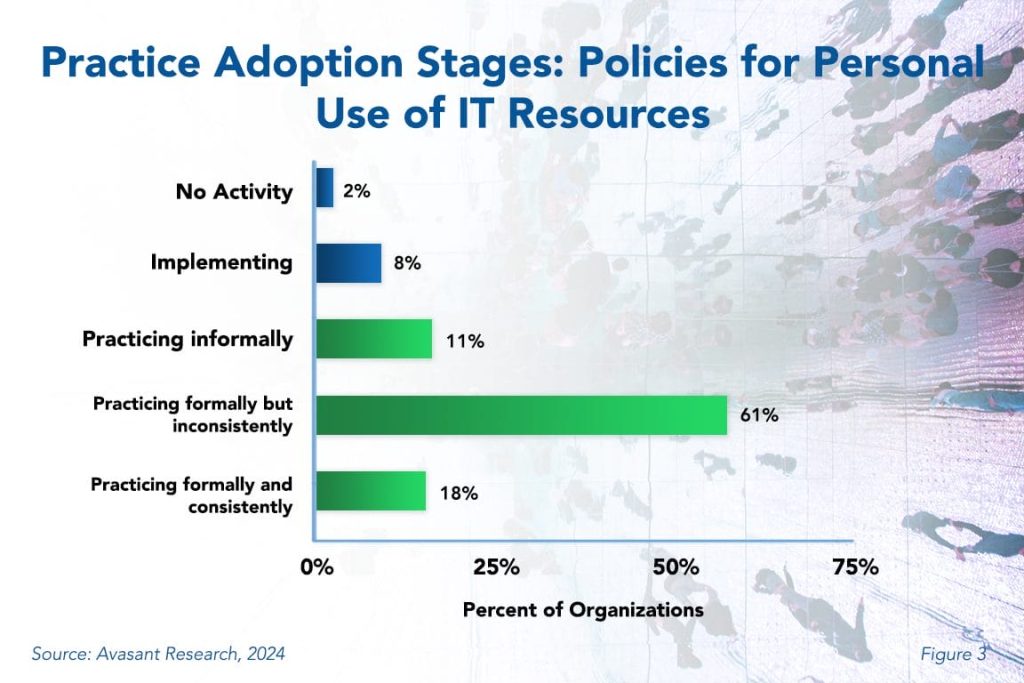
Policies for personal use of IT resources are policies that explicitly restrict or permit use of the organization’s IT resources for personal reasons. The good news is that 90% of survey respondents have adopted personal-use policies, at various levels of commitment. However, despite high adoption, not all companies consistently and formally practice them. This Research Byte summarizes our full report on policies for personal use as a best practice.
Policies for Personal Use of IT Resources Best Practices 2024
Policies for personal use of IT resources are policies that explicitly restrict or permit use of the organization’s IT resources for personal reasons. The good news is that 90% of survey respondents have adopted personal-use policies, at various levels of commitment. However, despite high adoption, not all companies consistently and formally practice them. This Research Byte summarizes our full report on policies for personal use as a best practice.
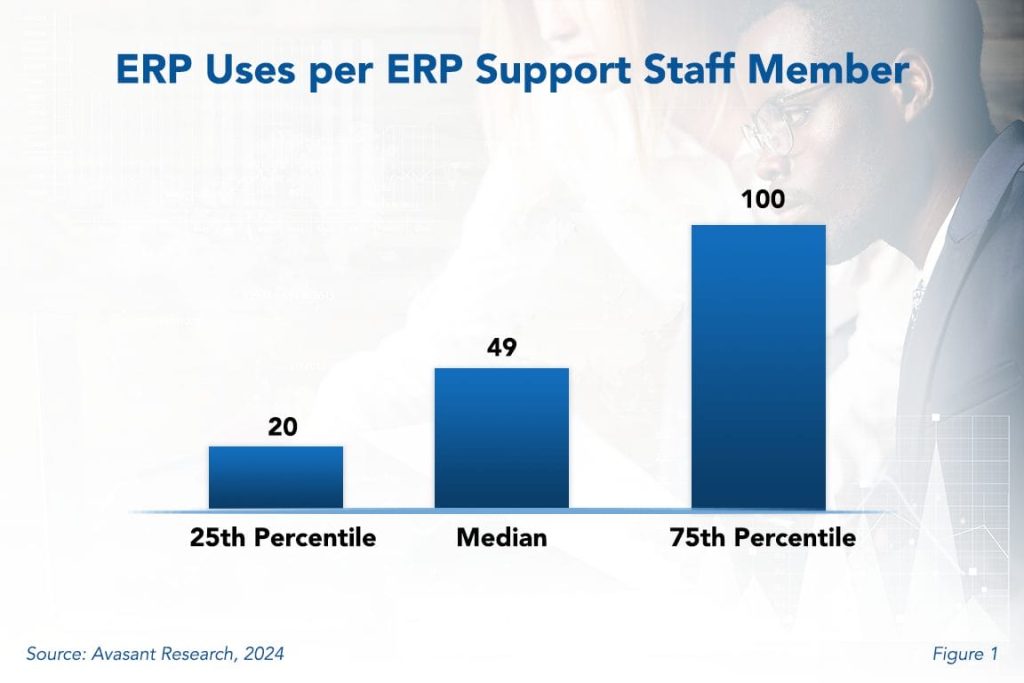
ERP Support Staffing Ratios 2024
Rightsizing the support staff for an ERP system can be difficult. This is because many factors affect the support staffing ratio. These include the type of ERP system, its age, the extent of modification, and the industry sector. Nevertheless, understanding support requirements for ERP systems is vital for IT leaders. This research byte summarizes our full report on ERP support staffing ratios.
Rightsizing ERP Support Staffing
Rightsizing the support staff for an ERP system can be difficult. This is because many factors affect the support staffing ratio. These include the type of ERP system, its age, the extent of modification, and the industry sector. Nevertheless, understanding support requirements for ERP systems is vital for IT leaders. This research byte summarizes our full report on ERP support staffing ratios.
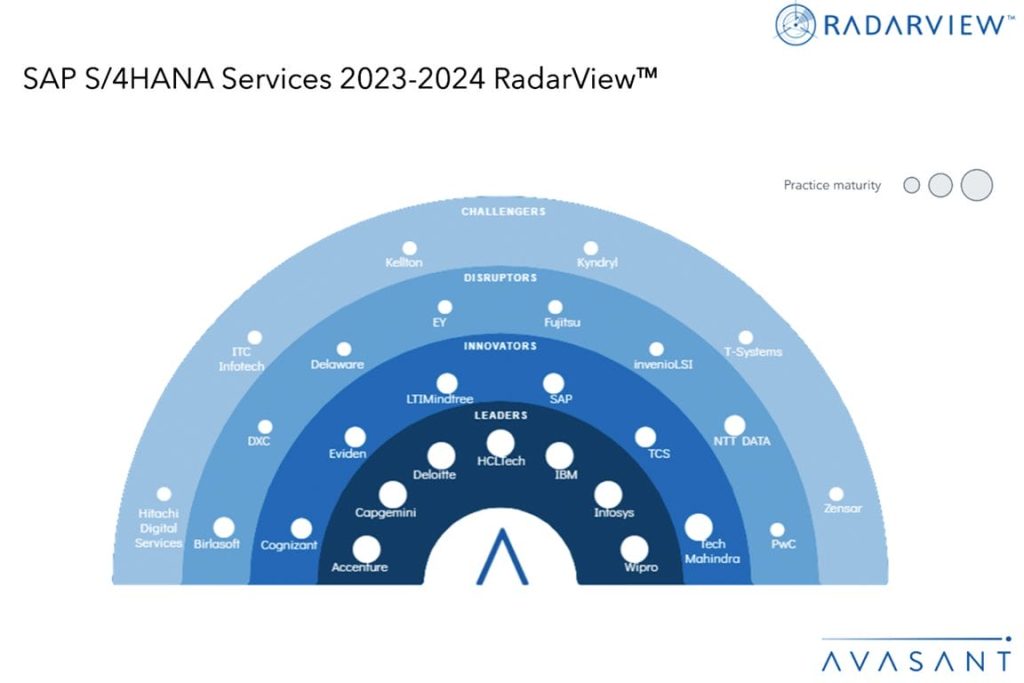
SAP S/4HANA: Reducing Time to Market Through Industry-Specific Solutions and Generative AI Capabilities
Migrating to SAP S/4HANA presents a challenge for enterprises encompassing multiple business processes across the value chain, intricate data structures, and several customizations. Current macroeconomic headwinds have made this transition more complex as customers reassess their SAP S/4HANA implementation strategies to develop a cost-optimal road map and seek quick ROI on their IT investments. Service providers are also addressing these trends, reducing time to market for clients through industry-specific solutions with preconfigured process workflows. They have also invested in generative AI solutions to strengthen horizontal capabilities, such as testing and documentation.