Areas of Interest
Content Type
Industries
- Aerospace and defense
- Banking, Financial Services, and Insurance
- Energy and Resources
- Federal Government
- Healthcare and life sciences
- High-tech and telecommunications
- Higher Education
- Media and entertainment
- Private equity
- Public Sector
- Retail and manufacturing
- Social Impact Institutions
- Travel and transportation
Technologies
- Artificial Intelligence
- Automation
- Blockchain
- Business and data analytics
- Cloud
- Customer relationship management (CRM)
- Cybersecurity
- Digital Services
- Enterprise resource planning (ERP)
- Human capital management (HCM)
- Internet Of Things
- Machine Learning
- Networking
- Supply chain management (SCM)
- Virtual reality/Augmented reality
Areas of Interest


Latest Reports
State and local governments expediting their digital transformation
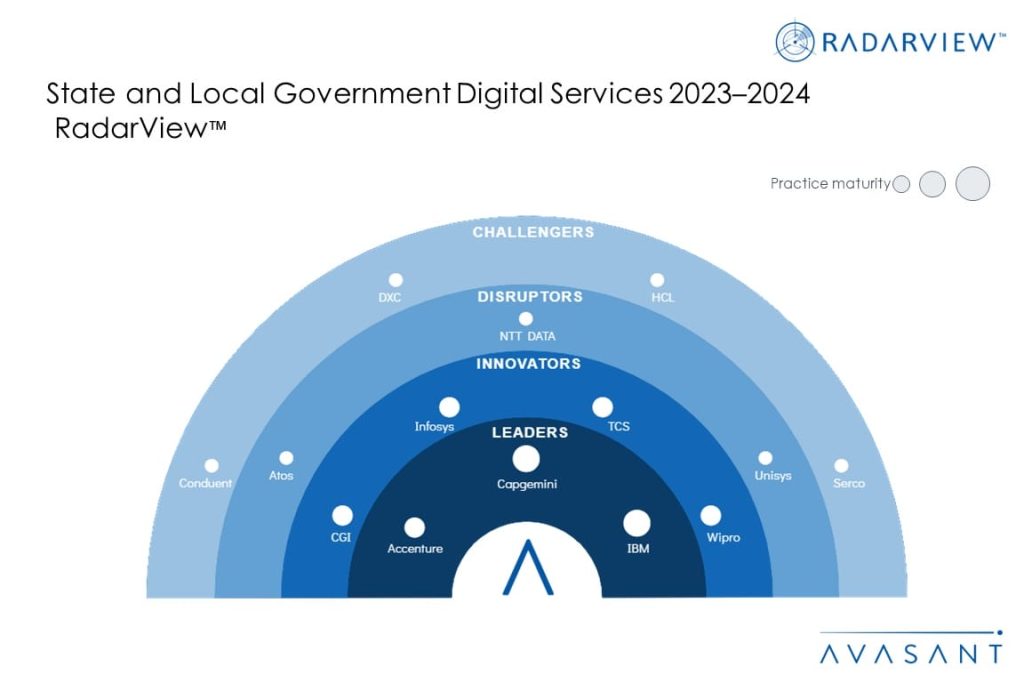
Aging infrastructure and demand for better citizen experience have put state and local governments under pressure to deliver. In addition, public safety and health support delivery issues are straining government resources, along with the increased focus on sustainability. By expediting digital transformation initiatives, governments are focusing on modernizing existing infrastructure and automating core processes to enhance service delivery. They are also investing in solutions to promote citizen experience and improve outreach to them via multiple digital channels. To maintain the right balance between controlling costs, improving government operations, and enhancing citizen services, governments are partnering with service providers to accelerate digital adoption. These trends are covered in Avasant’s new State and Local Government Digital Services 2023-2024 RadarView™ .

State and Local Government Digital Services 2023-2024 RadarView™
The State and Local Government Digital Services 2023–2024 RadarView™ provides information to assist governments in charting their action plan and identifying key global service providers and system integrators that can expedite their digital transformation journeys. The 70-page report also highlights key market trends and offers Avasant’s viewpoint on the road ahead for state and local government agencies in the coming years.
Managing Complexity in Engineering and Construction through Digital Technologies
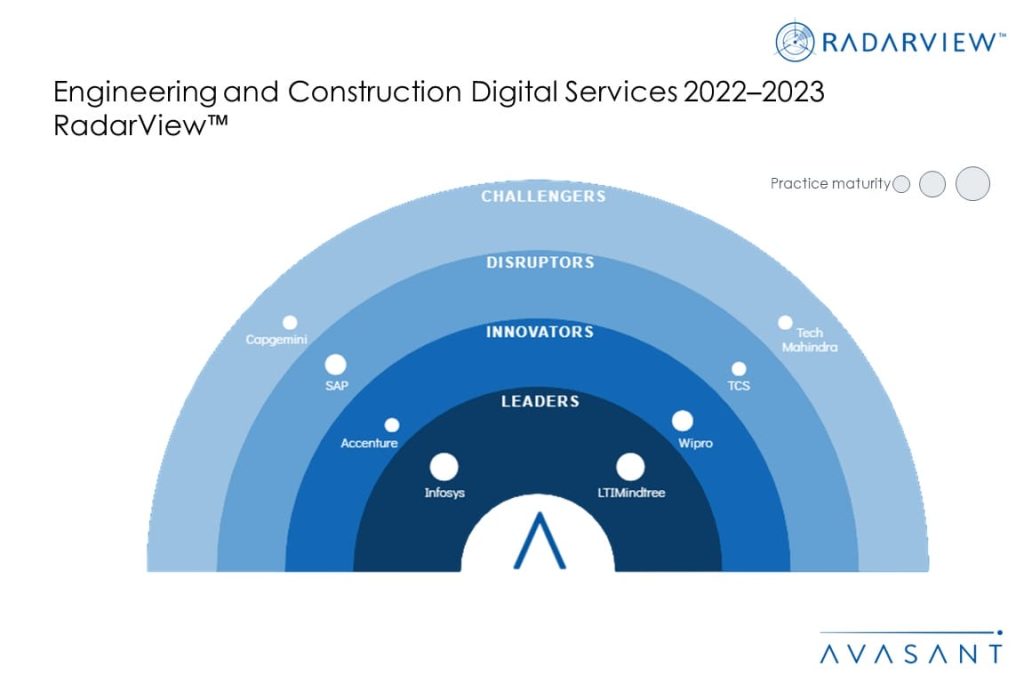
While the demand for new infrastructure and real estate projects is rising, engineering and construction firms are facing skilled worker shortages, project overruns, supply chain disruptions, and increasing regulations. To address these challenges, businesses are accelerating their digital transformation journeys by leveraging connected construction platforms, project management solutions, automated tools for modular construction, and remote project inspections. Additionally, engineering and construction companies are using digital technologies for improved productivity, process efficiency, and increasing profitability, investing heavily in virtual reality and product life cycle management tools. These emerging trends are covered in Avasant’s Engineering and Construction Digital Services 2022–2023 RadarView™.

Engineering and Construction Digital Services 2022–2023 RadarView™
The Engineering and Construction Digital Services 2022–2023 RadarView™ can help enterprises craft a robust strategy based on industry outlook, best practices, and digital transformation. The report can also aid them in identifying the right partners and service providers to accelerate their digital transformation. The 50-page report also highlights top market trends in the engineering and construction digital services space and Avasant’s viewpoint.
The Ebb and Flow of Help Desk Staffing
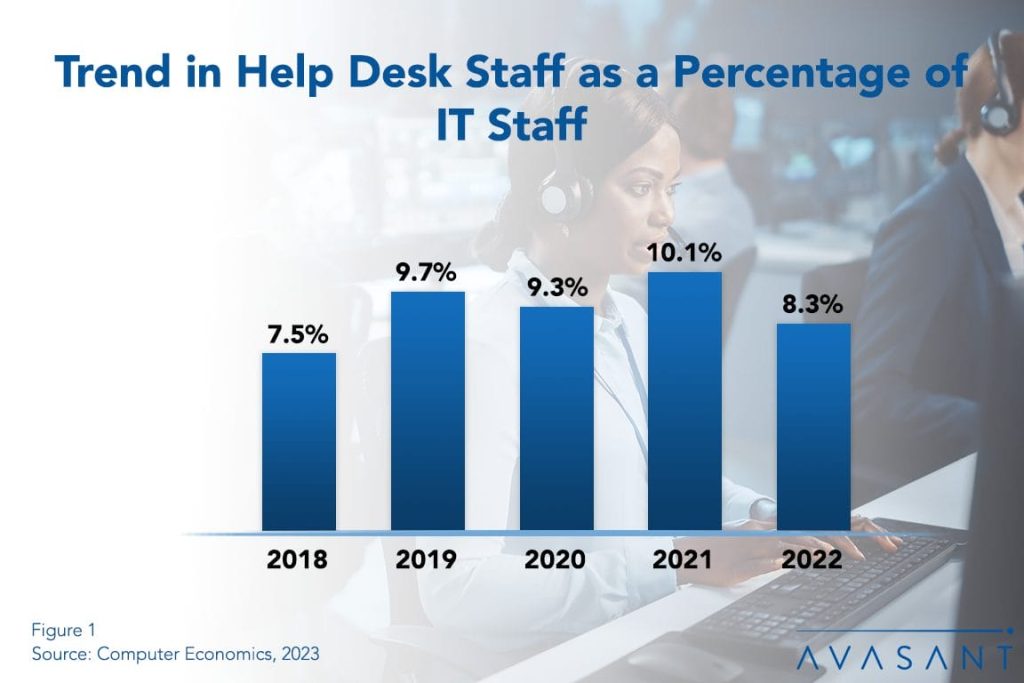
The help desk plays an important role in the delivery of IT services to the business. However, in 2023, help desk staffing declined to a level not seen since prior to the pandemic. Businesses are adapting to new working models, which may be one factor impacting this staffing ratio. This Research Byte summarizes our full report on help desk staffing ratios.
Help Desk Staffing Ratios 2023
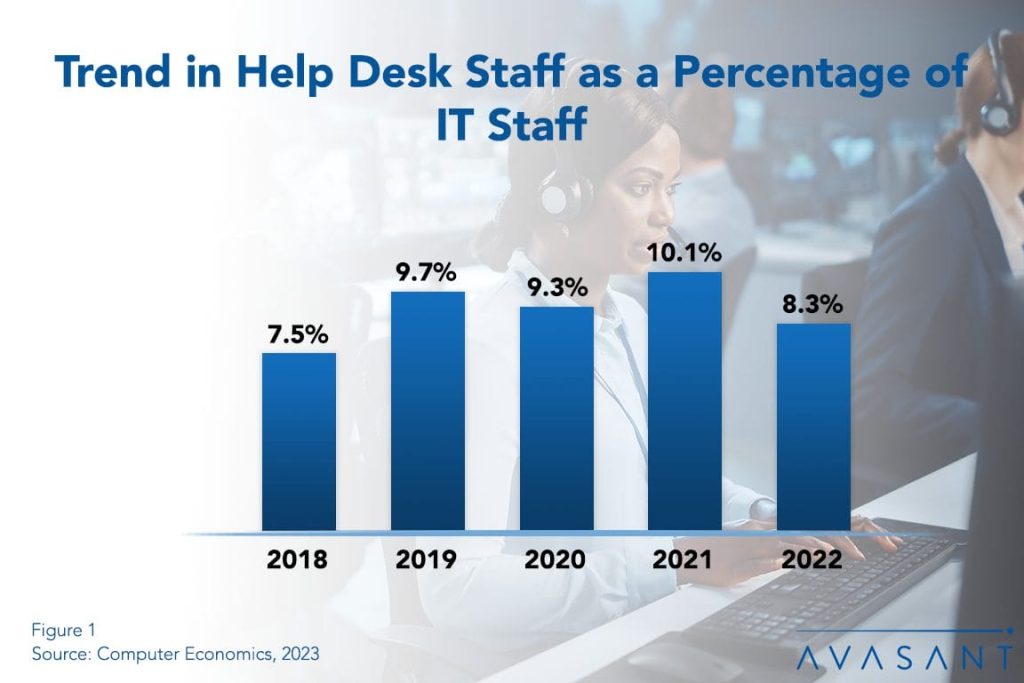
The help desk plays an important role in the delivery of IT services to the business. However, in 2022, help desk staffing declined to a level not seen since prior to the pandemic. Businesses are adapting to new working models, which may be one factor impacting this staffing ratio. The Research Byte summarizes our full report on help desk staffing ratios.

Formulating Your Strategy for Digital Real Estate
Digital real estate is the virtual space inside a virtual world that is sometimes available for purchase by consumers and enterprises. For enterprises, it is the space where your customers or partners interact with each other and your brand in the metaverse.

China Diversification Strategies and Options for Relocation
China’s economic and geopolitical ambitions have created political and business instability with its global trading partners. As a result, many western companies with manufacturing operations in China or significant sourcing from China are pursuing a diversification strategy. This report summarizes the factors that are driving western nations to diversify their operations out of China as well as options for new locations.
Blockchain in Action: Facilitating Digital Transformation Through Trust and Security
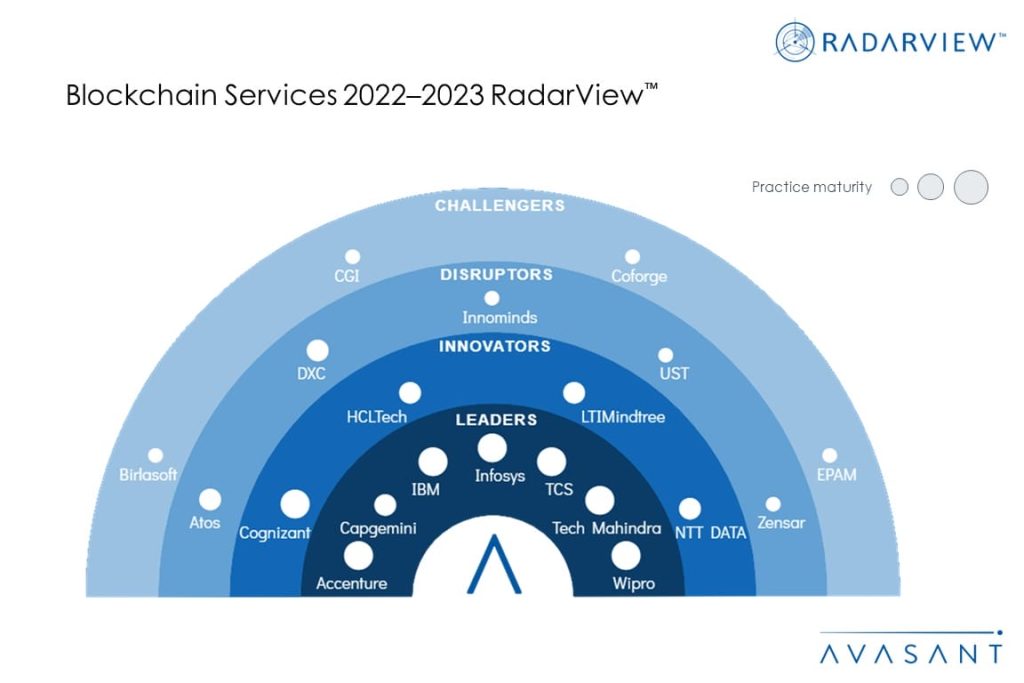
After a slowdown during the pandemic, the adoption of blockchain services picked up the pace again in 2022. Use cases such as tokenization, central bank digital currencies (CBDCs), non-fungible tokens (NFTs), and the metaverse saw an increase in blockchain adoption, and new use cases emerged, such as blockchain for ESG. More enterprises are moving from proof of concepts (POCs) and pilots to full-scale production and building integrated digital solutions for blockchain with a focus on enabling trust and transparency and addressing data privacy issues. The share of enterprise production-grade projects increased from 18% in 2021 to 29% in 2022. These emerging trends, and others, are covered in Avasant’s Blockchain Services 2022 –2023 RadarView™.

Blockchain Services 2022–2023 RadarView™
Avasant’s Blockchain Services 2022–2023 RadarView™ provides information to assist enterprises in identifying key application areas and use cases and developing a strategy around blockchain adoption. It helps organizations in charting out an action plan to drive blockchain initiatives. The report identifies key service providers who can help companies expedite business transformation by leveraging blockchain. It brings out detailed capability and experience analyses of leading providers to assist enterprises in identifying the right strategic partners. The 71-page report also highlights key industry trends in the blockchain space and Avasant’s viewpoint on them.