Areas of Interest
Content Type
Industries
- Aerospace and defense
- Banking, Financial Services, and Insurance
- Energy and Resources
- Federal Government
- Healthcare and life sciences
- High-tech and telecommunications
- Higher Education
- Media and entertainment
- Private equity
- Public Sector
- Retail and manufacturing
- Social Impact Institutions
- Travel and transportation
Technologies
- Artificial Intelligence
- Automation
- Blockchain
- Business and data analytics
- Cloud
- Customer relationship management (CRM)
- Cybersecurity
- Digital Services
- Enterprise resource planning (ERP)
- Human capital management (HCM)
- Internet Of Things
- Machine Learning
- Networking
- Supply chain management (SCM)
- Virtual reality/Augmented reality
Areas of Interest


Latest Reports
F&A Business Process Transformation 2022–2023 RadarView™
The F&A Business Process Transformation 2022–2023 RadarView™ aims to help enterprises identify the correct finance digital transformation partner by detailing service capability and offering a portfolio of leading providers in the F&A space. It provides an all-encompassing view of major F&A service providers under three broad parameters: practice maturity, domain ecosystem, and investments and innovation. The 79-page report also highlights top industry trends in the F&A outsourcing space and Avasant’s viewpoint on them.
Residual Value Forecast January 2023
Our quarterly Residual Value Forecast (RVF) report provides forecasts for the following categories of IT equipment: desktop computers, laptops, network equipment, printers, servers, storage devices, and other IT equipment. It also includes residual values for other non-IT equipment in the following categories: copiers, material handling equipment (forklifts), mail equipment, medical equipment, test equipment, and miscellaneous equipment such as manufacturing machinery and NC machines. Residual Value Forecasts are provided for five years for end-user, wholesale, and orderly liquidation values (OLV) prices.
Leveraging the Hybrid Cloud for Faster Time-to-Market
Enterprises want to improve customer experience of their cloud-based solutions and applications, and they are looking for faster rollout of features and upgrades to deliver personalized products and services. They are leveraging hybrid cloud environments to quickly modify their applications according to client requirements while ensuring the stability and reliability of the underlying cloud infrastructure.
Hybrid Enterprise Cloud Services 2022–2023 RadarView™
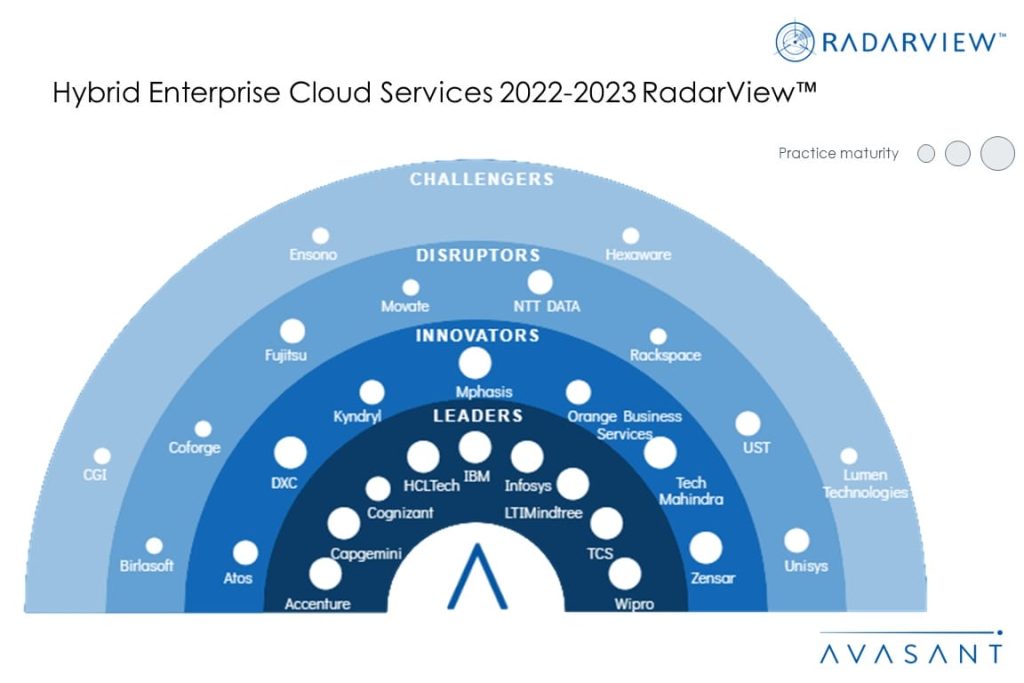
The Hybrid Enterprise Services 2022–2023 RadarView™ provides information to assist enterprises in charting out their action plan for developing a hybrid cloud environment. It identifies key global service providers and system integrators that can help expedite their cloud transformation journey. It also brings out detailed capability and experience analyses of leading providers to assist organizations in identifying strategic partners. The 85-page report also highlights top industry trends in the hybrid cloud space and Avasant’s viewpoint on them. It delivers a general ranking across the key dimensions of practice maturity, partner ecosystem, and investment and innovation.
Study: IT in PJs on the Rise
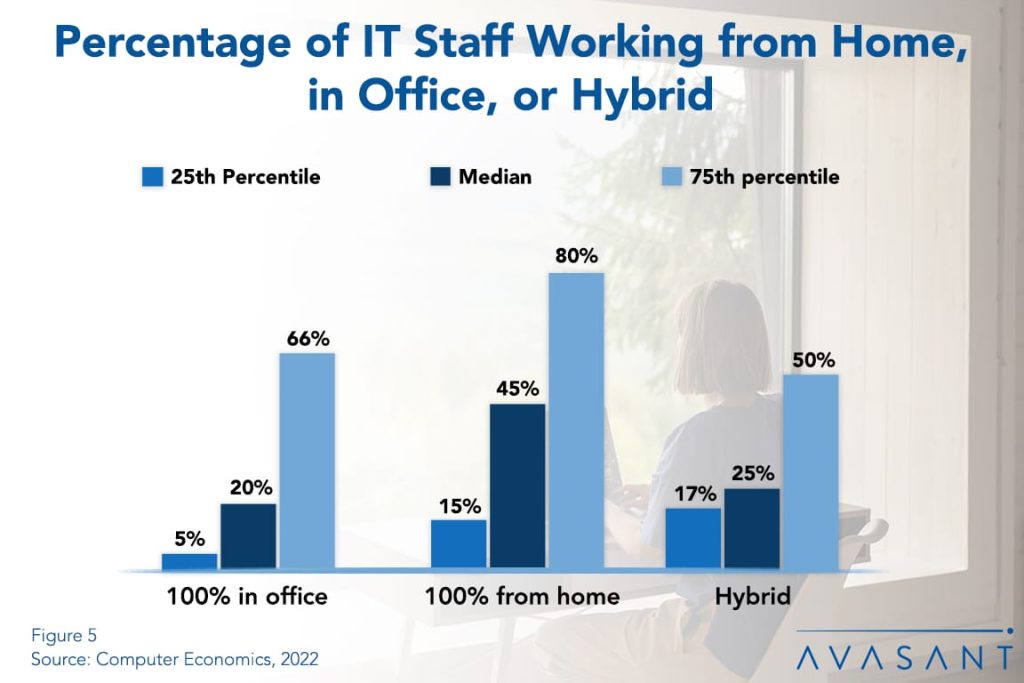
In the aftermath of the pandemic, one thing appears to be here to stay: working from home. Today, a much higher percentage of IT personnel are working from home, compared to pre-pandemic numbers. Our annual IT salary study finds that almost half of IT workers now ply their trade from home.
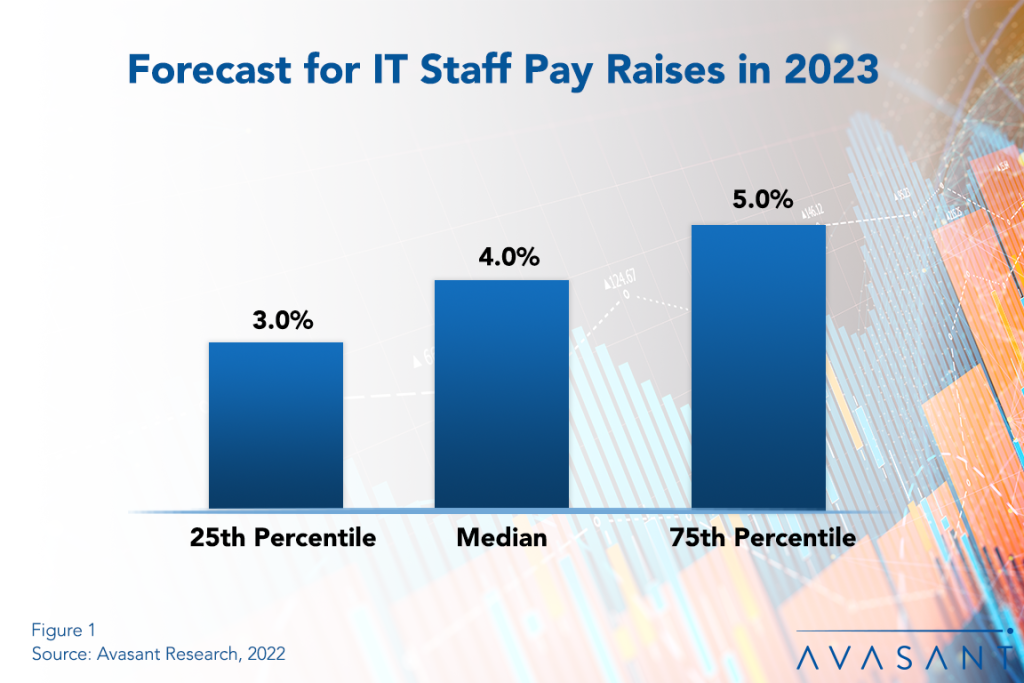
IT Wages to Rise 4.0% at the Median in 2023, Salary Study Finds
With current high levels of inflation and relatively low levels of unemployment, we would expect IT salaries to be rising strongly. But in the IT job market right now, that is not the case. The job market is being influenced by a series of competing tensions, which will continue in ’23. This Research Byte summarizes the executive summary of our IT Salary Report 2023.
IT Salary Report 2023
This report provides total compensation for 80 IT job functions for more than 400 US metro areas and 20 industry sectors. The executive summary also provides our forecast for pay raises and hiring in 2023 and includes job descriptions for each job function. The salary tables are provided as a downloadable Microsoft Excel workbook, with total salaries reported at the 10th, 25th, 50th (median), 75th, and 90th percentiles.
Digital Talent Capability: Developing the Talent Needed for Digital Transformation
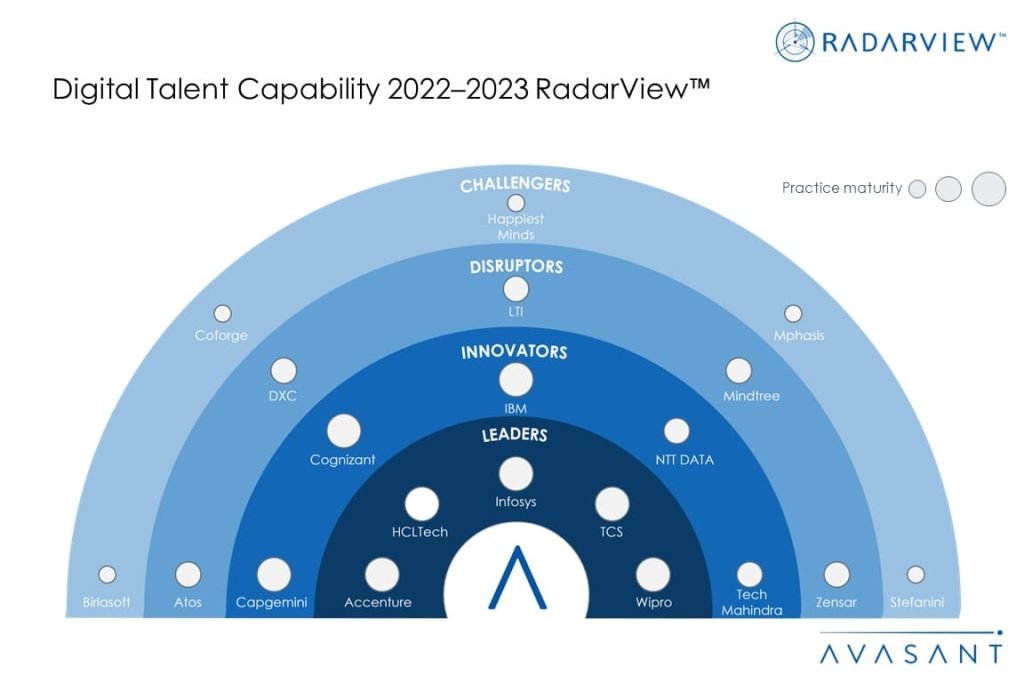
Enterprises and IT service providers across industries are facing talent shortages. This is leading enterprises and service providers to invest in digital technology-related capabilities and initiatives to develop relevant skills in their workforce. The push for faster digital transformation has forced companies to increase their IT and digital spending, with more than 71% of enterprises increasing investment across digital technologies. With a surge in IT outsourcing, service providers are supporting enterprises by growing their digital talent pipeline. However, multiple talent-related challenges continue to persist. These emerging trends are covered in Avasant’s Digital Talent Capability 2022–2023 RadarView™ .
Digital Talent Capability 2022–2023 RadarView™
The Digital Talent Capability 2022–2023 RadarViewTM provides information to assist enterprises in building a digital talent strategy and helps them chart out an action plan for filling the digital talent gap. It identifies key global service providers and system integrators that can expedite an organization’s digital transformation journey by leveraging their digital talent capabilities. It also brings out detailed analyses of leading providers to support enterprises in identifying the right strategic partners. The 71-page report also highlights Avasant’s viewpoint on key technology and outsourcing trends reshaping the market.
Transforming the Utilities Industry Through Digital Technologies
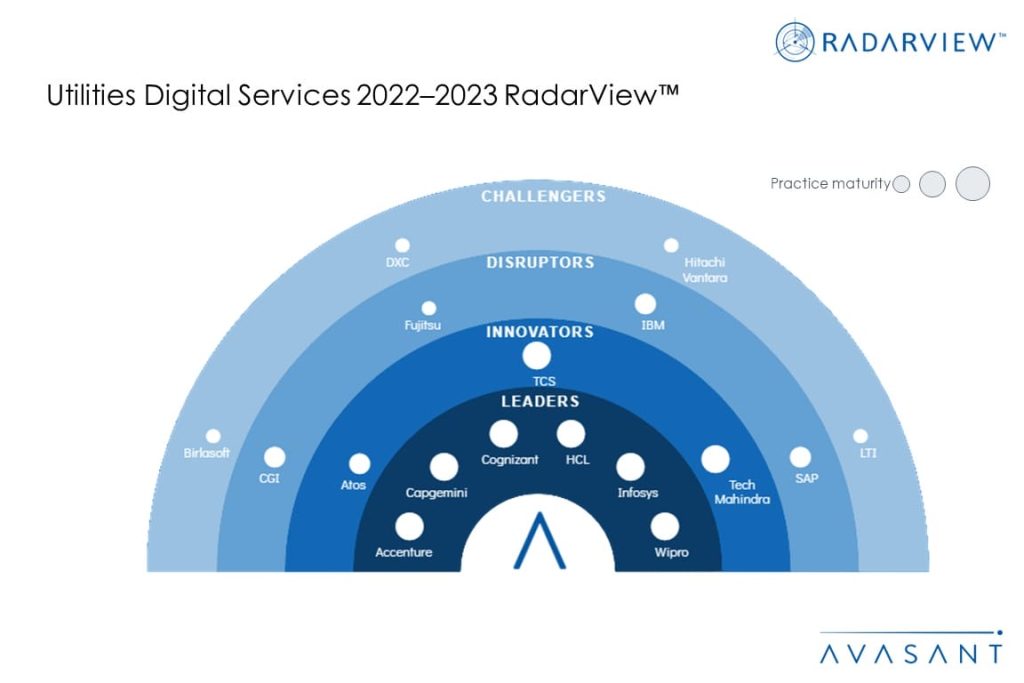
Electric, gas, and water utilities are facing regulatory pressures. For example, governments expect gas and electric utilities to support global sustainability and energy transition goals. They also require water utilities to ensure water quality and availability. While an increasing number of electrical customers also become energy producers, their expectations have changed. Furthermore, utilities are facing growing challenges in terms of skilled worker shortages, high investment and maintenance costs, and heavy asset losses due to the rising number of natural disasters. To address these issues, utilities globally are investing in digital technologies to transform their day-to-day operations, enable predictive maintenance, reduce human dependency, automate repetitive and tedious tasks, and reduce costs. These emerging trends are covered in Avasant’s Utilities Digital Services 2022–2023 RadarView™.