
 Grid View
 List View
-
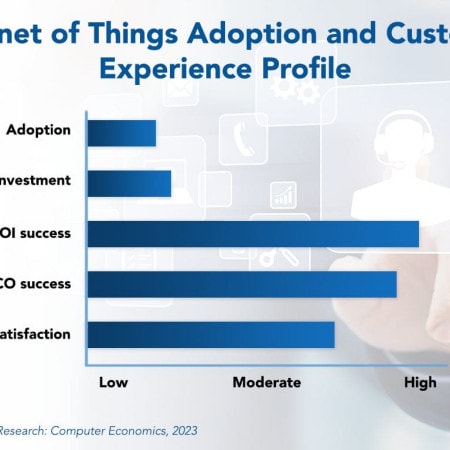
IoT Shows Little Growth in Adoption Despite High ROI
The Internet of Things (IoT) is a maturing technology, and for many years it has promised benefits such as reduced labor costs and improved business processes. However, our data is showing a trend that is common with other technologies as they mature. The adoption and investment of IoT projects have remained low. In fact, IoT appears to lag most technologies. This Research Byte examines the potential causes.
June, 2023
-
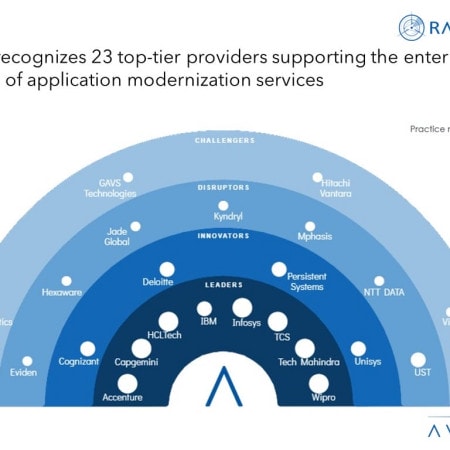
Application Modernization Services: Gaining competitive advantage by modernizing applications
Enterprises are compelled to modernize applications due to the evolving digital landscape’s demands for enhanced agility, user experiences, and competitiveness. Legacy systems often hinder innovation and lack the ability to harness data-driven insights. Service providers are pivotal in aiding businesses to achieve their application modernization goals. They offer expert assessments, strategy formulation, and technology selection, ensuring seamless migration, integration, security, and compliance. Service providers also facilitate thorough testing, training, and ongoing support, enabling enterprises to transition smoothly to modernized applications while aligning with business needs and driving transformative digital shifts. Both demand-side and supply-side trends are covered in Avasant’s Application Modernization Services 2023 Market Insights™ and Application Modernization Services 2023 RadarView™, respectively.
August, 2023
-
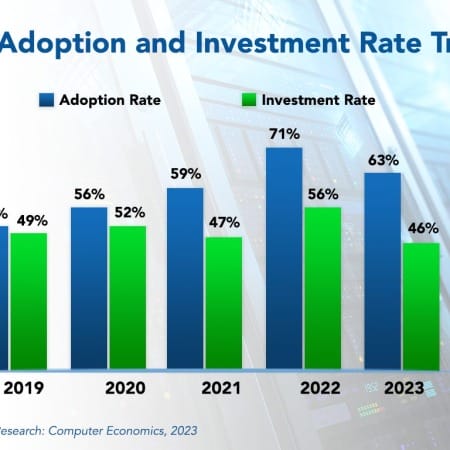
Hybrid Approaches to Cloud Infrastructure More Desirable
The need for agility continues to drive investment in IaaS, and the global pandemic and subsequent supply chain disruptions have only increased this trend. Cloud infrastructure makes it easier for companies to respond to fluctuations in demand, changes in business requirements, and the need to optimize costs over time. However, as companies embrace more cloud, it can lead to complexity and a need to pay closer attention to total costs. This has led companies to reevaluate their hybrid and multicloud deployments to focus on efficiency and lower operational costs while still pursuing growth.
October, 2023
-
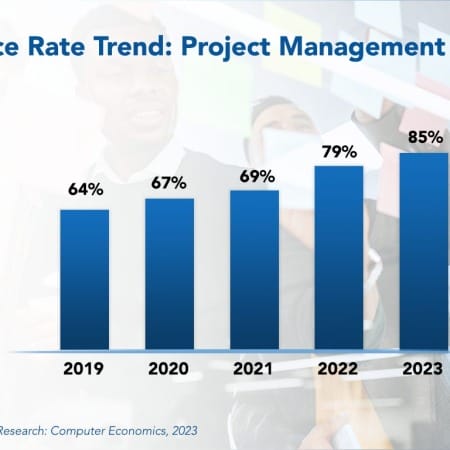
Hybrid Work Increasing the Need for PMOs
Over the past five years, the use of project management offices (PMOs) has increased by 20%. According to our study, Project Management Office Adoption Trends, the number of companies making full use of PMOs for every IT project is among the highest-rated best practices in the study. The shift toward hybrid and remote work has put a significant strain on projects as teams must collaborate in hybrid settings and still finish projects on time and within budget. This Research Byte gives an overview of the increasing PMO best practice adoption and provides insights into why this increase might be occurring.
December, 2023
-
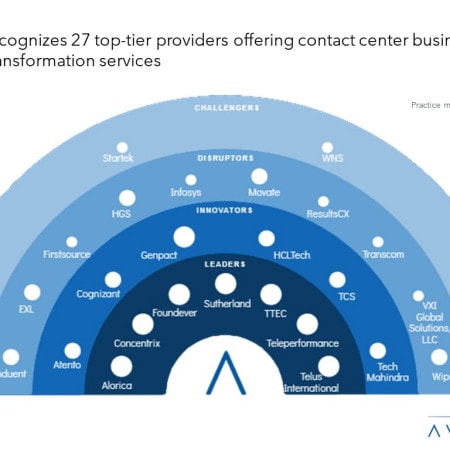
Finding the Synergy Between AI Capabilities and Human Agents to Enhance Customer Experience
Enterprises are strategically aligning their priorities to emphasize customer experience while concurrently optimizing costs. This approach has fueled the surge in nearshore outsourcing, underpinned by considerations such as data security, cultural alignment, and the imperative for swifter response times. The increased usage of digital channels, coupled with the integration of generative AI and cloud-based solutions, signifies a paradigm shift in the contact center outsourcing landscape. This technology integration is poised to drive the growth of contact center services as organizations increasingly seek tailored solutions by leveraging data-driven insights to navigate the intricate dynamics of the contemporary business environment. Demand-side and supply-side trends are covered in our Contact Center Business Process Transformation 2023–2024 Market Insights™ and Contact Center Business Process Transformation 2023–2024 RadarView™, respectively.
January, 2024
-
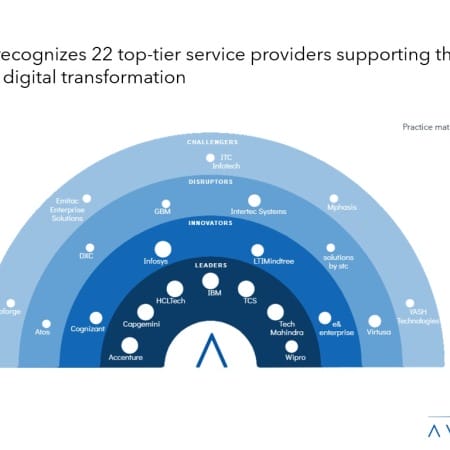
GCC Region: Powering GCC Region’s Future Using Digital Technologies
Amid economic diversification through digital transformation, enterprises in the GCC region are facing the challenges of managing profitability while catering to the fierce digital talent crunch. The region is bridging the digital skills gap by training local talent and attracting foreign talent with visa schemes and easing labor laws. Enhanced focus on augmenting citizen experience, innovation through AI adoption, improved cyber posture, and a sustainable future is pushing regional authorities and firms to collaborate with leading service providers to develop digital solutions and optimize costs.
February, 2024
-
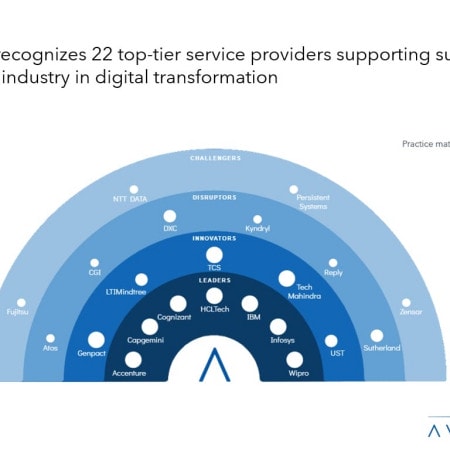
Retail Digital Services: Elevating Customer Experience Using Emerging Technologies
Retail enterprises worldwide leverage emerging technologies to provide a personalized and immersive customer experience. They also focus on enhancing profit margins by utilizing AI to improve operational efficiency and venturing into higher-margin businesses such as retail media networks. They are also realizing the significance of social media as a pivotal commerce channel and adopting measures to better connect with their audiences there. Increasing regulatory requirements also compel retailers to integrate sustainability into core business operations.
March, 2024
-

Decentralized AI in Healthcare: Preparing for ‘GOD AI’ and Its Agents
The god of healthcare is coming. And he’s bringing his agents, millions of them. At least, this was the vision of Ramesh Raskar, Associate Director, MIT Media Labs, as he laid it out at the most recent TiEcon conference here.
May, 2024
-

Banking Digital Services: Navigating Challenging Times with Technology Disruption
Banks are focused on improving their brand loyalty by offering enriched customer engagement through hyper-personalized services. They are working toward modernizing their legacy core banking infrastructure and adopting cloud environments to achieve greater flexibility, improved integration with newer technologies, innovate effectively, and launch new products faster. Banks are navigating increased regulations and financial scrutiny post-2023 Silicon Valley Bank crisis by leveraging advanced analytics and AI-powered risk management and regulatory data reporting solutions. They are continuously boosting their cybersecurity posture to deal with increased vulnerabilities and prioritizing ESG goals to promote green financing and financial inclusivity.
June, 2024
-

Utilities Digital Services: Traversing Challenging Times with Technology Disruption
The utilities sector (electric, gas, and water), bolstered by legislative investments across the US and Europe, is poised to overhaul outdated systems and match other sectors in tech adoption. However, providing cost-effective energy/water and expedited customer services remains challenging. Despite these challenges in delivering affordable services quickly, utilities are diversifying energy sources and embracing digital upgrades for better efficiency. Investments in new tech aim to balance energy needs with climate realities. Moreover, sustainability is now critical, driven by regulations and expectations, with generative AI playing a key role in meeting compliance demands.
July, 2024
-

The Key to Navigating the Tides of Disruptive Technologies
Navigating the intersection of sustainable growth and disruptive technology is a critical challenge for modern businesses. At Avasant’s Empowering Beyond Summit (EBS), industry leaders Cynthia McKenzie, Tembi (Sibanda) Hommes, and Anish Sethi, moderated by Chitra Rajeshwari, explored strategies to balance innovation with sustainability. They discussed aligning operations with the UN's Sustainable Development Goals, ensuring global equity in technology access, and maintaining ethical standards. As McKenzie noted, the key is to harness technology to meet business goals without compromising ethical, social, and environmental responsibilities.
July, 2024
-

Empowering Enterprises with Hyperconverged Digital Solutions and Integrated AI Capabilities
Enterprises face ongoing challenges from rising protectionism and geopolitical tensions, prompting them to adopt digital resilience strategies using AI, cloud, and blockchain for supply chain management. IT infrastructure readiness is being reassessed, highlighted by incidents like the CrowdStrike outage, leading to a diversified, multilayered approach to security solutions and incident response. The demand for hyperconverged digital technologies is growing, particularly in healthcare, finance, and retail, to enhance digital transformation. AI capabilities are increasingly integrated across industries, driving operational efficiency and digital transformation through tailored solutions, data analytics, and IoT.
September, 2024
-

Role of Application Developers is Changing Rapidly
In just five years, application developers as a percentage of IT staff have gone from making up nearly a quarter of the entire IT staff (23.1%) to only 14.2%. This significant drop is not necessarily a sign of mass layoffs of application developers. In fact, we have seen no evidence that fewer application developers are working in IT departments. However, it does signal a change in the overall makeup of IT departments and the changing role of the application developer. This research byte summarizes our full report, Application Developer Staffing Ratios.
-

Artificial Intelligence: Should Robots Have Rights? Part 2
The article examines advancements in AI and robotics, focusing on Tesla’s Optimus and Boston Dynamics’ Atlas. These robots now use AI to navigate, interpret emotions, and engage in lifelike conversations. As they become more human-like, ethical concerns emerge regarding robot rights, emotional dependency, workplace integration, and privacy. The article stresses the need for regulations to address these challenges and balance the integration of robots into society while protecting human autonomy.
October, 2024
-

Canada Digital Services: Utilizing Emerging Technologies to Power a New Era of Growth
Canada’s strong digitalization drive is accelerating generative AI (Gen AI) adoption, backed by significant federal government and Canadian enterprise investments. Efforts are intensifying to position Central Canada as a leading tech hub while expanding broadband access across the Northwest Territories and British Columbia’s remote and rural areas. With an increased emphasis on cybersecurity, addressing the digital talent divide, and advancing sustainability, the Canadian government and businesses are collaborating closely with service providers to develop innovative digital solutions and enhance the customer experience.
November, 2024
Areas of Interest
Search results for "" ( 5620 )