Areas of Interest
Content Type
Industries
- Aerospace and defense
- Banking, Financial Services, and Insurance
- Energy and Resources
- Federal Government
- Healthcare and life sciences
- High-tech and telecommunications
- Higher Education
- Media and entertainment
- Private equity
- Public Sector
- Retail and manufacturing
- Social Impact Institutions
- Travel and transportation
Technologies
- Artificial Intelligence
- Automation
- Blockchain
- Business and data analytics
- Cloud
- Customer relationship management (CRM)
- Cybersecurity
- Digital Services
- Enterprise resource planning (ERP)
- Human capital management (HCM)
- Internet Of Things
- Machine Learning
- Networking
- Supply chain management (SCM)
- Virtual reality/Augmented reality
Areas of Interest


Latest Reports
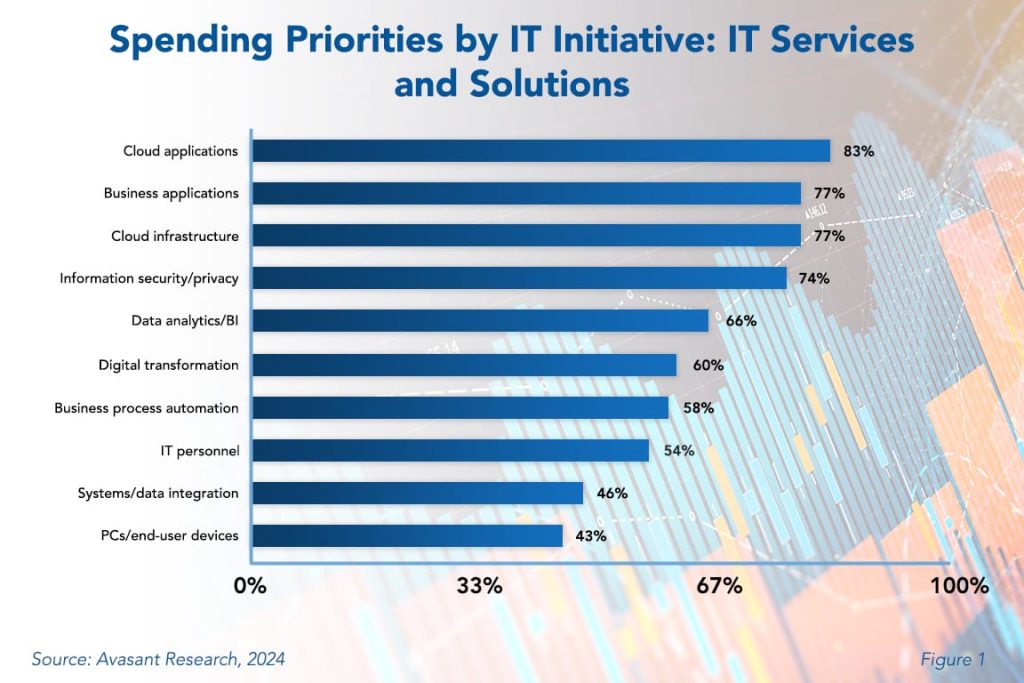
IT Spending Trends in the IT Services and Solutions Sector 2024
The IT services and solutions sector is experiencing unprecedented upheaval, fueled by the relentless march of digital transformation. Businesses across industries are deeply intertwined with technology, leading to a surge in demand for skilled service providers. These providers act as trusted guides, navigating the complexities of the digital landscape and helping organizations achieve their technological ambitions.

Revenue Cycle Management (RCM) Business Process Transformation 2024 Market Insights™
The Revenue Cycle Management (RCM) Business Process Transformation 2024 Market Insights™ assists organizations in identifying important demand-side trends that are expected to have a long-term impact on any RCM services project. The report also highlights key challenges that enterprises face today.
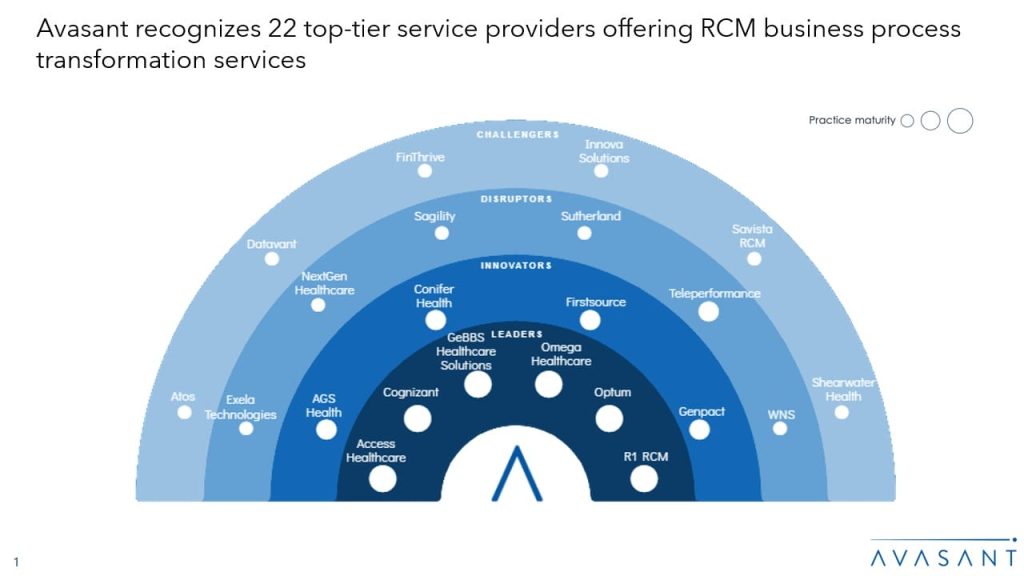
Leveraging Advanced RCM Solutions for Enhancing Patient Experience and Financial Performance
With rising technological advancements and the adoption of the value-based care model, providers are focusing on implementing advanced patient-centric revenue cycle management (RCM) solutions to enhance cash collections and reduce reliance on manual processes. They are developing unified payment gateways with digital payment options, cumulative patient billing, and data transparency to boost patient satisfaction. In 2023–2024, providers saw improved operating margins due to increased revenues. However, rising costs driven by inflation, labor shortages, and escalating drug prices remained a concern. Nevertheless, they continue to invest in technologies such as generative (Gen) AI-assisted coding, self-service scheduling, and Gen AI-powered denials recovery solutions to streamline operations and enhance efficiency. Both demand-side and supply-side trends are covered in our Revenue Cycle Management (RCM) Business Process Transformation 2024 Market Insights™ and Revenue Cycle Management (RCM) Business Process Transformation 2024 RadarView™, respectively.
Revenue Cycle Management (RCM) Business Process Transformation 2024 RadarView™
The Revenue Cycle Management (RCM) Business Process Transformation 2024 RadarView™ assists organizations in identifying strategic partners for RCM services by offering detailed capability and experience analyses of service providers in this space. It provides a 360-degree view of the service providers across practice maturity, domain ecosystem, and investments and innovation, thereby supporting enterprises in identifying the right RCM services partner. The 66-page report highlights top supply-side trends in the RCM services space and Avasant’s viewpoint.

The Digital Leap: Transforming Property and Casualty Insurance Underwriting for the Future
The property and casualty (P&C) insurance industry has always been a cornerstone of financial stability, covering various risks, from natural disasters to automobile accidents. At the heart of this industry lies the critical function of underwriting. Over the past few years, the underwriting landscape has undergone significant changes driven by evolving market dynamics, regulatory shifts, and technological advancements.

Navigating the Future: Integrating Technology and Operations in Travel and Transportation
A recent Empowering Beyond Summit panel, titled “Re-imagining Travel & Transportation: Aligning Tech and Ops to Accelerate Value Creation,” brought together a group of experts to discuss how technology, operations, and strategy are evolving within the travel and transportation sectors. The panel included Wipro General Manager Siddharth Saxena, Toronto Airport Director of Business Transformation Pierre Lanthier, BNSF Railway AVP Christy Thomas, and Solistica CIO David Orellana, with Avasant Managing Partner Carlos Hernandez as the moderator. The conversation highlighted the powerful impact of technology on improving operations and customer experiences in the industry.
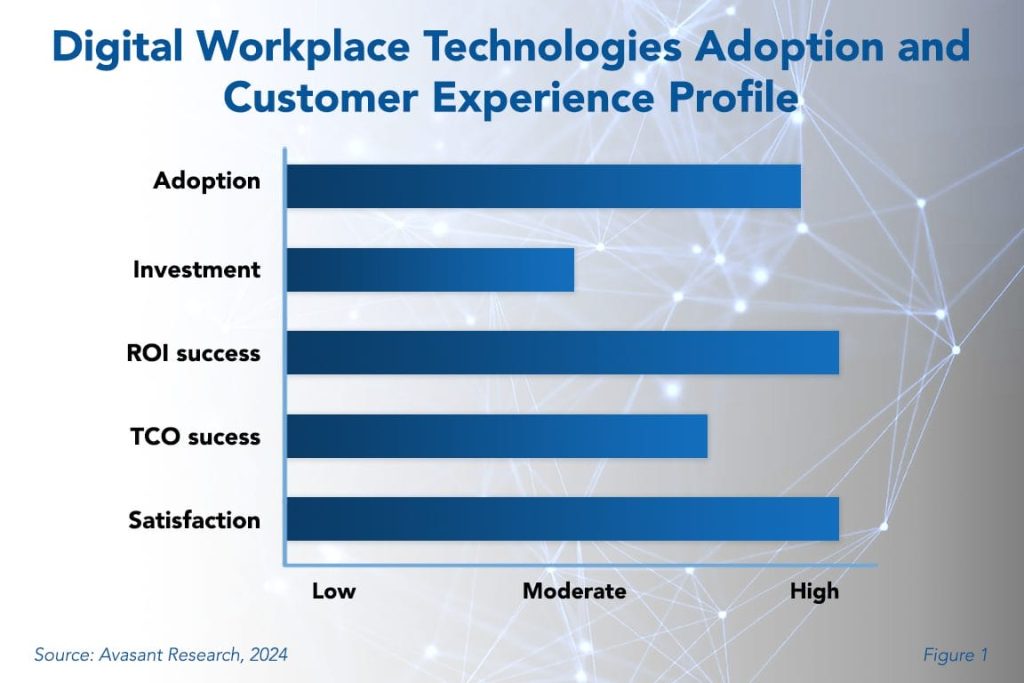
Digital Workplace: Challenges and Opportunities in the Modern Enterprise
The emergence of smart technologies enabled workplaces to become more productive and allow for a work-from-anywhere model. Web conferencing tools such as Zoom, Teams, and Google Meet, and workplace social networking tools such as Slack and Microsoft Yammer were already gaining popularity prior to the pandemic. This Research Byte summarizes our full report, Digital Workplace Technologies Adoption and Customer Experience.
Digital Workplace Technologies Adoption and Customer Experience 2024
Digital workplace technologies are a set of tools and electronic capabilities that allow workers to communicate and collaborate virtually from anywhere. They are used to create the digital workplace, which integrates technologies into a single environment.

Leveraging AI: Transforming Industries and Shaping the Future
Generative AI (Gen AI) has brought artificial intelligence and machine learning into the mainstream, making these powerful tools accessible to both consumers and businesses.

Salesforce Services 2024 Market Insights™
The Salesforce Services 2024 Market Insights™ assists organizations in identifying important demand-side trends that are expected to have a long-term impact on any Salesforce project. The report also highlights key challenges that enterprises face today.