
 Grid View
 List View
-
In a Year Where Security Is Paramount, Many Drop the Ball
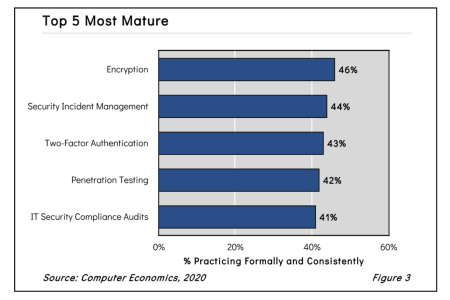
Computer Economics, a division of Avasant Research has released its major annual study on 34 IT management best practices, and one important category of practices–IT security and risk management–is showing mixed results. This is a bad sign in 2020, considering the changing threat landscape and the ramifications of the pandemic. This Research Byte highlights our findings on IT security best practices, along with an overview of the contents of the full study. The full study analyzes the growth and maturity of all 34 best practices, which are grouped into five major categories: IT governance, IT financial management, IT operational management, IT security and risk management, and application development.
October, 2020
-
IT Management Best Practices 2020-2021
The best-run IT organizations not only focus their process improvement efforts on those of other departments, they also seek to optimize their own IT management processes internally. In this study, we examine the growth and maturity of 34 IT management practices.
October, 2020
-
Wuhan Coronavirus Shows Need to Include Pandemic Scenarios in Business Continuity Planning
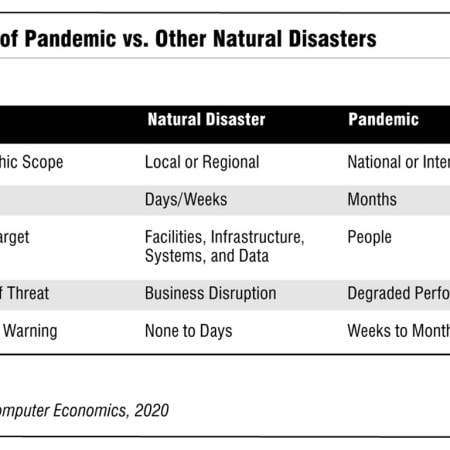
The Wuhan coronavirus (nCoV2019) rampaging through China has led to a massive quarantine in that country, the temporary closure of hundreds of schools and businesses, and an extensive travel ban. This latest threat reminds us that most IT organizations have not incorporated countermeasures specifically to deal with pandemic scenarios.
February, 2020
-
IT Budgets Show K-Shaped Recovery
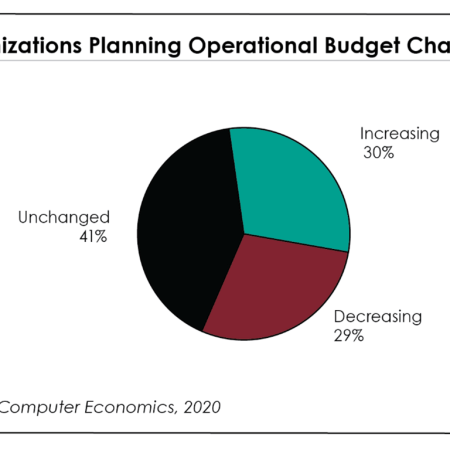
A new special survey by Computer Economics in August through September, 2020 shows a K-shaped recovery from the pandemic has begun. Nearly an equal number of companies have increased their IT budgets in response to the pandemic as those that decreased them, with slightly more actually increasing them. This research byte is a summary of the full report Revisiting the Impact of COVID-19 on IT Organizations in 2020.
October, 2020
-
One Fifth of Organizations at Risk of Technical Bankruptcy
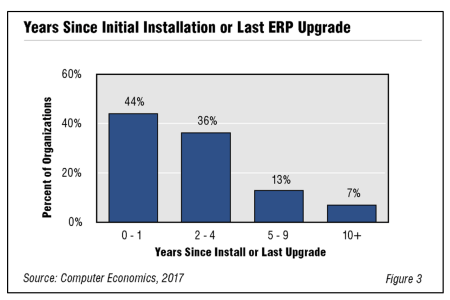
In recent years, it has become popular to describe organizations with an enterprise system that has become out of date because of accrued unapplied updates as being in “technical debt.” If organizations ignore this debt too long, it can lead to what we refer to as “technical bankruptcy.” An enterprise system in technical bankruptcy is one where the organization cannot, or finds it exceedingly difficult to, pay off the technical debt. At this stage, the system becomes a true legacy system, frozen in the past and extremely difficult to upgrade.
March, 2017
-
Avoiding Technical Bankruptcy in Legacy Systems
Technical debt is a term that describes the consequences of a system that has become out of date because of accrued unapplied updates. But if an organization continues to take on technical debt, the system becomes a true legacy system, falling into a state we describe as “technical bankruptcy.” In this report, we identify the symptoms of technical bankruptcy and the devastating effects that it has on the organization.
March, 2017
-
The Differences Between Cloud and Hosted ERP, and Why They Matter
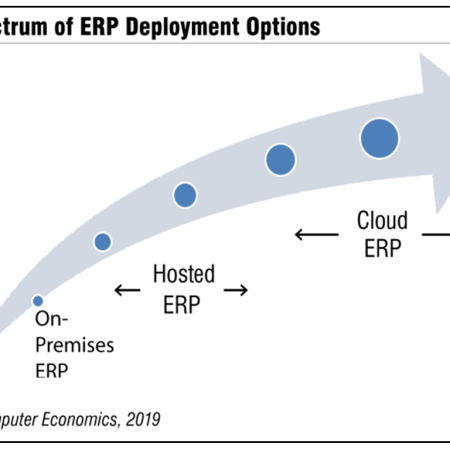
Cloud ERP has been rapidly gaining ground, and many traditional ERP vendors have responded with hosted versions of their on-premises systems. This report explores the defining differences between cloud and hosted ERP and why these differences matter in terms of the benefits that customers can expect to receive from each.
January, 2019
-
Drawing the Line Between Cloud ERP and Hosted ERP
Traditional ERP vendors are responding to the threat of cloud ERP by offering hosted deployment options for their on-premises systems. How does hosted ERP differ from cloud ERP, and how can a buyer choose between them? This Research Byte is a summary of our full report, The Differences Between Cloud and Hosted ERP and Why They Matter.
January, 2019
-

The Economic and Strategic Benefits of Cloud Computing
Does SaaS save money? Based on our latest survey, we find organizations that have largely migrated to the cloud spend less on IT as a percentage of revenue and on a per-user basis. Savings come not only from a reduction in data center spending, but also from lower IT personnel costs.
April, 2016
-
Cloud Users Enjoy Significant Savings
IT organizations that have successfully made the transition to the cloud enjoy significantly lower IT costs than industry peers who continue to operate large data centers and host most of their applications on premises, an Avasant Computer Economics study on the benefits of cloud computing found.
April, 2016
-
A Guide for Cloud ERP Buyers
As organizations realize the benefits of cloud computing, an increasing number are committed to moving as many of their applications as possible away from their on-premises infrastructure. Moving the bulk of an organization’s systems to the cloud means that ERP—typically the largest single application—also must move to the cloud. Without cloud ERP, an organization will still be running a significant percentage of its application portfolio on-premises.
August, 2014
-
Understanding Cloud ERP Buyers and Providers
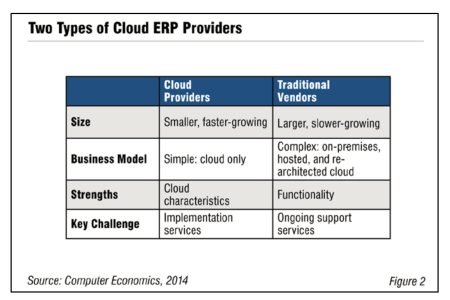
Not all ERP systems that are labeled “cloud” are the same. At the same time, vendors need to realize that not all ERP buyers are the same. The study provides an overview of ERP cloud vendors and describes the two major categories of buyers in this market: first-time buyers looking for their first ERP systems and established companies replacing their legacy systems.
August, 2014
-
As SaaS Matures, It Is Slowing Down Just Like the Rest of Us
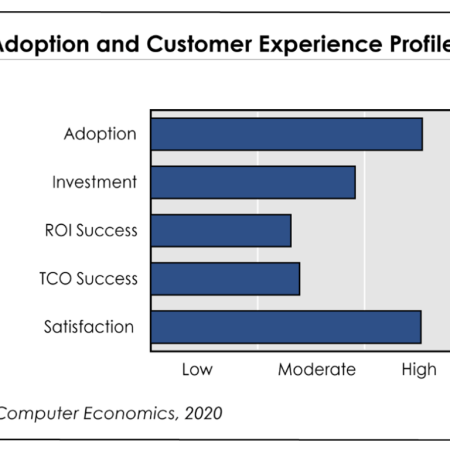
It is time to stop thinking of SaaS as a new technology and think of it as a mature incumbent. As such, we would expect a few things to begin to happen—investment to slow, ROI to be slightly harder to achieve, and satisfaction to drop. This Research Byte (a summary of the full report) explains why.
September, 2020
-
SaaS Adoption Trends and Customer Experience 2020
Software as a service is everywhere, and nearly all new software deployments are SaaS. It is time to stop thinking of SaaS as a growing technology and think of it as a mature incumbent. This report quantifies the current investment trends for SaaS and identifies the benefits driving companies to expand their SaaS implementations.
September, 2020
CE Report
Search results for "" ( 5626 )