
 Grid View
 List View
-
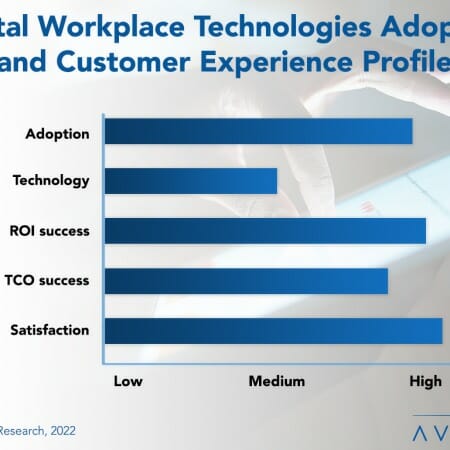
Digital Workplace Technologies Adoption Trends and Customer Experience 2022
Digital workplace technologies are a set of tools and electronic capabilities that allow workers to communicate and collaborate virtually from anywhere. They are used to create the digital workplace, which integrates the technologies into a single environment. These tools took on additional significance during COVID-19 lockdowns but remain important as many companies have adopted more hybrid work since seeing how well it worked during lockdowns.
October, 2022
-
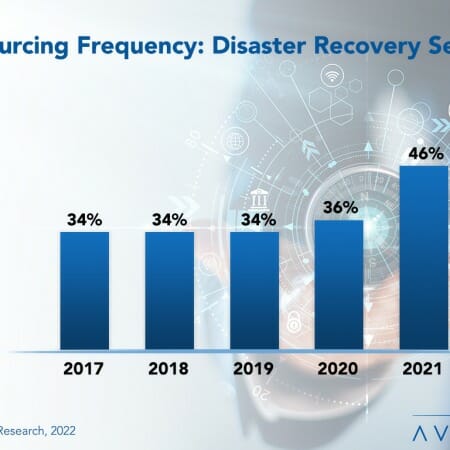
Disaster Recovery Outsourcing Trends and Customer Experience 2022
Experiences over the past two years have revealed that many organizations were not adequately prepared for a worldwide pandemic from a business continuity perspective. But most enterprises responded by establishing remote working environments on short notice and built out the network infrastructure and security measures to support them. Now, emerging from pandemic lockdowns, most businesses are retaining these remote work capabilities, even if they are to support a hybrid work model. Businesses are now more resilient, not just in facing another pandemic but in supporting remote work in the event of other natural or man-made disasters.
September, 2022
-
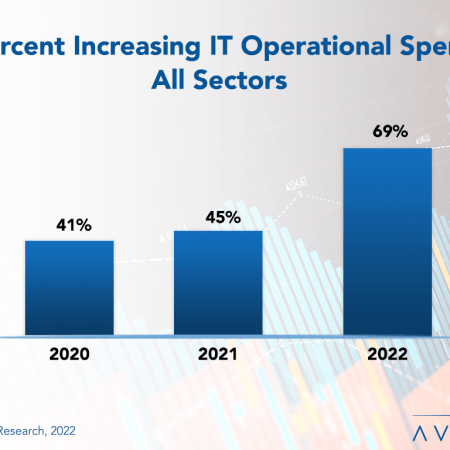
Tough Times in Europe Call for IT Budget Growth
In recent years, Europe has been hit by a pandemic, double-digit inflation, and a war. The subsequent supply chain disruptions, shortages of food and fuel, and looming recession do not make anything any easier for IT organizations on the continent. Still, IT budgets are rising. Not necessarily at the pace of rampant inflation. But still more than typical in times of economic contraction. It is starting to become clear that most enterprises now view IT as a strategic resource in weathering uncertainty. IT is no longer seen as a cost center but as a strategic resource that can impact the top and bottom lines. This research byte is a brief description of some of the findings in our European IT Spending and Staffing Benchmarks 2022/2023 study.
September, 2022
-
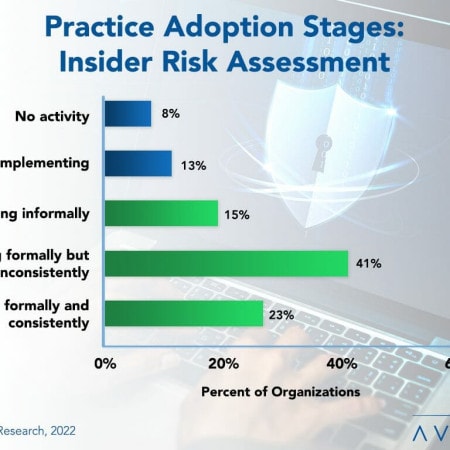
Insider Risk Assessment: Which of Your Employees May Be the Bad Apple?
Most IT organizations have insider security risk assessments to some extent, but, too often, they are not formally established, comprehensive in their scope, or followed consistently. Because of this, insider threats remain prevalent and continue to increase annually. This Research Byte summarizes our full report on Insider Security Risk Assessment Best Practices.
September, 2022
-
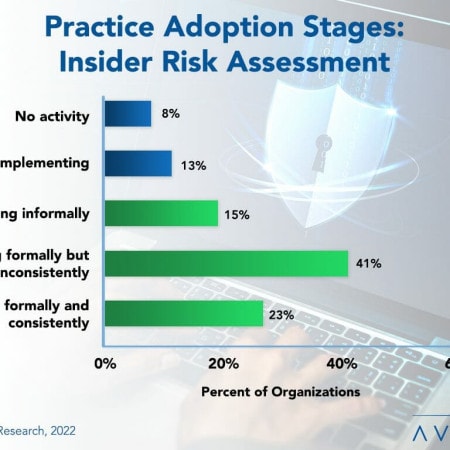
Insider Security Risk Assessment Best Practices 2022
Most organizations are aware of the IT security threats posed by outsiders. Countermeasures such as firewalls, antivirus software, and intrusion detection systems are all aimed at these threats. Yet these measures do little to counter insider threats within the organization.
September, 2022
-
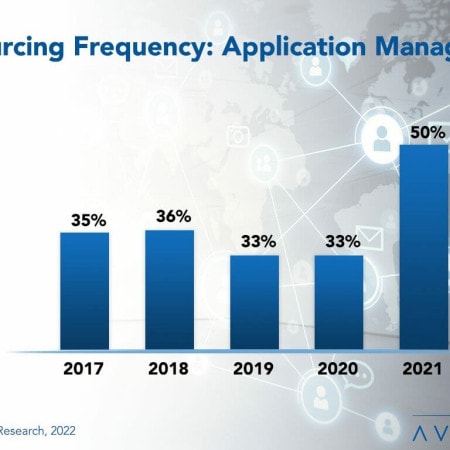
Application Management Outsourcing Trends and Customer Experience 2022
As the application portfolio grows, the ongoing support for those systems can become a burden on the IT organization, leaving little time for developing and implementing new systems. In response, a growing number of organizations see outsourcing application management as an attractive option. Still, we are a long way from eliminating application management entirely from the IT organization.
August, 2022
-

Cross-Border Commerce, Digital Currencies, and the Future of Money
Traditional payment systems are proving to be too slow to accommodate increasing levels of e-commerce and cross-border transactions. And demands for faster payment processing will only increase as commerce enters the omniverse. This Research Byte outlines the factors driving the need for speed in financial transactions. We examine the benefits and drawbacks of one kind of digital currency—cryptocurrencies—and what the future of money could look like. We conclude with recommendations for enterprises to understand and prepare for the future of money.
August, 2022
-
IT Vendor Governance Best Practices
IT vendor management is a function and set of practices that guide the selection, management, and assessment of IT suppliers to ensure that all parties comply with the terms of their contracts. IT supplier management has been a best practice for many years, but the disciplines have evolved. Traditional IT vendor governance practices are now inadequate to navigate the changing business ecosystem. The upshot is that most organizations need to transform their vendor governance programs. This Research Byte summarizes our full report on IT Vendor Governance Best Practices.
August, 2022
-
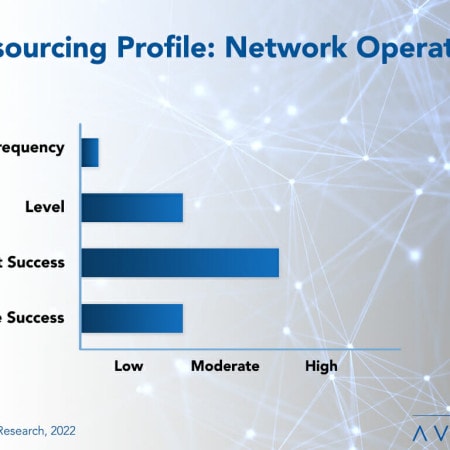
Network Operations Outsourcing Trends and Customer Experience 2022
Network operations is a mature but evolving outsourcing category with a wide assortment of top IT and telecom industry service providers competing with regional providers for market share. In addition, large equipment vendors are transforming their businesses beyond being manufacturing producers to delivering value-added network services. In doing so, they provide the network backbone to enterprise organizations as well as a growing variety of network services, including network design and planning, and even network support operations.
July, 2022
-

An Innovator’s Story: Creating a Business for Lasting Success
Ring, the first provider of video doorbells, is an interesting case study in innovation. Jamie Siminoff founded the firm in 2013, and, despite walking away from an episode of Shark Tank with no money, grew it to disrupt the home security industry. He eventually sold Ring to Amazon in 2018 for over $1 billion. This Research Byte provides a summary of Siminoff’s keynote and fireside chat at Avasant’s Empowering Beyond Summit earlier this year.
July, 2022
-
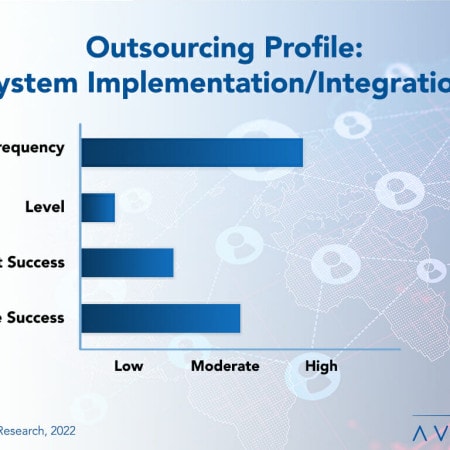
System Implementation/ Integration Outsourcing Trends and Customer Experience 2022
The outsourcing of system implementation/integration is on the rise. Our report examines adoption trends and customer experience with system implementation/integration outsourcing. We report on the percentage of organizations outsourcing it (frequency) and the average amount of work outsourced (level). We also present data on the cost and service experience and how these trends differ by organization size and sector. We conclude with guidelines to consider when outsourcing this function.
July, 2022
-
IT Spending and Staffing Benchmarks 2022/2023: Chapter 1: Executive Summary
This chapter provides an overview of the key findings from the full study and describes the contents of the subsequent chapters. It also includes information on the study participants and the survey methodology.
July, 2022
-

IT Spending and Staffing Benchmarks 2022/2023: Chapter 2: Composite Benchmarks
This chapter provides composite metrics for all of the organizations surveyed, across all industry sectors and organization sizes. The key metrics provided in this chapter are listed in the Key Metrics Descriptions section above.
July, 2022
-

IT Spending and Staffing Benchmarks 2022/2023: Chapter 3A: Benchmarks for Small Organizations
Chapter 3A provides benchmarks for small organizations, across all sectors. Small organizations are defined as those having IT operational budgets of less than $5 million. For a complete description of all metrics, please see the full study description. There are 79 respondents in the small-company sample.
July, 2022
-

IT Spending and Staffing Benchmarks 2022/2023: Chapter 3B: Benchmarks for Midsize Organizations
Chapter 4 provides benchmarks for process manufacturers. Process manufacturers are defined as those where the production process adds value by mixing, separating, forming, or chemical reaction. The sector includes manufacturers of chemicals, petrochemicals, semiconductors, pharmaceuticals, dietary supplements, food and beverage products, cosmetics, building materials, packaging materials, steel, glass, paper products, and other process-manufactured goods. The 56 respondents in the sample range in size from a minimum of about $50 million to a maximum $60 billion in annual revenue.
July, 2022
CE Report
Search results for "" ( 5628 )