
 Grid View
 List View
-
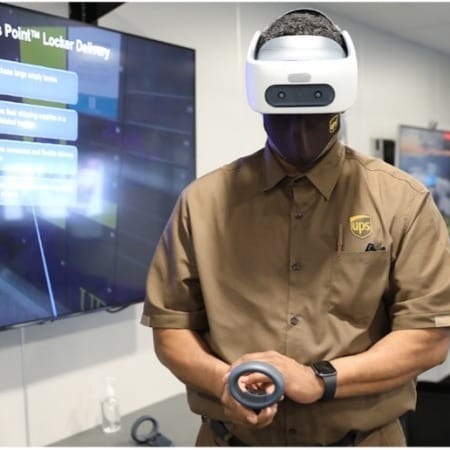
Heads Up: Addressing the Specific Device Management Needs of XR Headsets
Many Fortune 500 companies increasingly rely on AR, VR, and XR (augmented, virtual, and extended reality) devices to train employees, collaborate, perform maintenance, visualize data, run product demos, and more. But traditional mobile device management (MDM) or unified endpoint management (UEM) platforms are not necessarily good for managing AR/VR/XR devices. These headsets have specific management and security needs, and once an enterprise scales its AR/VR/XR program, it needs a platform tailored specifically to these types of devices. Innovative companies like ArborXR have stepped up to fill this need.
July, 2023
-

IT Spending and Staffing Benchmarks 2024/2025: Chapter 21: High-Tech
Chapter 21 provides benchmarks for high-tech companies. This category includes computer products manufacturers, telecommunications equipment manufacturers, semiconductor manufacturers, aerospace and defense manufacturers, pharmaceutical makers, biotechnology product makers, and other high-tech manufacturers. The 27 respondents in this sample range in size from a minimum of about $50 million to over $30 billion in revenue.
September, 2024
-

IT Spending and Staffing Benchmarks 2024/2025: Chapter 36: Healthcare Clinics and Doctors’ Offices
Chapter 36 provides benchmarks for healthcare clinics and doctors’ offices. The 22 respondents in this subsector range in size from $50 million to around $100 billion in annual revenue. This category includes health clinics, urgent care, optometry chains, and even large retailers who have begun some basic healthcare operations.
September, 2024
-

Business Process Services Pricing and Solution Trends: H1 2024
In this report, Avasant provides key information on pricing and solution trends for the business process services industry from the past 12 months. The report covers various aspects, including market demand, provider solution trends, commercial engagement trends, emerging location trends, and pricing and staffing trends in the space. The geographic coverage is global, with a large share of data points from North America. The report builds on insights gathered through our enterprise interactions, ongoing market research, data collection, and the AvaMark™ Price Benchmarking database.
July, 2024
-
Generative AI Strategy, Spending, and Adoption Metrics 2024: Chapter 4: Retail Sector Benchmarks
This chapter provides generative AI metrics for the retail sector. It features a sample of 15 retailers including department stores, apparel retailers, multinational brick-and-mortar chains, toys, and office supplies, as well as online retailers. It includes metrics on how much enterprises are spending on generative AI, where they are spending it, and how they are governing it.
December, 2023
-

IT Spending and Staffing Benchmarks 2024/2025: Chapter 30: Healthcare Payors
Chapter 30 provides benchmarks for health insurance companies. The firms in this sector include companies that sell medical and dental insurance along with healthcare providers that also offer health insurance plans and function as healthcare payors. The 26 respondents in this sector range in size from a minimum of $100 million to over $100 billion in annual revenue.
September, 2024
-

Leveraging AI in Private Equity: Enhancing Value Creation Across the Investment Lifecycle
Private equity (PE) firms are increasingly using Artificial Intelligence (AI) to improve investment strategies and decision-making, progressing from rule-based systems to predictive and generative AI (or Gen AI).
October, 2024
-

IT Spending Trends in Retail 2024
Retail CIOs are feeling the pressure. Retail is in a change-or-die mode, but most CIOs in the sector feel they are not being given the budget to make those changes. Retailers are looking to reduce costs to protect the bottom line and digitally transform to better serve their customers. This report analyzes the IT characteristics of this sector. Based on our latest benchmarking survey, it provides key metrics for this sector.
June, 2024
-

Higher Education Digital Services 2023–2024 RadarView™
The Higher Education Digital Services 2023–2024 RadarView™ helps higher education institutes craft a robust business strategy based on industry outlook, best practices, and digital transformation. The report can also aid them in identifying the right partners and service providers to accelerate their digital transformation in the higher education space. In addition, the 49-page report highlights top market trends in the higher education space and Avasant’s viewpoint on them.
July, 2023
-

Business Process Services – Provider Trends CQ4 2024
In this quarterly report for CQ4 2024, Avasant provides key information on trends in the business process services (BPS) space. It covers facts and figures about service providers (including revenue and resource trends), macro trends, and executive sentiment from the service provider community. The geographic coverage is global, with a larger share of data points from North America. The report builds on insights gathered through ongoing market research, data collection, and proprietary databases. It includes market data from providers accessed through multiple sources, such as public disclosures and market interactions.
April, 2025
-

IT Spending and Staffing Benchmarks 2024/2025: Chapter 8: Retail
Chapter 8 provides benchmarks for retailers. This sector includes retailers of clothing, jewelry, hardware, furniture, sports equipment, groceries, pharmaceuticals, and general merchandise. They include department stores, fashion stores, furniture stores, pharmacies, convenience stores, sporting goods stores, and specialty retailers. We also include hospitality and consumer services in this sector. The 62 respondents in the sample range in size from $50 million to over $200 billion in annual revenue.
September, 2024
-

Higher Education Digital Services 2023–2024 Market Insights™
The Higher Education Digital Services 2023–2024 Market Insights™ assists organizations in identifying important demand-side trends that are expected to have a long-term impact on any digital projects in the higher education space. The report also highlights key challenges that enterprises face today.
July, 2023
-

IT Spending Trends in the Energy and Utilities Sector 2024
It is a challenging time for organizations in the energy and utilities sector, with global conflicts, supply chain issues, government mandates, and environmental concerns churning the waters. The demands on their IT organizations are significant. What is it about the energy and utilities sector that makes it unique? In this report, we analyze the ways in which this sector differs from other sectors in terms of their IT spending characteristics. We conclude with recommendations for optimizing the IT budget within this sector.
May, 2024
-
Business Process Services – Provider Trends CQ1 2025
In this quarterly report for CQ1 2025, Avasant provides key information on trends in the business process services (BPS) space. It covers facts and figures about service providers (including revenue and resource trends), macro trends, and executive sentiment from the service provider community. The geographic coverage is global, with a larger share of data points from North America. The report builds on insights gathered through ongoing market research, data collection, and proprietary databases. It includes market data from providers accessed through multiple sources, such as public disclosures and market interactions.
July, 2025
-

IT Spending and Staffing Benchmarks 2024/2025: Chapter 28: Brick-and-Mortar Retail
Chapter 28 provides benchmarks for brick-and-mortar retailers. This subsector includes department stores, clothing stores, convenience stores, pet stores, pharmacies, hardware stores, nonprofit retailers, furniture retailers, agricultural retailers, and other retailers. The 39 respondents in this sample have annual revenues ranging from about $95 million to over $200 billion.
September, 2024
Industry Page Featured
Search results for "" ( 5628 )