Areas of Interest
Content Type
Industries
- Aerospace and defense
- Banking, Financial Services, and Insurance
- Energy and Resources
- Federal Government
- Healthcare and life sciences
- High-tech and telecommunications
- Higher Education
- Media and entertainment
- Private equity
- Public Sector
- Retail and manufacturing
- Social Impact Institutions
- Travel and transportation
Technologies
- Artificial Intelligence
- Automation
- Blockchain
- Business and data analytics
- Cloud
- Customer relationship management (CRM)
- Cybersecurity
- Digital Services
- Enterprise resource planning (ERP)
- Human capital management (HCM)
- Internet Of Things
- Machine Learning
- Networking
- Supply chain management (SCM)
- Virtual reality/Augmented reality
Areas of Interest


Latest Reports

GAVS and Its AIOps Platform Tackle the IT Quagmire
The enterprise computing environment today is more heterogenous and complex than ever. There are multiple computing platforms, combinations of cloud and on-premises infrastructure, and even multiple clouds. This IT quagmire causes many problems and represents a security risk. Into this breach has stepped a discipline known as AIOps. A leading provider of AIOps solutions and a Tech Innovator is GAVS Technologies.
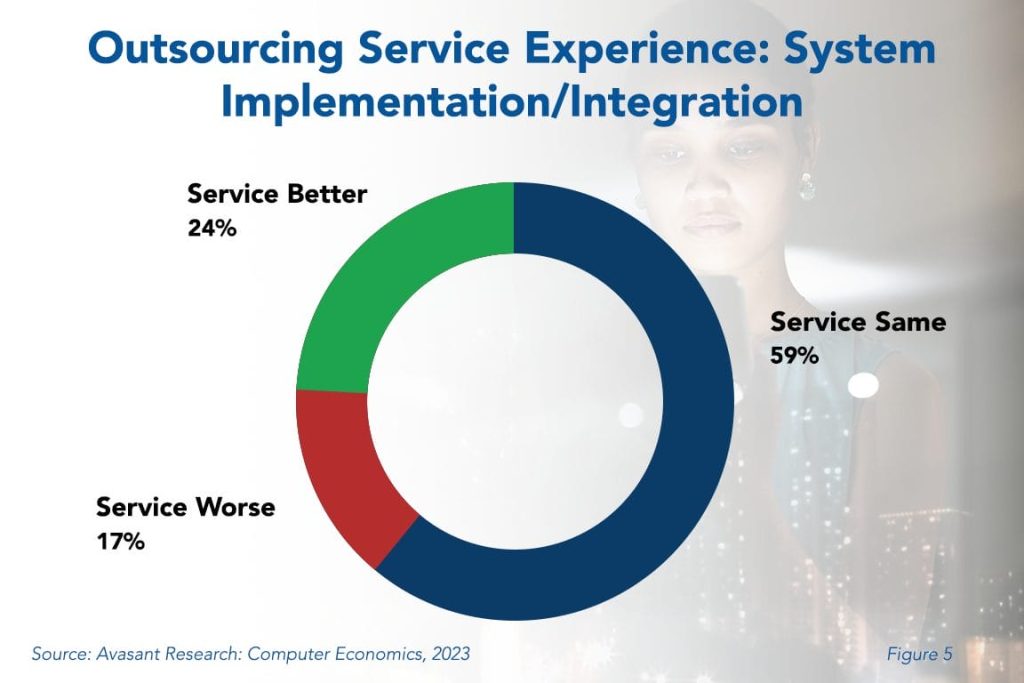
Service Success a Priority Over Cost for System Integration Outsourcing
While many outsourcing decisions are influenced by the need to save money, system implementation/integration outsourcing differs. There are some instances where businesses are willing to pay extra for the expertise or operational flexibility that a service provider can deliver. However, in the case of system implementation/integration, the primary motivation is to ensure project success. This Research Byte summarizes our full report on System Implementation/Integration Outsourcing Trends and Customer Experience.
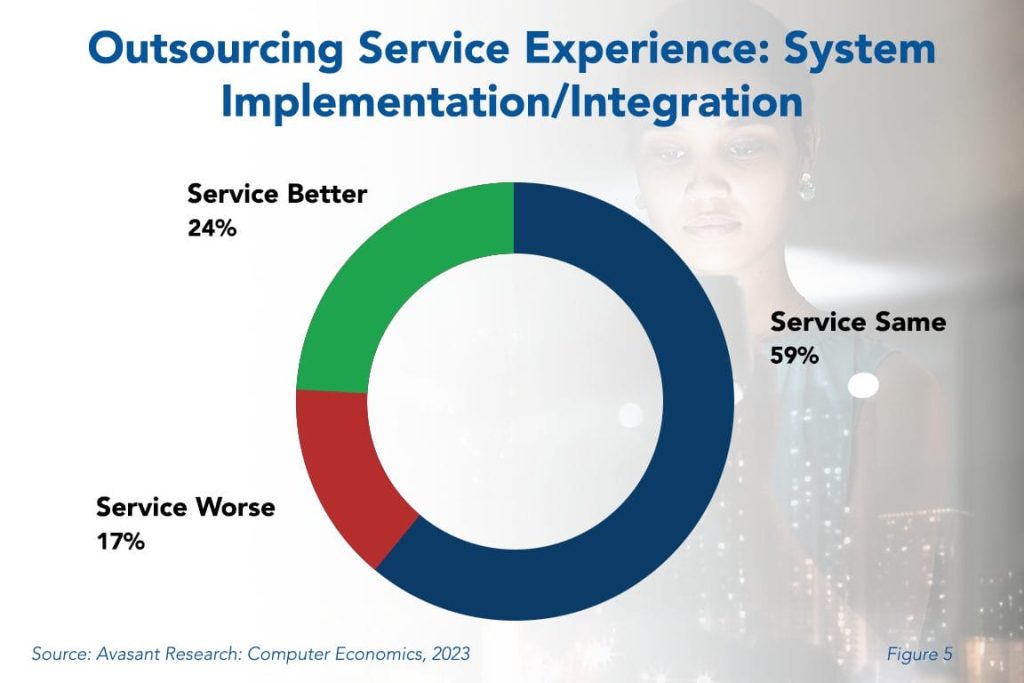
System Implementation/Integration Outsourcing Trends and Customer Experience 2023
System implementation/integration outsourcing is the use of an external service provider to assist in implementing new systems, which often includes integration with other new or existing systems. A systems integration (SI) firm can help or be responsible for some or all of the following: identifying system requirements, understanding and redesigning business processes, selecting a new system, and deploying the system.

Current Fair Market Values November 2023
The Computer Economics Market Value Reports provide information on the most commonly traded machines and systems at the time the report is published. The values shown are the composites of a range of quotes acquired from sources within the industry deemed reliable, accuracy of the information presented is not guaranteed. Resources are eBay, Insight, NewEgg, CDW, ETB-Tech, Amazon, Savemyserver, TheServerStore, LoadBalancer, NetworkOutlet, Netsyst-Direct, TigerDirect, and others as well as online sales companies and appraisals.

Vendor Discount Report October 2023
The largest and best discounts are often only offered to the vendors’ best customers, and buyers may find it difficult to determine whether the discount offered is typical or whether a better deal can be negotiated. The Vendor Discounts Report is designed to give procurement personnel, lessors, lessees, and departmental manager’s insight and guidance regarding current discount structures on a variety of categories of equipment in the marketplace.
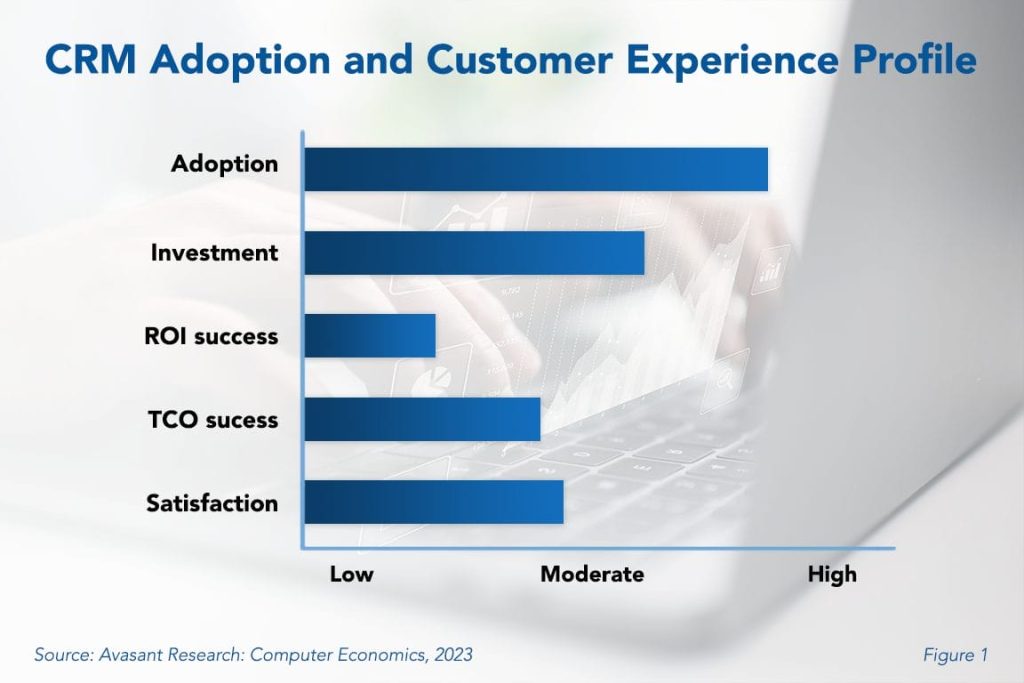
CRM Necessary but Hard to Manage
CRM systems are one of the most widely adopted categories of enterprise applications. Modern CRM systems are essential for companies looking to improve their productivity and effectiveness in sales, marketing, and customer service. However, investing in a new CRM system can be a messy business. At the core, a CRM system needs to interact with data across the entire business. Business processes should change to match the new capabilities, and people need to be trained on the new system. Hidden or unexpected costs can quickly add up, and missteps can result in a major setback, or worse, project failure. This Research Byte summarizes our full report on CRM Adoption Trends and Customer Experience.
CRM Adoption Trends and Customer Experience 2023
Customer relationship management systems are one of the most widely adopted categories of enterprise applications, and investment in new CRM capabilities continues to grow. Although cloud-based CRM offerings have allowed the capabilities to move down-market to smaller companies, the need to adopt a CRM system signals that a company has reached a milestone in the building of its application portfolio, similar to when a company first moves from spreadsheets to a real accounting system. Modern CRM systems are essential for companies looking to improve their productivity and effectiveness in sales, marketing, and customer service.

Generative AI: The Next Pivotal Point for Productivity and Efficiency
Generative AI is more than a buzzword. It holds genuine transformational potential that resonates with senior executives and employees across industries. It sparks imagination and innovation by promising to automate tasks previously deemed impossible to replicate by machines. From generating human-like text and creative content to assisting in complex decision-making, generative AI drives a paradigm shift in how businesses operate. This transformative technology is not merely hype but a catalyst for redefining productivity and unleashing unprecedented opportunities for growth and efficiency.
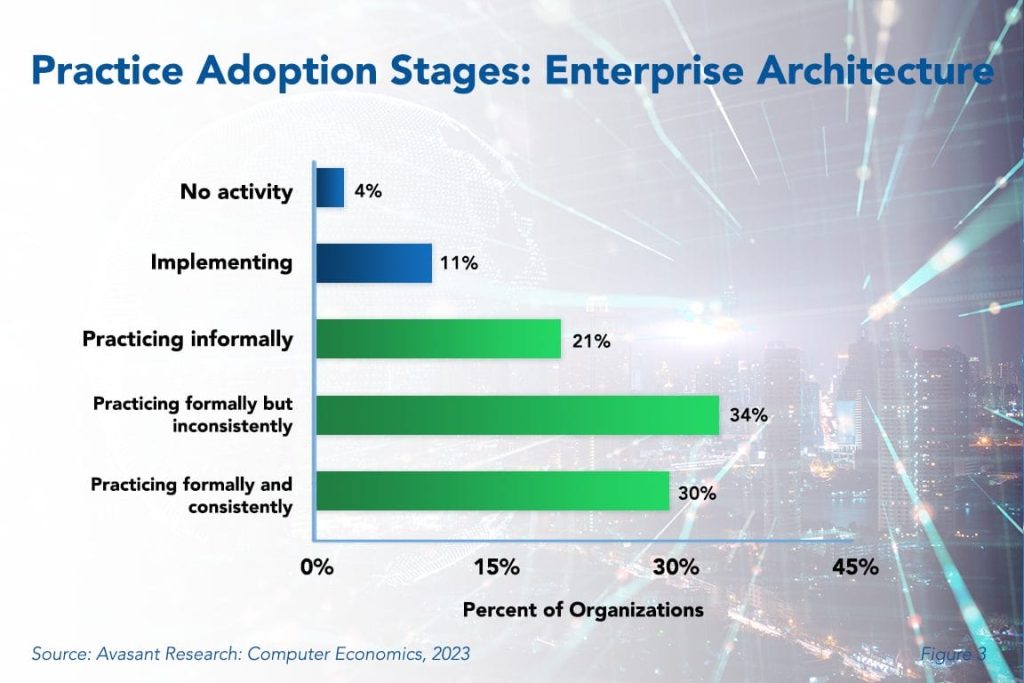
Enterprise Architecture Popular but Inconsistently Practiced
Enterprise architecture is an IT best practice that has been around since the 1980s. It provides a description of the organization in its desired state. With the obvious benefits of this approach, you would think more enterprises would make heavy use of it. However, while it is one of the most adopted practices in our study, most organizations practice it inconsistently, availing only a portion of its benefits. This Research Byte discusses the importance of enterprise architecture and its adoption trends.
Enterprise Architecture Adoption and Best Practices 2023
While large IT project failures generate headlines, an even larger risk may be the incoherence that comes from developing new systems and capabilities without an overall plan. Enterprise architecture is an IT best practice that provides a description of the organization in its desired state. This allows developers to build an infrastructure, data model, systems, and process that are aligned with that organizational architecture.