Areas of Interest
Content Type
Industries
- Aerospace and defense
- Banking, Financial Services, and Insurance
- Energy and Resources
- Federal Government
- Healthcare and life sciences
- High-tech and telecommunications
- Higher Education
- Media and entertainment
- Private equity
- Public Sector
- Retail and manufacturing
- Social Impact Institutions
- Travel and transportation
Technologies
- Artificial Intelligence
- Automation
- Blockchain
- Business and data analytics
- Cloud
- Customer relationship management (CRM)
- Cybersecurity
- Digital Services
- Enterprise resource planning (ERP)
- Human capital management (HCM)
- Internet Of Things
- Machine Learning
- Networking
- Supply chain management (SCM)
- Virtual reality/Augmented reality
Areas of Interest


Latest Reports
Nordics Digital Services 2024–2025 RadarView™
The Nordics Digital Services 2024–2025 RadarView™ can help enterprises in the Nordic region craft a robust strategy based on regional outlook, best practices, and digital transformation. The report can also aid them in identifying the right partners and service providers to accelerate their digital transformation. The 89-page report also highlights top market trends in Nordics and Avasant’s viewpoint on them.

Aerospace and Defense Digital Services 2024 Market Insights™
The Aerospace and Defense Digital Services 2024 Market Insights™ assists organizations in identifying important demand-side trends that are expected to have a long-term impact on any digital project in the Aerospace and Defense industry. The report also highlights key challenges that enterprises face today in this space.
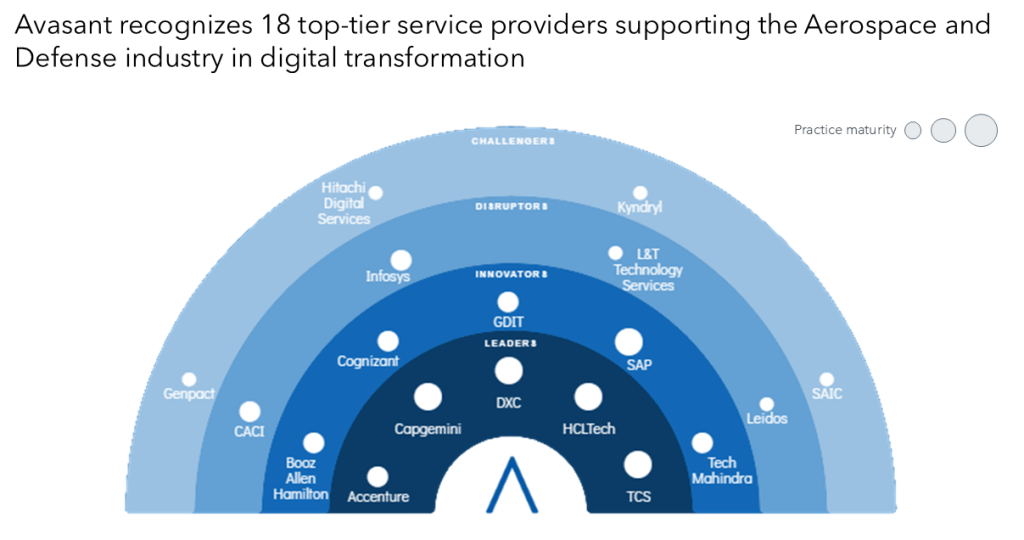
Empowering Aerospace and Defense with Smarter, Sustainable, and Secure Solutions
Aerospace and Defense enterprises are responding to industry demands by advancing sustainable aviation through R&D in cleaner propulsion systems and adopting zero-emissions technologies such as hydrogen-powered engines. They are enhancing supply chain resilience using AI, blockchain, and digital threads while integrating predictive analytics and reshoring strategies to address geopolitical risks. Additionally, they are investing in advanced cybersecurity frameworks, generative AI, and quantum computing for innovation and operational efficiency while modernizing their workforce with AR/VR and AI-driven training to address the skills shortage. Aerospace and Defense companies collaborate with service providers for digital transformation, which requires strong technological expertise and delivery capabilities. Both demand-side and supply-side trends are covered in our Aerospace and Defense Digital Services 2024 Market Insights™ and Aerospace and Defense Digital Services 2024 RadarView™, respectively.

Aerospace and Defense Digital Services 2024 RadarView™
The Aerospace and Defence Digital Services 2024 RadarView™ can help Aerospace and Defense enterprises craft a robust strategy based on industry outlook, best practices, and digital transformation. The report can also aid these enterprises in identifying the right partners and service providers to accelerate their digital transformation in this space. The 73-page report also highlights top market trends in the Aerospace and Defense industry and Avasant’s viewpoint.

Marvell’s Silicon Surge Continues
SANTA CLARA, Calif.—Semiconductor maker Marvell Technology has experienced a significant surge this year, and it’s due in large part to its focus on making custom silicon for hyperscalers. Founded in 1995, Marvell started with an emphasis on consumer electronics. But it transformed itself into a global semiconductor company that designs, develops, and markets a wide range of integrated circuits. The company’s products are used in data centers, networking, storage, and consumer electronics. We attended Marvell’s Analyst Day this week to learn more about the surge this year and its plans for the future.

Life and Annuities Insurance Digital Services 2024–2025 RadarView™
The Life and Annuities Insurance Digital Services 2024–2025 RadarView™ can help enterprises craft a robust strategy based on industry outlook, best practices, and digital transformation. The report can also aid them in identifying the right partners and service providers to accelerate their digital transformation. The 99-page report also highlights top supply-side trends in the L&A insurance digital services space and Avasant’s viewpoint.

Life and Annuities Insurance Digital Services 2024–2025 Market Insights™
The Life and Annuities Insurance Digital Services 2024–2025 Market Insights™ assists organizations in identifying important demand-side trends that are expected to have a long-term impact on any digital project in the L&A insurance industry. The report also highlights key challenges that enterprises face today in this space.
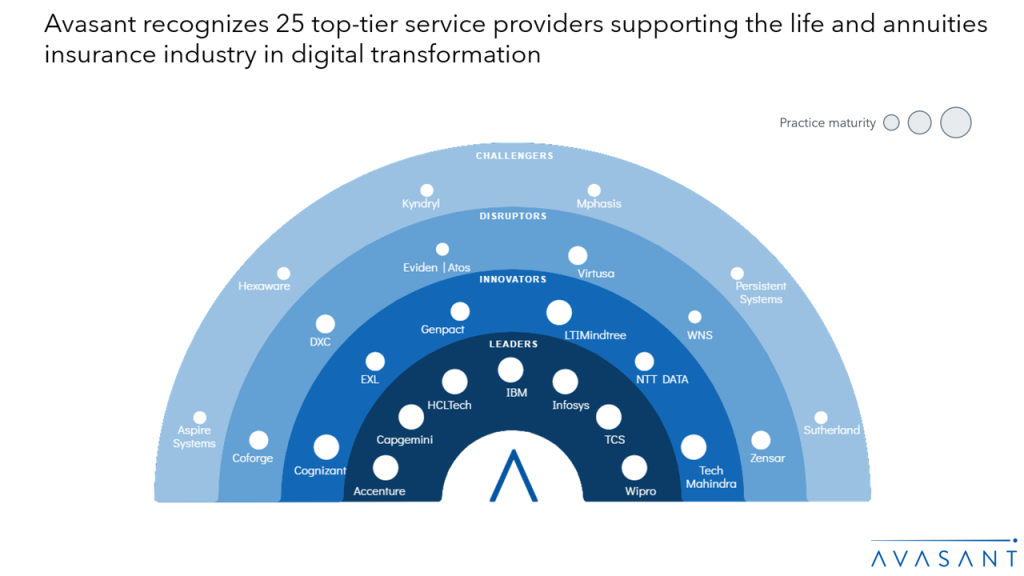
Life and Annuities Insurance Digital Services: Harnessing Digital Power for Customer-Centric Transformation

End-user Computing Services 2024–2025 Market Insights™
The End-user Computing Services 2024–2025 Market Insights™ assists organizations in identifying important demand-side trends that are expected to have a long-term impact on any end-user computing services project. The report also highlights key challenges that enterprises face today.
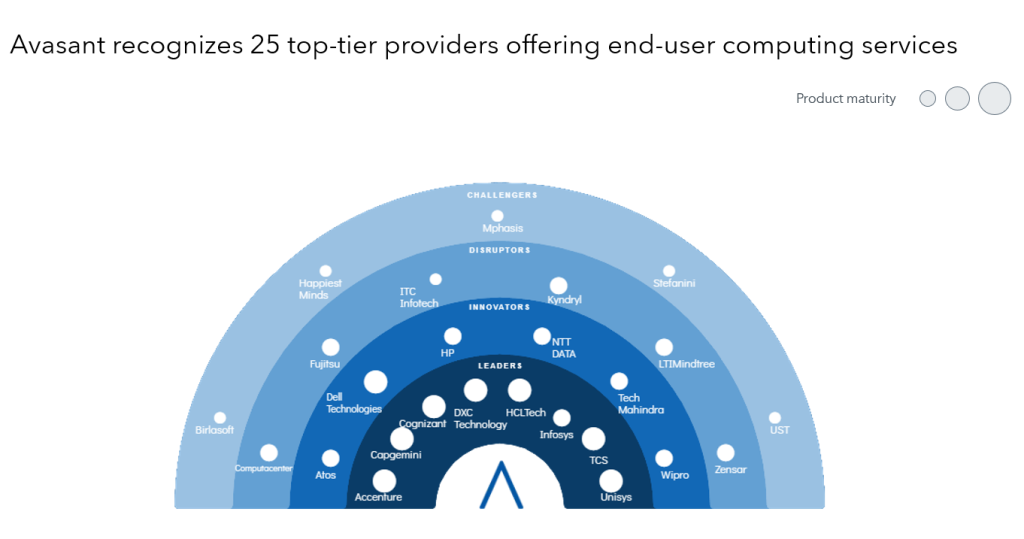
Transforming End-user Computing Services with Generative AI and Experience-driven Pricing Models
Enterprises focus on improving user experience and productivity by leveraging emerging technologies such as AI and analytics across various applications. They use generative AI to enhance communication, boost productivity with AI-powered PCs, strengthen endpoint security, and deploy chatbots for efficient support. They are shifting from service-level agreement (SLA)-based to experience-level agreement (XLA)-based pricing models, prioritizing user experience and business outcomes. BFSI, retail and CPG, and manufacturing sectors dominate over 50% of end-user computing services, focusing on virtual workspaces and unified collaboration to ensure secure access and teamwork.